



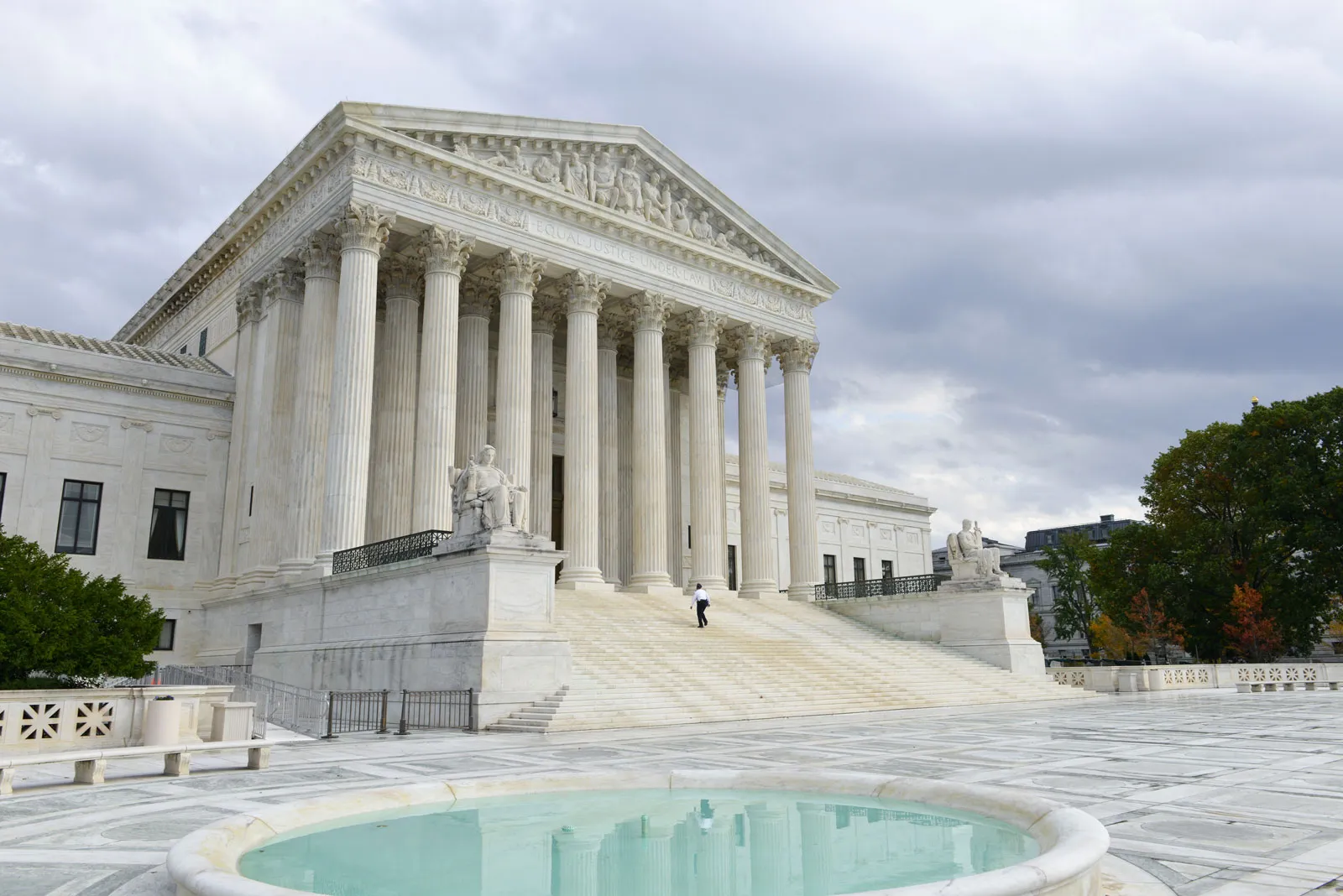
In a rare defeat for President Donald Trump, the Supreme Court on Tuesday blocked his administration’s attempt to deploy the National Guard to Chicago to protect Immigration and Customs Enforcement (ICE) agents, marking a significant rebuke of the president’s efforts to expand federal enforcement powers in Democratic-led cities.
The unsigned order, issued by the nation’s highest court, held that the Trump administration had failed to demonstrate any legal authority allowing federal troops to execute civilian laws in Illinois. “At this preliminary stage, the government has failed to identify a source of authority that would allow the military to execute the laws in Illinois,” the court wrote.
The ruling came over dissents from conservative justices Samuel Alito, Clarence Thomas, and Neil Gorsuch, highlighting the sharp divisions even within the court’s conservative majority. Experts describe the decision as “the most significant Supreme Court defeat for Trump this year,” signaling potential limits on future federal deployments in other cities.
White House Responds
A White House spokeswoman, Abigail Jackson, sought to downplay the setback, emphasizing that the ruling would not prevent Trump from continuing to enforce immigration laws or safeguard federal personnel. “He activated the National Guard to protect federal law enforcement officers, and to ensure rioters did not destroy federal buildings and property,” she told CNN. “Nothing in today’s ruling detracts from that core agenda.”
Despite this, legal analysts said the ruling severely restricts the administration’s ability to rely on an obscure 1908 federal statute that Trump attempted to invoke to mobilize state National Guard units. “It’s hard to see how the administration can continue to use this authority to deploy federalized National Guard troops,” said Steve Vladeck, a law professor at Georgetown University.
Legal Context
Federal law allows a president to federalize the National Guard when regular forces are insufficient to enforce the laws of the United States. A central question in the case was whether “regular forces” referred to the U.S. military or federal law enforcement agents such as ICE officers. The Supreme Court clarified that the statute likely refers to the standing military and not civilian agencies, effectively barring the use of National Guard units to assist ICE under this law.
Justice Brett Kavanaugh, while supporting the court’s ruling, noted that the decision could have broader implications for emergency deployments. He questioned what might happen if a large crowd threatened a federal courthouse and the military could not be deployed in time, suggesting the court’s interpretation could restrict presidential options in unforeseen crises.
Illinois Attorney General Kwame Raoul, a Democrat, praised the decision. “The extremely limited circumstances under which the federal government can call up the militia over a state’s objection do not exist in Illinois,” he said. “I am pleased that the streets of Illinois will remain free of armed National Guard members as our litigation continues.”
Dissenting Opinion
Justice Alito, joined by Thomas, strongly disagreed with the majority, arguing that the president’s inherent authority should have been sufficient to justify the deployment. “The protection of federal officers from potentially lethal attacks should not be thwarted,” Alito wrote, emphasizing that the administration had reasonably determined civilian law enforcement resources were insufficient.
The case originated after a federal district court in Chicago blocked the deployment of 300 Illinois National Guard members to “protect federal officers and property.” Another 400 federalized troops from Texas were also affected. The administration maintained that the troops would only serve in protective capacities and would not engage in law enforcement.
US District Judge April Perry, a Biden appointee, questioned the administration’s characterization of protests as equivalent to riots, raising concerns about overreach and the potential misuse of military forces in civilian law enforcement. The Chicago-based 7th Circuit largely upheld Perry’s ruling, allowing the federalization of Guard members but not their deployment.
Broader Implications
The Supreme Court’s decision could limit the administration’s ability to deploy Guard units in other major cities, including Los Angeles, Portland, and Memphis, where Trump had previously sought to supplement federal law enforcement. The ruling underscores the challenges of balancing state and federal authority over the National Guard, a balance that has existed since the founding of the Republic.
The administration’s reliance on historical precedent, including the 1827 case Martin v. Mott, highlights the legal complexity of the issue. That case upheld the president’s exclusive authority to determine when a state militia should be mobilized during emergencies. However, states challenging the deployment have argued that protests against ICE officers do not constitute conditions warranting federal intervention.
On the Ground
Tensions on the ground at the ICE facility west of Chicago, where the deployment was intended, had eased in recent weeks, according to the administration. Officials cited “increased coordination” with local police and a reduced need for federal personnel to engage directly with protesters. Defense officials also announced in November that they were “rightsizing” planned deployments, keeping only a fraction of the National Guard units in standby positions.
While Trump retains the option of invoking the Insurrection Act to deploy regular military forces, doing so would carry significant political and legal risks, given longstanding prohibitions on using the military for domestic law enforcement.
National Debate
The ruling has reignited debate over presidential authority and federal law enforcement powers. Critics argue that the Trump administration’s approach equates political opposition with criminality, while supporters contend that federal personnel deserve protection from violent attacks.
In court filings, the Justice Department highlighted past incidents in which federal agents had been attacked, including being shot at, having bricks and concrete thrown at them, and being rammed by vehicles. These claims formed the basis of the administration’s request to deploy Guard troops, arguing that existing civilian law enforcement resources were insufficient.
The Supreme Court’s order signals that such arguments, while factually supported, may not satisfy the legal standards required for deploying state National Guard units under the law invoked by Trump.
Looking Ahead
As the administration evaluates its next steps, the decision leaves Trump with a narrower legal pathway for federal interventions in cities with high-profile ICE operations. The ruling may also influence ongoing debates over executive authority, particularly regarding the limits of presidential power in domestic security matters.
Legal experts predict that future efforts to federalize state National Guard units for law enforcement purposes will face heightened scrutiny, and any attempt to bypass these limits could provoke additional judicial challenges.
For now, the Supreme Court’s ruling stands as a clear statement: the president’s power to deploy the National Guard for civilian law enforcement is limited and cannot override state authority without specific statutory authorization.

Emily Johnson is a critically acclaimed essayist and novelist known for her thought-provoking works centered on feminism, women’s rights, and modern relationships. Born and raised in Portland, Oregon, Emily grew up with a deep love of books, often spending her afternoons at her local library. She went on to study literature and gender studies at UCLA, where she became deeply involved in activism and began publishing essays in campus journals. Her debut essay collection, Voices Unbound, struck a chord with readers nationwide for its fearless exploration of gender dynamics, identity, and the challenges faced by women in contemporary society. Emily later transitioned into fiction, writing novels that balance compelling storytelling with social commentary. Her protagonists are often strong, multidimensional women navigating love, ambition, and the struggles of everyday life, making her a favorite among readers who crave authentic, relatable narratives. Critics praise her ability to merge personal intimacy with universal themes. Off the page, Emily is an advocate for women in publishing, leading workshops that encourage young female writers to embrace their voices. She lives in Seattle with her partner and two rescue cats, where she continues to write, teach, and inspire a new generation of storytellers.