



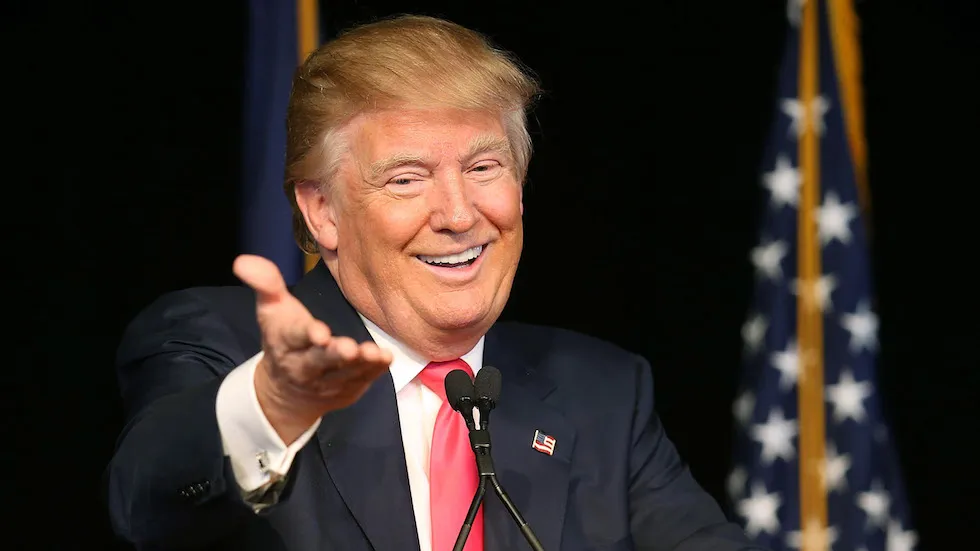
President Donald Trump has reignited his public feud with Georgia Congresswoman Marjorie Taylor Greene, describing her as “highly neurotic” and repeatedly using his longstanding nickname for her, “Traitor,” amid tensions over the release of Justice Department files related to the late convicted sex offender Jeffrey Epstein. The confrontation underscores the widening rift between the former president and a previously loyal Republican ally, highlighting the delicate dynamics of party loyalty, principle, and transparency within the GOP.
The dispute centers on Greene’s vocal push for the full disclosure of federal documents regarding Epstein, the financier whose decades-long sexual abuse scandal gripped the nation and implicated numerous high-profile figures. Greene was among the first House Republicans to publicly support legislation compelling the Justice Department to release the files—a move Trump initially opposed. However, after more Republicans expressed support for the measure, Trump directed his party to vote for its passage and ultimately signed it into law, despite publicly downplaying the gravity of the Epstein case and at times referring to it as a “hoax.”
During a rally in North Carolina on Friday night, which primarily focused on promoting his economic agenda and highlighting his administration’s achievements, Trump spent a portion of his speech criticizing Greene by name. “Marjorie Traitor Brown, I call her. Because green turns to brown under stress,” he said. The president also claimed their falling out was due to his refusal to return her phone calls, calling her “highly neurotic” and questioning her temperament.
The Background of the Rift
Trump and Greene’s relationship was historically defined by mutual support. Greene, who has long been associated with the populist wing of the Republican Party, championed Trump’s policies on border security, economic reform, and cultural issues, frequently appearing alongside him at rallies and public events. However, recent disagreements over policy priorities—including affordability, foreign policy, and especially the Epstein files—have caused a visible fracture in their alliance.
Following Trump’s withdrawal of his endorsement in November, Greene clarified that she had not made any phone calls to him but had sent text messages concerning the Epstein files. She later criticized Trump in a press conference with survivors of Epstein’s alleged sexual abuse, stating, “I was called a traitor by a man that I fought for five, no, actually, six years for, and I gave him my loyalty for free.” Greene’s remarks underscored both her frustration with the former president and her continued commitment to advocating for victims of sexual abuse.
Trump’s critics argue that this episode is consistent with a pattern in which the former president publicly criticizes allies when policy disagreements emerge or loyalty is perceived to falter. Greene, by contrast, has positioned herself as an independent voice within the party, emphasizing principle and transparency over personal allegiance.
The Epstein Files Controversy
The immediate source of tension is the partial release of Epstein-related documents by the Justice Department on Friday. While thousands of pages were made public, Greene and other lawmakers criticized the administration for issuing heavily redacted files, arguing that the public and survivors of abuse deserve full transparency.
“The heavily redacted Epstein files being released” and the “failure to release them all by today’s lawful deadline” are “NOT MAGA,” Greene wrote on X, the social media platform formerly known as Twitter. In an earlier post, Greene also revealed that Trump had criticized her for refusing to remove her name from a discharge petition that forced a House vote on the files’ release. “I couldn’t be more proud I stayed on,” she said, framing her resistance as a principled stance in defense of government transparency.
The legal and political maneuvering surrounding the Epstein files has put Trump in an unusual position. Although he initially resisted disclosure, the bill mandating the release ultimately passed, and the president signed it into law. Some analysts suggest this reflects Trump’s effort to consolidate Republican support ahead of future elections while simultaneously maintaining control over the narrative surrounding the Epstein scandal.
Greene’s Resignation Announcement
Amid the ongoing controversy, Greene announced in November that she would resign from Congress next month. She described her decision as a refusal to remain in a political environment she deemed hostile. “I refuse to be a ‘battered wife’ hoping it all goes away and gets better,” Greene told constituents. Her resignation introduces a new element to the conflict, raising questions about the implications for the Georgia GOP and for Republican cohesion at large.
Political observers note that Greene’s resignation and her vocal criticism of Trump underscore ongoing tensions between traditional Republican leadership and a faction of lawmakers willing to challenge party orthodoxy on principle. Analysts have described Greene as emblematic of a cohort of GOP legislators willing to act independently, even when it risks friction with Trump, the party’s most prominent figure.
Responses from Lawmakers and the Public
The feud has provoked reactions across political and public spheres. Some Republican leaders expressed concern that public infighting could undermine legislative priorities and weaken party unity, particularly ahead of the 2026 midterm elections. Others have praised Greene’s stance on transparency and her advocacy for victims of sexual abuse, framing it as a principled position transcending partisan loyalty.
Democrats have largely emphasized the substantive issues surrounding the Epstein files, advocating for full disclosure and accountability. They criticized the partial release for extensive redactions, which, according to some legal experts, may obscure critical information about alleged accomplices and patterns of abuse. The documents, though released in stages, continue to generate media attention and public debate, particularly over who was implicated, how the abuse occurred, and the role of influential figures.
Public opinion appears divided. Among conservative voters, some remain loyal to Trump and view Greene’s defiance as disloyalty, while others support her principled stance on transparency and victims’ advocacy. Social media commentary, opinion columns, and televised news segments have amplified the feud, framing it both as a personal dispute and as a lens into the broader direction of the Republican Party.
Political Implications for the GOP
The confrontation between Trump and Greene carries broader consequences for Republican politics. It highlights the challenges Trump faces in maintaining loyalty among allies, especially when policy priorities or personal expectations diverge. Greene’s insistence on full transparency regarding the Epstein files contrasts with Trump’s tendency to manage public narratives on controversial issues, highlighting tensions between populist advocacy and party leadership.
Political strategists argue that the feud could affect candidate endorsements, fundraising, and grassroots mobilization. Greene’s high-profile resignation, combined with her outspoken criticism, may embolden other lawmakers to assert independence or reconsider their alignment with Trump. For Trump, publicly criticizing Greene reinforces his model of loyalty-centered politics, signaling that perceived disloyalty will not go unnoticed.
At the same time, Greene’s actions position her as a figure committed to principle over party loyalty. By challenging Trump on the Epstein files, she frames herself as an advocate for transparency and accountability, especially on issues affecting victims of sexual abuse. This dual narrative—principled defiance versus perceived betrayal—has become a focal point for media coverage and public discourse.
The Broader Context of Epstein Files
The release of Epstein files, and the ongoing debate surrounding them, reflects a broader national conversation about accountability for powerful figures implicated in sexual abuse. The Justice Department’s staggered disclosure has raised questions about transparency, victim privacy, and political influence. As lawmakers, journalists, and advocacy groups sift through thousands of pages of testimony and correspondence, public interest remains high, and scrutiny on politicians’ actions and alliances has intensified.
Trump’s role in this process has been particularly scrutinized. His initial resistance, subsequent signing of the release legislation, and subsequent criticism of Greene reveal the delicate balance between maintaining control over politically sensitive issues and responding to pressure from allies and constituents.
Looking Forward
As the Epstein file saga unfolds, the feud between Trump and Greene is likely to remain a prominent storyline within Republican politics. Legal developments, further document releases, and Greene’s imminent resignation will continue to dominate media coverage, influencing both public perception and party dynamics.
For Trump, the dispute underscores the challenges of balancing public messaging, personal relationships with lawmakers, and the management of high-profile legislative issues. For Greene, the conflict demonstrates the potential consequences of prioritizing principle and transparency over personal loyalty and political expediency.
While both figures remain influential within American politics, their clash highlights the enduring tension between individual advocacy and party alignment—a dynamic that will likely shape the Republican Party’s trajectory in the coming years.
The outcome of this feud may also set a precedent for how GOP members navigate disagreements with the former president and how future legislative efforts intersect with high-profile ethical and legal issues. As the party approaches the 2026 midterm elections, observers will closely watch whether the Trump-Greene conflict influences candidate endorsements, voter turnout, and intra-party cohesion.

Emily Johnson is a critically acclaimed essayist and novelist known for her thought-provoking works centered on feminism, women’s rights, and modern relationships. Born and raised in Portland, Oregon, Emily grew up with a deep love of books, often spending her afternoons at her local library. She went on to study literature and gender studies at UCLA, where she became deeply involved in activism and began publishing essays in campus journals. Her debut essay collection, Voices Unbound, struck a chord with readers nationwide for its fearless exploration of gender dynamics, identity, and the challenges faced by women in contemporary society. Emily later transitioned into fiction, writing novels that balance compelling storytelling with social commentary. Her protagonists are often strong, multidimensional women navigating love, ambition, and the struggles of everyday life, making her a favorite among readers who crave authentic, relatable narratives. Critics praise her ability to merge personal intimacy with universal themes. Off the page, Emily is an advocate for women in publishing, leading workshops that encourage young female writers to embrace their voices. She lives in Seattle with her partner and two rescue cats, where she continues to write, teach, and inspire a new generation of storytellers.