


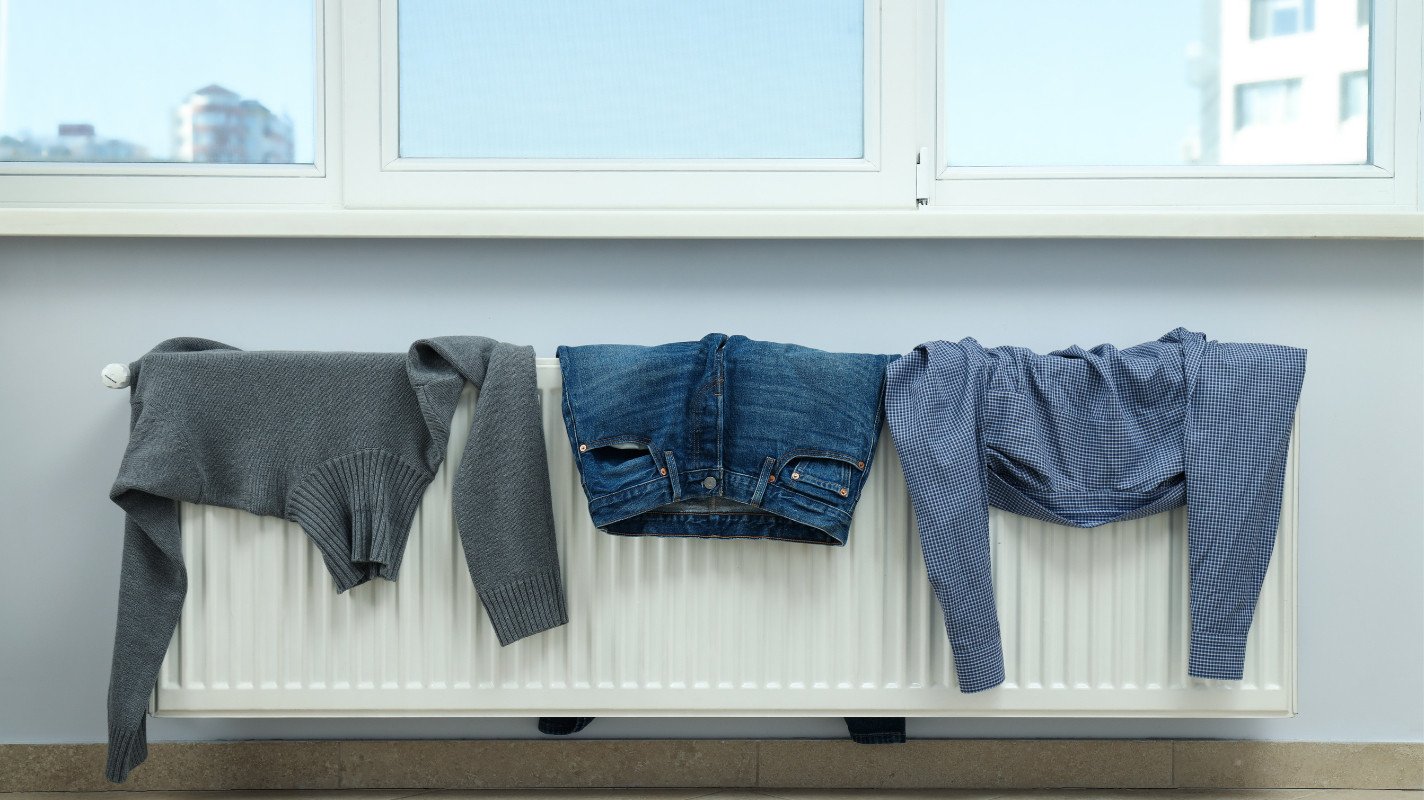
As temperatures drop and outdoor drying becomes impractical, many households turn to radiators as a quick solution for drying laundry indoors. While it may seem harmless, experts warn that placing wet clothes directly on radiators can pose safety risks and negatively affect indoor air quality—especially in poorly ventilated homes.
Although modern radiators are designed with safety features, the risk of overheating increases when damp clothes are left on them for long periods. This is particularly concerning in older homes or with aging heating systems, where prolonged heat buildup can place extra strain on the radiator and surrounding components. In rare cases, this may even increase the risk of overheating or system malfunction.
Beyond safety concerns, drying laundry on radiators can also contribute to poor indoor air quality. As wet clothing heats up, it releases moisture into the air, along with tiny residues of detergent and fabric conditioner. In enclosed spaces with limited ventilation, this excess humidity can make rooms feel stuffy, uncomfortable, and heavy.
Over time, consistently high indoor moisture levels can encourage condensation on walls and windows, potentially leading to damp patches or mould growth. This can be particularly problematic for people with allergies, asthma, or other respiratory conditions, as poor air quality can aggravate symptoms.
So, What’s the Better Option?
Fortunately, experts say there are safer and more effective ways to dry clothes indoors without putting unnecessary strain on your heating system or compromising air quality.
According to home improvement specialists at Plumbworld, one of the safest alternatives is using a freestanding clothes airer positioned near a radiator—but not directly on it. This allows warm air to circulate naturally around the clothes, helping them dry more evenly while avoiding direct heat contact.
Short bursts of ventilation can also make a big difference. Opening windows briefly—even during colder months—allows excess moisture to escape and fresh air to circulate. This simple habit can significantly reduce humidity buildup without drastically lowering room temperature.
Another highly recommended solution is using a dehumidifier. These devices remove excess moisture from the air, speeding up drying times while improving overall air quality. Dehumidifiers are particularly effective in flats or homes where opening windows regularly is not practical.
Practical Heating Tips That Help
Experts also recommend using over-radiator drying racks rather than placing clothes directly on the radiator surface. These racks are designed to allow heat to flow freely around garments, reducing the risk of overheating while still making use of residual warmth.
Maintaining your heating system is equally important. Checking boiler pressure occasionally ensures your system is running efficiently, especially during colder months when it’s under increased demand.
Keeping radiators clear of obstructions improves heat distribution throughout the room. If you notice that the top of a radiator feels cold while the bottom is warm, it may need bleeding. Removing trapped air can restore efficiency and help heat circulate more effectively—benefiting both your comfort and your energy bills.
A Reminder About Laundry Hygiene
Plumbworld has previously issued advice on laundry hygiene that many people overlook—particularly when it comes to bath mats. According to its experts, washing a bath mat once or twice a year is far from sufficient. Because bath mats absorb moisture regularly, they should be washed weekly on a hot cycle to prevent bacteria and mould buildup.
How Often Should You Wash Clothes?
To maintain hygiene and prolong garment life, experts recommend the following washing frequency guidelines:
Underwear: After every wear
Socks: After every wear
Bras: Every 2–3 wears
Jeans: Every 6–10 wears
T-shirts: Every 1–2 wears
Sweatshirts: Every 5–6 wears
Workout gear: After every wear
Pyjamas: Every 3–4 wears
White clothing: Every 1–2 wears
Skirts: Every 5–7 wears
Dresses: Every 1–3 wears
Coats: 1–2 washes per season
Swimwear: After every wear
Hats and gloves: 2–3 washes per season
The Bottom Line
While drying clothes on radiators may seem convenient, it can increase safety risks, reduce heating efficiency, and harm indoor air quality. With safer alternatives such as airers, dehumidifiers, and improved ventilation, it’s possible to dry laundry effectively while protecting both your home and your health.
A few small adjustments can make a significant difference—keeping your living space comfortable, efficient, and safe throughout the colder months.

Emily Johnson is a critically acclaimed essayist and novelist known for her thought-provoking works centered on feminism, women’s rights, and modern relationships. Born and raised in Portland, Oregon, Emily grew up with a deep love of books, often spending her afternoons at her local library. She went on to study literature and gender studies at UCLA, where she became deeply involved in activism and began publishing essays in campus journals. Her debut essay collection, Voices Unbound, struck a chord with readers nationwide for its fearless exploration of gender dynamics, identity, and the challenges faced by women in contemporary society. Emily later transitioned into fiction, writing novels that balance compelling storytelling with social commentary. Her protagonists are often strong, multidimensional women navigating love, ambition, and the struggles of everyday life, making her a favorite among readers who crave authentic, relatable narratives. Critics praise her ability to merge personal intimacy with universal themes. Off the page, Emily is an advocate for women in publishing, leading workshops that encourage young female writers to embrace their voices. She lives in Seattle with her partner and two rescue cats, where she continues to write, teach, and inspire a new generation of storytellers.