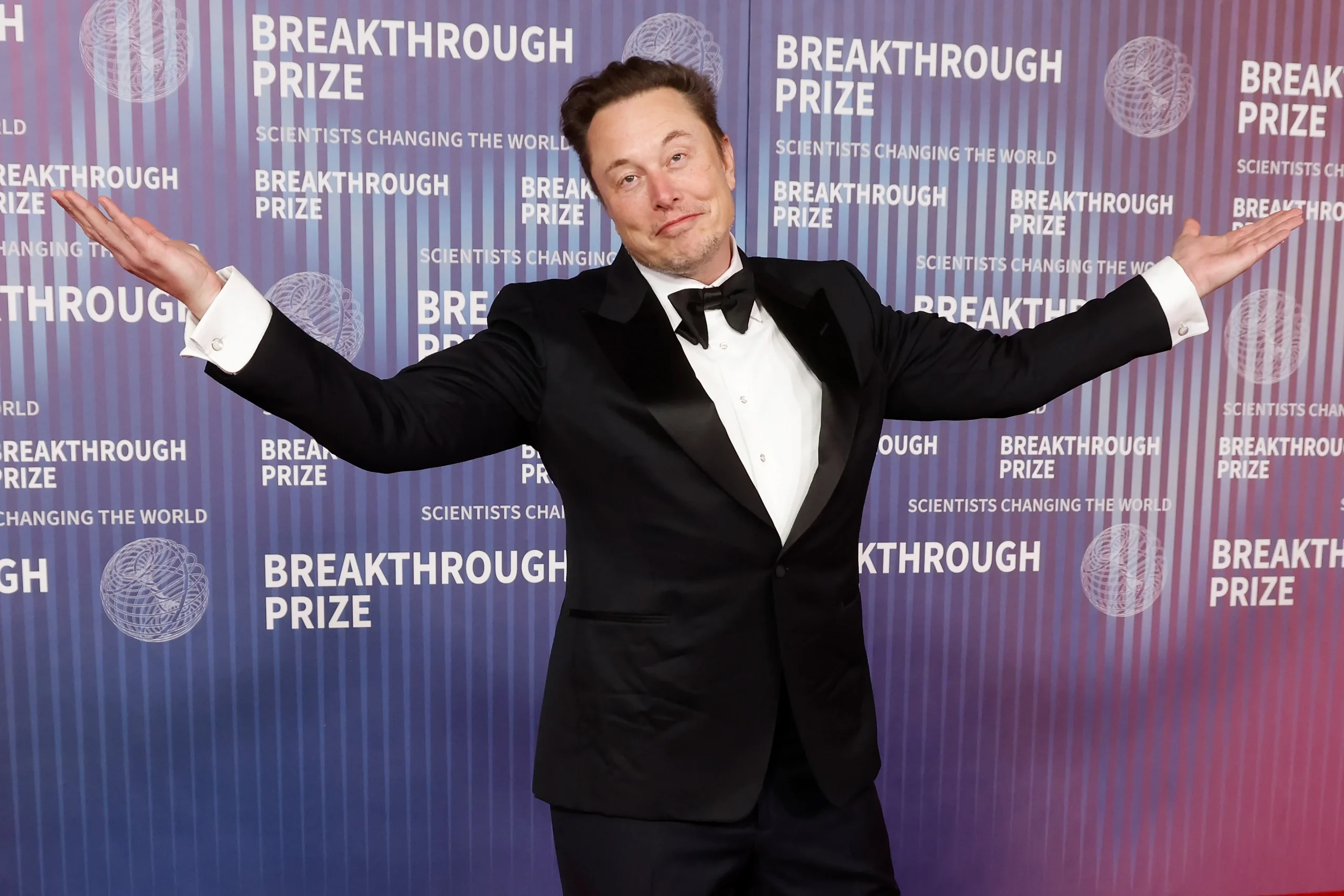
Elon Musk scored a decisive legal victory on Friday when the Delaware Supreme Court restored his controversial 2018 Tesla compensation package, a deal now valued at approximately $139 billion, nearly two years after a lower court invalidated it as “unfathomable.”
The ruling reverses a landmark 2024 decision that had stripped Musk of what was once the largest executive pay package in corporate history, igniting backlash from the billionaire entrepreneur and prompting a broader corporate exodus from Delaware’s courts. The decision not only reinstates Musk’s compensation but also reinforces shareholder authority and reshapes the national debate over executive pay, corporate governance, and judicial oversight.
In a 49-page opinion, the state’s highest court concluded that the lower court’s remedy—total rescission of the compensation plan—was improper and inequitable. The justices ruled that nullifying the agreement left Musk “uncompensated for his time and efforts over a period of six years,” despite Tesla having met all performance benchmarks tied to the deal.
The ruling restores Musk’s right to exercise stock options awarded under the 2018 plan, which was originally valued at $56 billion but has ballooned with Tesla’s stock price. Based on Friday’s market close, the package is now worth roughly $139 billion.
Musk reacted swiftly, posting on X that he had been “vindicated.”
A Landmark Compensation Plan
Tesla’s 2018 pay package was unprecedented in scale and structure. Rather than a traditional salary or cash bonus, the agreement granted Musk options to purchase approximately 304 million shares of Tesla stock at a deeply discounted price—but only if the company achieved aggressive operational and market-capitalization milestones.
Those benchmarks included targets for revenue growth, profitability, and market value that many analysts at the time considered extraordinarily ambitious. Tesla ultimately met every one of them, transforming itself into one of the world’s most valuable companies and cementing Musk’s status as the world’s richest person.
The options represent about 9 percent of Tesla’s outstanding shares, and if fully exercised, Musk’s ownership stake would rise from approximately 12.4 percent to 18.1 percent of an expanded share base.
“For Elon, this is a win because he gets control faster,” said Gene Munster, managing partner at Deepwater Asset Management and a longtime Tesla investor. “Control has always mattered more to him than the cash.”
Tesla shares rose modestly in after-hours trading following the ruling, reflecting investor relief that a prolonged legal overhang had been lifted.
The Legal Battle That Shook Delaware
The case originated with a lawsuit filed by Richard Tornetta, a Tesla shareholder who owned just nine shares at the time. Tornetta argued that Tesla’s board was conflicted and failed to provide shareholders with material information before asking them to approve Musk’s compensation.
In 2024, Delaware Chancery Court Judge Kathaleen McCormick agreed, concluding after a five-day trial that Tesla’s directors were insufficiently independent and that Musk exerted undue influence over the process. She ordered the pay package rescinded in its entirety, calling the deal excessive and procedurally flawed.
That ruling sent shockwaves through corporate America.
Musk publicly accused Delaware judges of being hostile to founders and innovators, warning that the state—long considered the gold standard for U.S. corporate law—was becoming unfriendly to business. He urged companies to reincorporate elsewhere, a call that soon bore fruit.
Dropbox, Roblox, Trade Desk, Coinbase, and other major firms moved their legal domiciles to Nevada or Texas. Tesla itself reincorporated in Texas, marking one of the most high-profile corporate departures in Delaware’s history.
Despite the backlash, Delaware remains the legal home for the majority of U.S. public companies.
Supreme Court Reversal
In overturning the lower court, the Delaware Supreme Court took a notably restrained tone, emphasizing proportionality and fairness rather than endorsing the size of Musk’s compensation outright.
The justices acknowledged concerns about corporate governance but concluded that rescinding the deal entirely went too far, especially given that shareholders had approved the plan and Tesla had delivered extraordinary growth under Musk’s leadership.
“The remedy of total rescission,” the court wrote, “was inequitable under the circumstances.”
Legal experts say the ruling signals a recalibration of Delaware’s approach, reinforcing deference to shareholder votes and cautioning against sweeping judicial remedies.
“I think there’s some belief that courts shouldn’t get between shareholders and the decisions they make,” said Brian Dunn, director of the Institute for Compensation Studies at Cornell University’s School of Industrial and Labor Relations.
Shareholders, Control, and a New Pay Package
The court’s decision also removes a potentially massive financial risk for Tesla. Had Musk’s appeal failed, the company warned it would have faced a $26 billion hit to earnings over two years to account for replacement stock compensation promised to Musk at today’s much higher share prices.
In November, Tesla shareholders overwhelmingly approved a new compensation plan for Musk, one that could theoretically be worth up to $878 billion if the company meets extremely aggressive future targets. While that figure has drawn skepticism, the vote demonstrated continued shareholder support for Musk’s leadership.
Tesla has also taken steps to insulate future compensation plans from legal challenges. Now incorporated in Texas, the company can require that shareholders own at least 3 percent of outstanding stock before bringing certain lawsuits. At current valuations, that threshold would amount to roughly $30 billion—effectively limiting such legal actions to Musk himself.
Governance Critics Push Back
Lawyers who challenged the 2018 pay package expressed disappointment with the ruling, saying they were evaluating their next steps.
“We are proud to have participated in the historic verdict below, calling to account the Tesla board and its largest stockholder for their breaches of fiduciary duty,” they said in a statement.
Corporate governance advocates warn that the ruling could embolden boards to approve increasingly outsized pay packages with minimal oversight, particularly when dealing with charismatic founder-CEOs.
“This case raises fundamental questions about whether any compensation can be too large,” said one governance expert. “The court didn’t say the deal was ideal—it said undoing it entirely wasn’t fair.”
Musk’s Broader Influence
The ruling further solidifies Musk’s grip on Tesla at a time when his attention is split across multiple ventures, including SpaceX, artificial intelligence startup xAI, and his role advising President Donald Trump. Musk has previously warned Tesla’s board that he could shift focus away from the automaker if he lacked sufficient voting power.
Tesla directors have echoed that concern, arguing that retaining Musk’s leadership is critical to the company’s long-term strategy, particularly as it pushes into artificial intelligence, autonomous driving, and robotics.
Critics counter that Musk’s expanding political and business commitments raise questions about governance, accountability, and succession planning at Tesla.
Implications Beyond Tesla
The decision is expected to have ripple effects far beyond Musk and Tesla. It sends a signal to corporate boards, executives, and investors about the limits of judicial intervention in shareholder-approved compensation agreements.
It may also slow the recent trend of companies fleeing Delaware, reassuring businesses that the state’s courts remain pragmatic and business-savvy despite heightened scrutiny of executive pay.
At the same time, the ruling underscores the growing power of mega-founders whose influence can reshape not only companies but legal and regulatory norms.
Conclusion
Elon Musk’s courtroom victory marks one of the most consequential corporate governance rulings in recent history. By restoring a pay package now worth roughly $139 billion, the Delaware Supreme Court has reaffirmed shareholder primacy, curbed aggressive judicial remedies, and reinforced Musk’s dominance at Tesla.
While debate over the fairness and optics of such compensation is unlikely to fade, the legal battle that threatened to redefine executive pay in America has, for now, ended decisively in Musk’s favor.
For Tesla, the ruling removes a massive uncertainty. For Musk, it delivers control, validation, and one of the most lucrative paydays ever seen. And for corporate America, it redraws the boundaries between courts, boards, and shareholders in an era defined by outsized personalities and unprecedented wealth.

Emily Johnson is a critically acclaimed essayist and novelist known for her thought-provoking works centered on feminism, women’s rights, and modern relationships. Born and raised in Portland, Oregon, Emily grew up with a deep love of books, often spending her afternoons at her local library. She went on to study literature and gender studies at UCLA, where she became deeply involved in activism and began publishing essays in campus journals. Her debut essay collection, Voices Unbound, struck a chord with readers nationwide for its fearless exploration of gender dynamics, identity, and the challenges faced by women in contemporary society. Emily later transitioned into fiction, writing novels that balance compelling storytelling with social commentary. Her protagonists are often strong, multidimensional women navigating love, ambition, and the struggles of everyday life, making her a favorite among readers who crave authentic, relatable narratives. Critics praise her ability to merge personal intimacy with universal themes. Off the page, Emily is an advocate for women in publishing, leading workshops that encourage young female writers to embrace their voices. She lives in Seattle with her partner and two rescue cats, where she continues to write, teach, and inspire a new generation of storytellers.