


A newly unveiled series of plaques inside the White House is igniting controversy after sharply criticizing several of President Donald Trump’s predecessors, including multiple Democratic presidents and even a former Republican commander in chief.
Installed beneath photographs on what the administration calls the “Presidential Walk of Fame,” the plaques reflect President Trump’s unapologetically combative approach to politics and history. The display, located along corridors connecting the Oval Office to the South Lawn, marks a significant departure from the longstanding tradition of treating the White House as a politically neutral symbol of national unity.
Instead, the new installation presents a blunt—and deeply partisan—interpretation of recent presidential history, one that critics argue weaponizes the nation’s most iconic residence to settle political scores.
A Stark Break From Tradition
For generations, presidents of both parties have taken pains to maintain the White House as a shared national institution, even amid intense political disagreements. Portraits of former presidents have traditionally been accompanied by minimal descriptions or neutral acknowledgments of service.
The newly installed plaques break decisively with that convention.
Rather than offering restrained historical summaries, the inscriptions deliver sharp judgments—some inflammatory, others disputed—about the legacies of Trump’s immediate predecessors. The language, tone, and framing closely mirror Trump’s own rhetoric on the campaign trail and in office.
“This is not about historical reflection,” said one former White House official familiar with past decor practices. “It’s about narrative control.”
Biden Singularly Targeted
The most striking—and controversial—plaque is the one associated with former President Joe Biden.
Unlike every other president represented in the display, Biden does not have a portrait. Instead, his place on the wall is marked by a photograph of an autopen, the mechanical device used to reproduce signatures.
The plaque beneath it describes Biden as “by far, the worst President in American history,” falsely claims he won “the most corrupt election ever,” and alleges improper reliance on the autopen while in office.
Biden, whom Trump succeeded earlier this year, is the only former president denied a photographic likeness in the exhibit.
Historians and legal experts have long noted that autopens have been used by presidents of both parties for decades and are legally valid. The claims embedded in the plaque echo allegations Trump has repeatedly made without evidence.
“This is unprecedented,” said a presidential historian who requested anonymity to avoid political backlash. “No modern president has ever been treated this way inside the White House itself.”
Obama Labeled “Divisive”
Another plaque targets former President Barack Obama, referring to him by his full name, “Barack Hussein Obama,” and describing him as “one of the most divisive political figures in American history.”
Obama, the nation’s first Black president, served two terms from 2009 to 2017 and left office with relatively high approval ratings. Many scholars instead rank Trump himself as the most polarizing president in U.S. history, based on public opinion data, electoral divisions, and post-presidency unrest.
Critics argue that the phrasing of Obama’s plaque reflects long-standing political attacks that question his legitimacy and amplify racialized undertones.
Supporters of the president counter that the plaque merely reflects Trump’s personal assessment of Obama’s impact on American politics.
Clinton Reduced to 2016 Loss
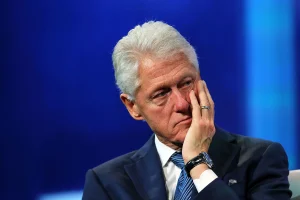
Former President Bill Clinton is also featured—but the plaque beneath his image does not focus on his eight years in office, economic expansion, or foreign policy record.
Instead, it reads: “In 2016, President Clinton’s wife, Hillary Clinton, lost the Presidency to President Donald J. Trump!”
The inscription reframes Clinton’s legacy almost entirely through the lens of Trump’s electoral victory nearly two decades after Clinton left office, an approach critics describe as self-referential and dismissive.
“It turns history into a footnote for Trump’s own success narrative,” said a political science professor specializing in presidential institutions.
Bush Not Spared
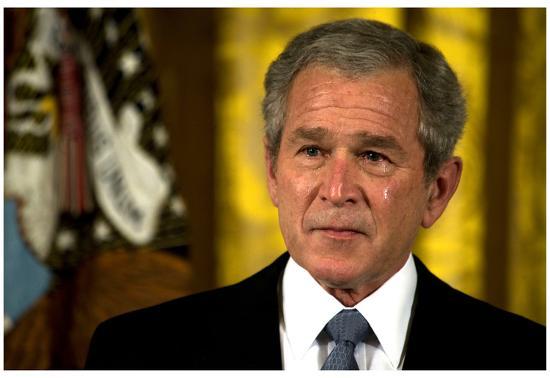
Even former President George W. Bush, a fellow Republican, is not exempt from criticism.
His plaque states that Bush started wars in Afghanistan and Iraq, “both of which should not have happened.”
While Trump has long criticized U.S. involvement in those conflicts, the decision to highlight that judgment inside the White House marks a public rebuke of a former GOP president who has kept his distance from Trump and declined to support him politically.
The plaque underscores Trump’s willingness to challenge not only Democratic predecessors but also leaders within his own party who do not align with his worldview.
White House Defends the Display
White House Press Secretary Karoline Leavitt defended the plaques, describing them as an “eloquent” summary of each president’s legacy.
“As a student of history, many were written directly by the President himself,” Leavitt said in a statement.
Administration officials say the Walk of Fame is intended to present what they call an honest appraisal of presidential leadership rather than what they characterize as sanitized historical narratives.
Supporters argue that Trump was elected, in part, because voters wanted a president willing to challenge elite consensus and rewrite what they view as a distorted historical record.
Historians Push Back
Presidential historians and archivists have reacted with alarm.
While scholars acknowledge that history is constantly reassessed, many argue that placing overtly partisan judgments inside the White House undermines the credibility of the institution itself.
“The White House is not a campaign rally and not a personal museum,” said one historian. “It belongs to the American people, including those who did not vote for the sitting president.”
Several experts warned that future administrations could feel pressured to retaliate, leading to a cycle of revisionism that erodes the White House’s role as a symbol of continuity.
Part of a Broader Aesthetic Shift
The plaques are just one element of a broader transformation of the White House under Trump’s second term.
The administration has overseen a noticeable expansion of gold-colored accents, gilded fixtures, and decorative elements reminiscent of Trump Tower in New York and Trump’s Mar-a-Lago estate in Florida.
Critics argue the changes reflect a personalization of the presidency, while supporters see them as an expression of Trump’s taste and leadership style.
Either way, the alterations mark a visible departure from the understated elegance favored by many past administrations.
A Reflection of Trump’s Governing Style
The Presidential Walk of Fame—and its sharply worded plaques—encapsulate Trump’s broader approach to governance: confrontational, unapologetic, and dismissive of institutional norms he views as outdated or hypocritical.
Trump has long rejected the idea that presidents should refrain from criticizing their predecessors once in office. Instead, he has used official settings to reinforce campaign-style messaging, framing his presidency as a corrective to what he portrays as decades of mismanagement.
The plaques turn that philosophy into permanent fixtures within the White House itself.
Political Fallout Likely
Democrats swiftly condemned the display, calling it disrespectful and divisive. Some lawmakers have suggested that future administrations should remove the plaques entirely, while others have urged Congress to consider guidelines governing permanent installations inside the White House.
Republicans are more divided. While Trump’s closest allies have praised the move, some establishment conservatives privately expressed concern that the plaques could further deepen political polarization.
For now, the White House shows no sign of backing down.
A New Chapter for the White House
Whether the Presidential Walk of Fame endures beyond Trump’s term remains an open question. What is clear is that the plaques represent a reimagining of how presidential history is presented at the highest level of American government.
To supporters, the display is overdue candor. To critics, it is a troubling politicization of a national symbol.
Either way, the message is unmistakable: under Donald Trump, even the walls of the White House have become part of the political battlefield.

Emily Johnson is a critically acclaimed essayist and novelist known for her thought-provoking works centered on feminism, women’s rights, and modern relationships. Born and raised in Portland, Oregon, Emily grew up with a deep love of books, often spending her afternoons at her local library. She went on to study literature and gender studies at UCLA, where she became deeply involved in activism and began publishing essays in campus journals. Her debut essay collection, Voices Unbound, struck a chord with readers nationwide for its fearless exploration of gender dynamics, identity, and the challenges faced by women in contemporary society. Emily later transitioned into fiction, writing novels that balance compelling storytelling with social commentary. Her protagonists are often strong, multidimensional women navigating love, ambition, and the struggles of everyday life, making her a favorite among readers who crave authentic, relatable narratives. Critics praise her ability to merge personal intimacy with universal themes. Off the page, Emily is an advocate for women in publishing, leading workshops that encourage young female writers to embrace their voices. She lives in Seattle with her partner and two rescue cats, where she continues to write, teach, and inspire a new generation of storytellers.