


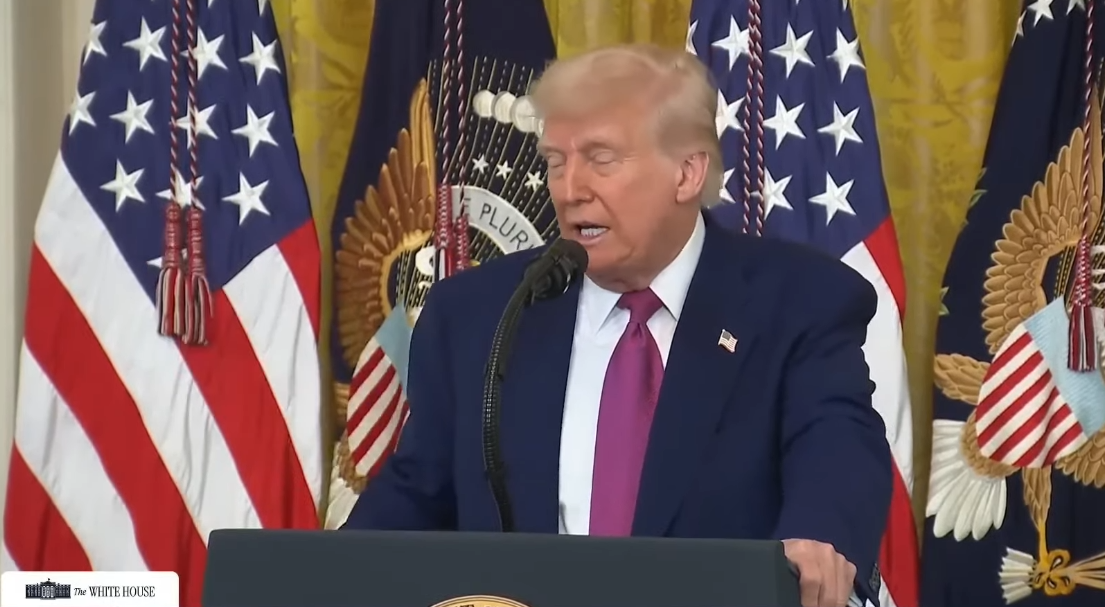
President Donald Trump on Thursday signed a pair of executive orders delivering welcome end-of-year benefits to millions of federal employees, including two additional paid days off surrounding Christmas and a finalized pay raise set to take effect in early 2026.
The actions, announced by the White House on Dec. 18, extend holiday leave for most federal workers and confirm a one percent across-the-board salary increase for the coming year. The moves come as part of a broader slate of late-year executive actions by Trump that emphasize workforce morale, compensation stability, and recognition of public service.
Three Paid Holidays Around Christmas
Under the first executive order, Trump officially designated Christmas Eve (Dec. 24, 2025) and Friday, Dec. 26, 2025, as federal holidays. Combined with Christmas Day on Dec. 25, which is already a statutory federal holiday, the order effectively grants most federal employees three consecutive paid days off next week.
Because the holidays fall adjacent to a weekend, many workers will receive five consecutive days away from work, a move welcomed across federal agencies as workloads slow during the holiday season.
“All executive departments and agencies of the Federal Government shall be closed and their employees excused from duty on Wednesday, December 24, 2025, and Friday, December 26, 2025, the day before and the day following Christmas Day, respectively,” the executive order states.
The directive applies broadly across the federal workforce, with limited exceptions for employees deemed essential for reasons of national security, defense, or urgent public need.
OPM Issues Guidance on Holiday Leave
Following the signing of the order, the Office of Personnel Management (OPM) released formal guidance clarifying how the additional holidays would be treated for pay and leave purposes.
“To celebrate Christmas, President Trump has issued an Executive Order excusing Federal employees from duty on Wednesday, December 24, 2025 and Friday, December 26, 2025,” OPM wrote. “For pay and leave purposes, this period will be treated as falling within the scope of statutes and Executive orders governing holidays for Federal employees.”
The agency also emphasized that department heads retain discretion to require certain employees to work if operational needs demand it, particularly in areas related to public safety, defense, border security, and emergency response.
A Familiar Trump-Era Holiday Tradition
The move marks a return to a practice Trump implemented multiple times during his first term in office. He granted additional Christmas leave to federal employees in 2018, 2019, and 2020, citing morale, family time, and appreciation for public service.
His predecessor, former President Joe Biden, issued a more limited version of the policy in 2024 by granting federal workers Christmas Eve off, but did not include the day after Christmas.
Trump’s decision to provide both days again signals a deliberate revival of his earlier approach to federal workforce holidays.
Pay Raises Finalized for 2026
In a second executive order signed the same day, Trump formally approved a 1 percent federal pay raise for most civilian government employees, finalizing salary adjustments for fiscal year 2026.
The White House published updated federal pay tables shortly after the signing. For most workers, the increase will take effect during the first full pay period after January 1, 2026, consistent with standard federal payroll procedures.
Every sitting president is required by law to finalize federal pay raises before Dec. 31 each year, either by accepting or modifying recommendations set by statute and federal compensation formulas.
Law Enforcement Pay Under Review
While the general pay raise was set at one percent, Trump’s order also directs OPM to conduct an assessment on whether certain federal civilian law enforcement personnel should receive a larger raise of up to 3.8 percent.
The review will examine recruitment challenges, retention concerns, cost-of-living pressures, and operational demands faced by law enforcement officers across federal agencies.
The move reflects ongoing concerns within federal law enforcement ranks about staffing shortages and rising job stress, particularly in agencies involved in border enforcement, drug interdiction, and national security operations.
Part of a Broader End-of-Year Push
Trump’s executive actions on federal holidays and pay come just one day after he announced the “Warrior Dividend,” a one-time $1,776 bonus for nearly 1.5 million active-duty U.S. service members.
The bonus, which commemorates the 250th anniversary of the U.S. military, was framed by the administration as both a gesture of gratitude and a symbolic recognition of military service dating back to the nation’s founding.
Funding for the Warrior Dividend was authorized earlier this year as part of Trump’s sweeping legislative package, widely known as the One Big Beautiful Bill.
Taken together, the announcements signal a coordinated end-of-year effort by the White House to highlight compensation, recognition, and morale initiatives across the federal government and military.
Supporters Applaud Workforce Recognition
Supporters of the president say the holiday leave and pay raise decisions demonstrate a commitment to valuing public servants without expanding bureaucracy or permanently increasing spending obligations beyond existing frameworks.
Granting additional paid holidays does not require congressional approval and does not alter baseline salary structures, making it a relatively low-cost but high-impact morale measure.
Advocates also note that the pay raise, while modest, provides predictability and stability amid broader economic pressures, particularly for lower- and mid-grade federal employees.
Critics Call Raises Insufficient
Some critics, however, argue that a one percent pay increase does not keep pace with inflation or rising living costs in major metropolitan areas where many federal employees are based.
Federal worker unions have long pushed for larger annual increases, especially in high-cost regions such as Washington, D.C., Northern Virginia, and parts of California.
Still, administration officials point out that the president retains discretion to authorize targeted adjustments—such as the ongoing law enforcement review—where workforce needs are most acute.
Balancing Fiscal Restraint and Morale
White House officials have framed the executive orders as part of Trump’s broader effort to balance fiscal discipline with recognition of service.
Rather than proposing large, permanent salary expansions, the administration has favored targeted bonuses, modest raises, and symbolic gestures such as holiday leave and commemorative payments.
Supporters argue this approach rewards workers while avoiding long-term budgetary commitments that could compound future deficits.
Timing and Political Context
The executive orders arrive as Trump closes out his first year back in office, a period marked by aggressive policy moves on immigration, national security, and government restructuring.
While economic affordability remains a central political issue, the administration has increasingly emphasized tangible benefits delivered through executive authority, particularly for workers already within the federal system.
By pairing federal employee benefits with military compensation initiatives, the White House has sought to reinforce a message of loyalty to government service and national defense.
What Happens Next
Federal agencies are expected to implement the holiday closures immediately, with OPM continuing to issue technical guidance as needed.
Updated pay rates will be reflected in payroll systems after the new year, while the law enforcement pay review will proceed into early 2026.
For millions of federal workers, the immediate impact is clear: an extended Christmas break and a guaranteed pay bump in the coming year.
As Trump continues to rely heavily on executive action, the holiday and pay orders stand out as among the most broadly felt—and politically popular—moves of his latest slate of decisions.

Emily Johnson is a critically acclaimed essayist and novelist known for her thought-provoking works centered on feminism, women’s rights, and modern relationships. Born and raised in Portland, Oregon, Emily grew up with a deep love of books, often spending her afternoons at her local library. She went on to study literature and gender studies at UCLA, where she became deeply involved in activism and began publishing essays in campus journals. Her debut essay collection, Voices Unbound, struck a chord with readers nationwide for its fearless exploration of gender dynamics, identity, and the challenges faced by women in contemporary society. Emily later transitioned into fiction, writing novels that balance compelling storytelling with social commentary. Her protagonists are often strong, multidimensional women navigating love, ambition, and the struggles of everyday life, making her a favorite among readers who crave authentic, relatable narratives. Critics praise her ability to merge personal intimacy with universal themes. Off the page, Emily is an advocate for women in publishing, leading workshops that encourage young female writers to embrace their voices. She lives in Seattle with her partner and two rescue cats, where she continues to write, teach, and inspire a new generation of storytellers.