


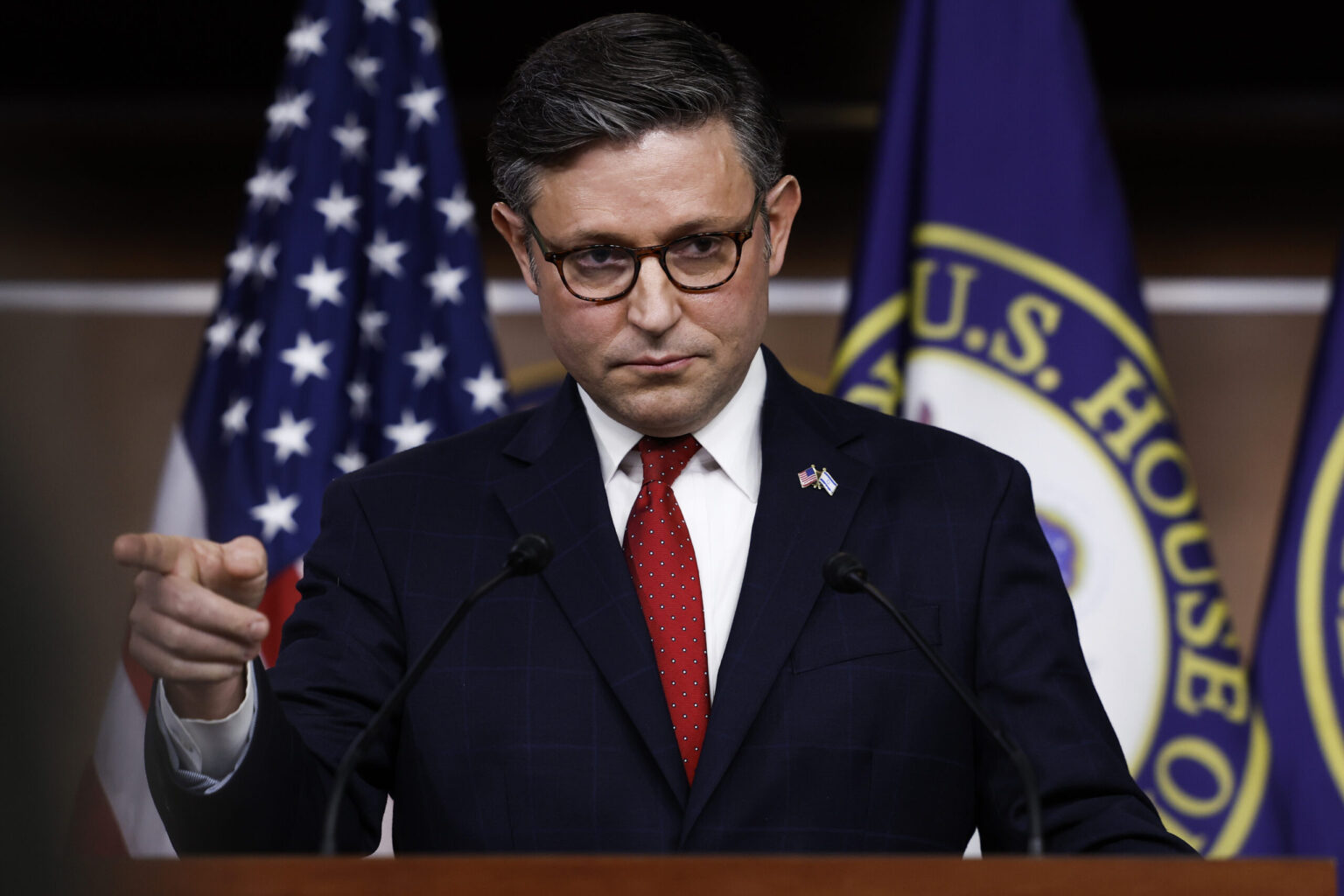
House Speaker Mike Johnson said Tuesday that congressional Republicans are preparing for an intense legislative push beginning January 1, framing the opening weeks of the new year as a decisive moment for advancing President Donald Trump’s domestic agenda and addressing cost-of-living pressures facing American families.
Speaking to reporters, Johnson emphasized that House Republicans intend to move quickly once Congress reconvenes, with affordability, health care costs, and economic growth at the center of their focus. His remarks come as the White House and congressional leadership coordinate strategy ahead of what is expected to be a politically consequential year.
Johnson described the upcoming period as a “surge,” signaling both urgency and scale in the legislative effort that party leaders say will begin immediately after the calendar turns.
A Focus on Cost of Living and Affordability
According to Johnson, House Republicans plan to prioritize legislation aimed at lowering everyday expenses, including health care costs and broader cost-of-living pressures that have remained a central concern for voters.
“You’re going to see an aggressive affordability agenda,” Johnson said, noting that Republicans believe recent economic policies have begun to show results but require reinforcement through legislation.
He argued that congressional action is necessary to lock in economic gains and prevent future reversals, particularly as the administration looks ahead to the 2026 midterm elections.
Johnson said Republicans will continue working on health care-related measures designed to reduce costs for patients and families, though he did not outline specific bills during his remarks. Instead, he framed the agenda as part of a broader effort to stabilize prices and boost household financial security.
Coordination With the White House
The speaker stressed that the legislative strategy is being developed in close coordination with President Trump, describing frequent communication between the two.
“So much more yet to do,” Johnson said, adding that he and the president discuss legislative priorities almost daily. “He’s excited about it, and I am.”
The comments underscore the unusually close alignment between House leadership and the White House, as Republicans seek to present a unified front on economic messaging and policy execution.
Johnson also referenced a major legislative package passed earlier this year and signed into law on July 4, saying that many of its effects are only now beginning to be felt as implementation moves forward.
Vice President Takes Economic Message on the Road
As congressional leaders prepare for January, the administration has also stepped up its public messaging campaign. Vice President JD Vance traveled to Pennsylvania this week, delivering remarks focused on affordability and economic progress.
Speaking near Allentown, Vance echoed themes President Trump has emphasized in recent appearances, particularly the administration’s claim that it is reversing what it describes as an affordability crisis inherited from previous leadership.
A spokesperson for Vance said the vice president will continue traveling to highlight economic initiatives and reinforce the administration’s message that lowering costs remains its top priority.
“Making America affordable again is the number one priority of the Trump administration,” the spokesperson said, adding that recent tax policies and investment commitments are beginning to benefit working families.
A Broader Travel and Messaging Strategy
Sources familiar with internal discussions say the White House plans to increase President Trump’s domestic travel in 2026, using public events to reinforce economic messaging as midterm elections draw closer.
At the same time, Vice President Vance is expected to play an increasingly prominent role in communicating the administration’s agenda. Officials describe him as one of the administration’s most effective messengers, particularly on economic and cost-of-living issues.
Emphasizing affordability is expected to be central to both Trump’s and Vance’s public appearances in the coming months, according to those sources.
The Legislative Scope Comes Into Focus
Only after outlining the broad goals of the January push did Johnson provide a clearer sense of its scope.
He said House Republicans intend to move quickly to codify a substantial number of President Trump’s executive orders into permanent law—an effort designed to ensure the policies endure beyond the current administration.
“He’s up to about 200 of those,” Johnson said, referring to Trump’s executive orders. “Probably about 150 of them are codifiable by Congress, and we’re working steadily through that list.”
The statement revealed the scale of the effort underway on Capitol Hill. Codifying executive orders would require passing legislation through both chambers of Congress, transforming temporary executive actions into statutory law.
Johnson said Republicans believe this approach will provide stability and predictability, particularly on economic and regulatory matters.
Locking In Policy Gains
Supporters of the strategy argue that codification is essential to preventing future administrations from undoing key policies with the stroke of a pen. By embedding executive actions into law, they say, Congress can provide long-term certainty for businesses, investors, and families.
Johnson framed the effort as part of a broader promise to “deliver for the American people,” particularly as economic policies enacted earlier in the year move from passage to real-world implementation.
He suggested that voters will increasingly feel the impact of those policies as the year progresses, strengthening the administration’s case that its approach is working.
Trump’s Economic Branding
President Trump has leaned heavily into economic messaging in recent weeks, publicly referring to himself as the “affordability president.” He has pointed to agreements with pharmaceutical companies aimed at reducing prescription drug prices as evidence of progress.
The president has also urged Republicans to sharpen their messaging, arguing that the party needs to do a better job explaining how prices are coming down and how policies are benefiting everyday Americans.
Trump’s focus on affordability reflects internal polling that, according to administration officials, shows economic concerns remain top-of-mind for voters even as inflation has moderated.
https://twitter.com/EricLDaugh/status/2000957946352820238
Trade Policy and Grocery Prices
Earlier this month, Trump signed an executive order rolling back tariffs on a broad range of grocery staples, including beef, coffee, tomatoes, and bananas. The move was intended to lower food prices and reinforce the administration’s affordability narrative.
The order exempts certain imported agricultural products from reciprocal tariffs imposed under earlier trade actions. Administration officials said the change was designed to provide immediate relief to consumers while maintaining a tougher posture in other areas of trade policy.
House Republicans have pointed to the order as an example of how executive action and legislative follow-through can work together to address cost-of-living concerns.
Political Stakes Ahead
With midterm elections on the horizon, both the White House and congressional Republicans see the coming months as critical. Locking in policies, reinforcing economic messaging, and demonstrating legislative productivity are all viewed as essential components of their strategy.
Johnson’s remarks suggest that House leadership wants to set the tone early in the new year, using January as a launching point for what he described as an unusually aggressive agenda.
Whether the effort succeeds will depend on legislative negotiations, public reception, and economic conditions as they continue to evolve.
Looking to January
As January approaches, Republicans are signaling that the opening days of the new year will not be ceremonial or slow-moving. Instead, party leaders are promising rapid action, close coordination with the White House, and a sustained focus on affordability.
For Johnson, the message was clear: the start of the new year marks the beginning of what he sees as a defining phase of the current Congress—one aimed at translating executive action into lasting law and persuading voters that economic progress is underway.

Emily Johnson is a critically acclaimed essayist and novelist known for her thought-provoking works centered on feminism, women’s rights, and modern relationships. Born and raised in Portland, Oregon, Emily grew up with a deep love of books, often spending her afternoons at her local library. She went on to study literature and gender studies at UCLA, where she became deeply involved in activism and began publishing essays in campus journals. Her debut essay collection, Voices Unbound, struck a chord with readers nationwide for its fearless exploration of gender dynamics, identity, and the challenges faced by women in contemporary society. Emily later transitioned into fiction, writing novels that balance compelling storytelling with social commentary. Her protagonists are often strong, multidimensional women navigating love, ambition, and the struggles of everyday life, making her a favorite among readers who crave authentic, relatable narratives. Critics praise her ability to merge personal intimacy with universal themes. Off the page, Emily is an advocate for women in publishing, leading workshops that encourage young female writers to embrace their voices. She lives in Seattle with her partner and two rescue cats, where she continues to write, teach, and inspire a new generation of storytellers.