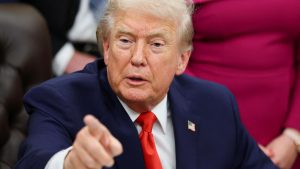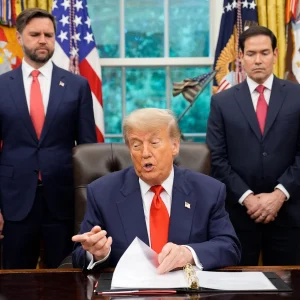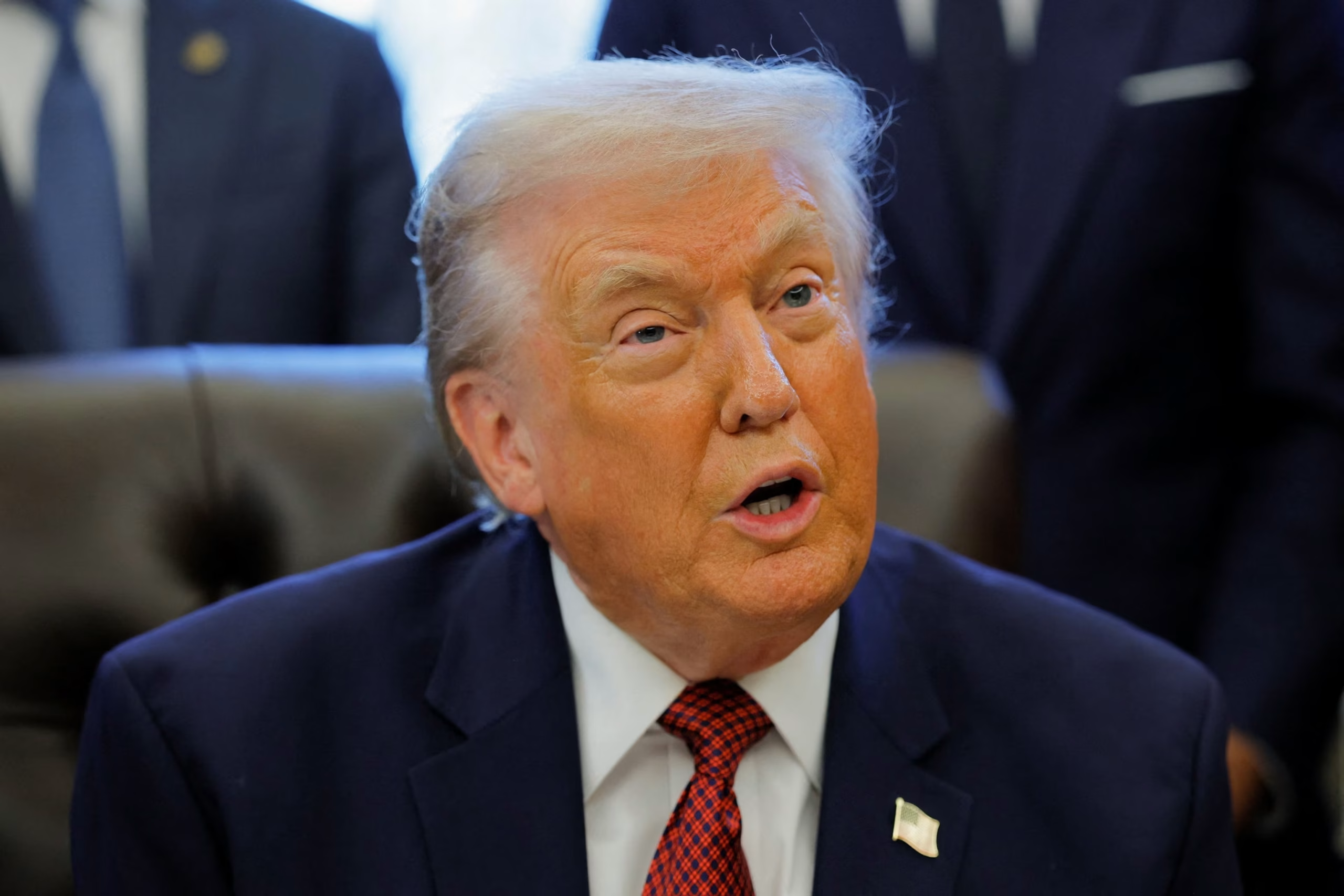
A recent profile in Vanity Fair has drawn intense scrutiny toward the White House, spotlighting comments made by the administration’s Chief of Staff, Susie Wiles. The article, published on December 16, 2025, characterized Wiles as describing the president as having an “alcoholic personality,” a statement that quickly drew reactions across political and social media platforms. The coverage has prompted discussions about the portrayal of senior officials, the framing of media narratives, and the dynamics within the current administration.
Wiles, who has been a central figure in the president’s team for over a year, responded swiftly after the article’s publication, calling it a “disingenuously framed” hit piece. Speaking through a statement on X, she emphasized that key portions of her remarks, as well as statements from other staffers, were omitted in ways that misrepresented both her views and the broader work of the administration.
“Significant context was disregarded and much of what I, and others, said about the team and the President was left out of the story,” Wiles said. “I assume, after reading it, that this was done to paint an overwhelmingly chaotic and negative narrative about the President and our team.”
In her remarks to Vanity Fair, Wiles provided insight into the personality traits she associated with high-functioning alcoholics, noting that such personalities often exhibit amplified behaviors under stress or influence. “High-functioning alcoholics or alcoholics in general, their personalities are exaggerated when they drink. And so I’m a little bit of an expert in big personalities,” Wiles told the publication. According to the article, she then applied this framework to the president, describing him as having “an alcoholic’s personality.”
The comments, while quickly seized upon by the media, have also opened broader conversations about leadership styles, personality assessment in politics, and the ways in which public figures are depicted. Political analysts note that high-profile leaders often display characteristics that, in ordinary contexts, might be linked to certain behavioral traits, but these same behaviors can also be interpreted as driving ambition, decisiveness, or risk-taking in governance.
President Donald Trump addressed the controversy in an interview with the New York Post on December 16. Speaking candidly, he downplayed the significance of Wiles’s comments, highlighting that he does not consume alcohol and framing her description as an assessment of a hypothetical rather than a critique. “No, she meant that I’m—you see, I don’t drink alcohol. So everybody knows that—but I’ve often said that if I did, I’d have a very good chance of being an alcoholic. I have said that many times about myself, I do. It’s a very possessive personality,” Trump said.
He elaborated further on what he believes Wiles was trying to convey, noting that the description reflects his approach to challenges and his highly driven personality. “I’m fortunate I’m not a drinker. If I did, I could very well, because I’ve said it—what’s the word? Not possessive—possessive and addictive type personality. Oh, I’ve said it many times, many times before.” The president framed the discussion with humor and a degree of self-reflection, underscoring his long-standing awareness of his own behavioral tendencies.
Observers point out that the episode illustrates the delicate balance senior staffers must maintain when providing candid assessments of public figures. Wiles’s comments, while intended to offer analytical insight into leadership traits, were quickly amplified in a media environment where sensational phrases dominate coverage. Some commentators have criticized Vanity Fair for isolating a single line from a broader discussion, while others argue that the media has a responsibility to highlight potentially revealing statements about leaders in positions of power.
The article also highlights the evolving role of social media in political discourse. Within hours of the publication, the story went viral, prompting responses from journalists, political commentators, and ordinary citizens alike. Wiles leveraged her own social media presence to clarify her position and to reinforce her support for the administration’s ongoing agenda. In her X post, she reiterated her commitment to the president’s priorities and achievements over the past 11 months, stating, “None of this will stop our relentless pursuit of Making America Great Again!”
Political analysts note that such situations underscore the complex interplay between private assessments and public communication. Leaders often rely on close advisors to provide unfiltered observations, but once these insights enter the public domain, the consequences can be unpredictable. In this instance, the framing of Wiles’s remarks triggered a combination of media scrutiny, partisan debate, and broader commentary on personality dynamics within high-pressure political environments.
The controversy also raises questions about journalistic framing and the responsibility of publications to provide context for quotes. In rapidly evolving news cycles, the extraction of single statements—especially those with provocative language—can overshadow the larger narrative. Critics of the Vanity Fair piece argue that a more comprehensive treatment of Wiles’s comments would have underscored the analytical intent of her observations, rather than portraying them as a personal attack.
Meanwhile, Trump’s public response has been widely interpreted as a strategic move to neutralize potential controversy. By emphasizing his abstention from alcohol and framing Wiles’s comments as an observation rather than a critique, he positions himself as both self-aware and resilient in the face of media scrutiny. Some analysts suggest this approach may also serve to reinforce loyalty among his senior staff, signaling that candid assessments, when framed constructively, are valued within the administration.
The broader political implications of the incident are also notable. In an era of highly polarized media coverage, statements by high-ranking officials are often scrutinized for potential partisan leverage. Opponents may interpret remarks in a negative light, while supporters can frame the same statements as evidence of transparency or forthrightness. Wiles’s case exemplifies this dynamic, illustrating how a single characterization of a leader’s personality can generate both criticism and support, depending on interpretive context.
Experts in leadership psychology have weighed in, noting that intense public scrutiny of personality traits is a common feature of modern political life. High-pressure roles often require traits such as decisiveness, assertiveness, and relentless focus—qualities that can be interpreted variably as ambition, intensity, or, in colloquial terms, “alcoholic personality.” The controversy surrounding Wiles’s comments may therefore reflect broader tensions inherent in assessing human behavior within public leadership.
For the administration, the immediate focus remains on managing perception and maintaining operational momentum. Wiles’s defense of her remarks, coupled with Trump’s clarifying statements, suggests a coordinated effort to reframe the narrative and underscore the ongoing work of the team. Observers note that while media cycles will likely continue to analyze the language used, the substantive policy and strategic goals of the administration remain the central concern for staff and constituents alike.
The episode also illustrates the enduring impact of language choice and media framing in political communication. Statements intended for nuanced analysis can be reshaped through selective reporting, emphasizing certain words or phrases while excluding broader context. Wiles’s experience underscores the importance for public officials to carefully navigate both internal discussions and interactions with journalists, recognizing the potential for rapid amplification in the digital age.
Beyond the immediate controversy, the incident may have implications for political discourse more broadly. As senior officials engage with media outlets, the line between private insight and public messaging can blur, highlighting the need for strategic communication, media literacy, and an understanding of audience perception. Wiles’s statement and the subsequent reactions demonstrate how nuanced observations can become focal points for public debate, influencing both reputation and policy perception.
In conclusion, the Vanity Fair article has sparked a multi-layered conversation about media representation, political personality analysis, and the responsibilities of senior officials in the White House. While the phrase “alcoholic personality” generated immediate attention, Wiles’s intent appears to have been analytical rather than accusatory, providing insight into leadership traits rather than personal judgment. President Trump’s response, emphasizing his non-drinking status and reflective commentary, framed the discussion in a manner designed to neutralize controversy and reinforce his image as a self-aware leader.
As the administration navigates the fallout, the episode underscores the delicate balance between candid analysis, public communication, and media interpretation. It also serves as a reminder of the complexities inherent in high-profile leadership, where statements are scrutinized, personalities are dissected, and the line between private insight and public perception is constantly negotiated. For Wiles, the incident may ultimately reaffirm her role as a strategic advisor capable of providing forthright assessments, while for the broader political landscape, it highlights the ongoing interplay between media narratives, leadership analysis, and public perception.

Emily Johnson is a critically acclaimed essayist and novelist known for her thought-provoking works centered on feminism, women’s rights, and modern relationships. Born and raised in Portland, Oregon, Emily grew up with a deep love of books, often spending her afternoons at her local library. She went on to study literature and gender studies at UCLA, where she became deeply involved in activism and began publishing essays in campus journals. Her debut essay collection, Voices Unbound, struck a chord with readers nationwide for its fearless exploration of gender dynamics, identity, and the challenges faced by women in contemporary society. Emily later transitioned into fiction, writing novels that balance compelling storytelling with social commentary. Her protagonists are often strong, multidimensional women navigating love, ambition, and the struggles of everyday life, making her a favorite among readers who crave authentic, relatable narratives. Critics praise her ability to merge personal intimacy with universal themes. Off the page, Emily is an advocate for women in publishing, leading workshops that encourage young female writers to embrace their voices. She lives in Seattle with her partner and two rescue cats, where she continues to write, teach, and inspire a new generation of storytellers.