


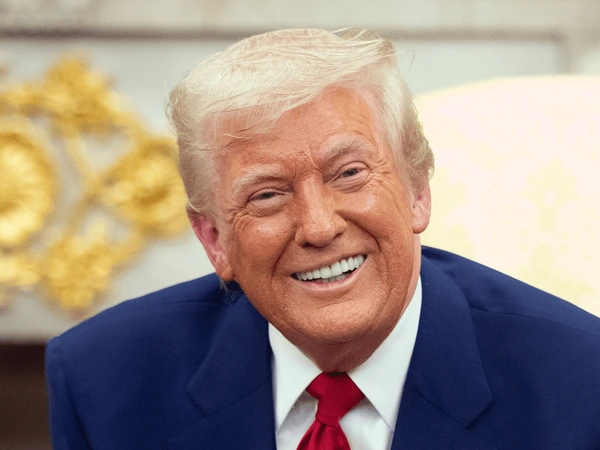
President Donald Trump announced on Monday a sweeping $12 billion economic aid package aimed at providing immediate relief to American farmers who have been struggling under the weight of prolonged trade tensions, declining export demand, and rising operational costs. The announcement came during a roundtable at the White House, where Trump emphasized that the assistance is designed to stabilize the agricultural sector during a period of unusual financial strain.
The move is one of the administration’s most significant economic interventions in support of the farming community, a demographic long considered central to Trump’s political coalition. The package is intended to offer temporary support as farmers wait for markets to normalize and trade disruptions to ease.
A Sector Under Pressure
The aid package arrives at a moment when U.S. farmers are facing some of the most challenging conditions in recent years. The ongoing trade dispute with China has led to a sharp reduction in American agricultural exports, especially in crops like soybeans, corn, cotton, wheat, and rice. China, traditionally the largest buyer of several U.S. farm commodities, has scaled back its purchases and shifted to alternative suppliers in South America and Southeast Asia.
This sudden decline in demand has left American farmers with swollen stockpiles and depressed market prices. Many have struggled to find new buyers to offset the losses, and the financial consequences have been severe. Several agricultural organizations have warned that without intervention, 2026 could see a wave of farm closures, consolidations, and bankruptcies.
In addition to export disruptions, farmers have also been grappling with rising input costs. Fertilizers, seeds, equipment, and fuel have all surged in price over the past year. For many, these increased costs have arrived at exactly the wrong moment—just as revenue streams from foreign buyers have weakened.
The combination of lost markets and increased operating expenses has put enormous strain on farm finances. For months, farmers and industry groups have been calling on Washington to take action, warning that without support, many family-owned farms might not survive the next planting season.
Details of the $12 Billion Package
The newly announced aid package is divided into two main components. The largest portion—up to $11 billion—will be distributed through a newly structured support mechanism aimed at producers of major row crops. This includes farmers who grow soybeans, corn, wheat, rice, cotton, and similar commodities.
A smaller portion, roughly $1 billion, will be directed toward specialty crops and other agricultural sectors that have also experienced disruptions but are less directly tied to the U.S.–China trade conflict. These include growers of fruits, vegetables, nuts, and other non-commodity products.
Administration officials said payments are expected to begin early next year, with many farmers receiving funds by February. The timeline is intended to align with the critical preparation period for the 2026 planting season. By providing cash flow early, the administration hopes to prevent delays or cuts in crop production that could ripple throughout the broader economy.
Farmers will not need to repay the assistance, and eligibility will be determined based on factors such as crop type, acreage, and financial impact. Officials stressed that the assistance is meant to function as a temporary bridge, not a permanent subsidy, and is designed to help farmers withstand the immediate effects of the trade turmoil.
Trump’s Message to Farmers
During the White House roundtable, President Trump praised American farmers as “the backbone of the nation” and said the government has a responsibility to support them in times of unusual economic disruption. He emphasized that the aid is part of a broader strategy to strengthen American agriculture over the long term.
Trump said that while trade negotiations and tariff adjustments may create short-term challenges, they are crucial to establishing fairer, more balanced economic relationships globally. He insisted that farmers would ultimately benefit from these policies once international markets stabilize.
Administration officials present at the event echoed the president’s remarks. The agriculture secretary said the package was created after extensive consultations with industry groups, lawmakers, and economic advisers. According to the secretary, the program is designed not only to compensate for lost revenue but to ensure that farmers feel confident moving into the next planting and harvesting cycles.
The treasury secretary described the aid as “a necessary bridge” to help farmers withstand market volatility. He argued that temporary support is essential to prevent long-term damage to the agricultural sector.
Reactions From the Farming Community
Reactions to the announcement were mixed, reflecting the complexity and urgency of the situation. Many farmers expressed immediate relief, saying the funds could mean the difference between staying afloat and shutting down. For growers who have already endured months of falling prices, shrinking profit margins, and uncertainty about future markets, the aid offers breathing room.
In states where agriculture dominates the economy, local leaders welcomed the package. They said the assistance will help maintain employment, stabilize rural communities, and keep supply chains functioning.
However, some farmers and agricultural economists voiced concerns that the package addresses symptoms rather than underlying causes. They argued that while direct payments can help in the short term, the long-term viability of U.S. agriculture depends heavily on export access. They worry that trade disruptions will continue into 2026, making it difficult for farmers to recover fully even with federal aid.
Smaller and mid-sized farms may face the greatest risk. These operations often lack the financial reserves and credit lines available to larger agribusinesses. For them, even temporary downturns can lead to irreversible consequences, including forced sales or closures.
Economists also cautioned that the aid may distort agricultural markets by reducing incentives for producers to adjust planting decisions based on real demand signals. Some fear that this could prolong oversupply issues and contribute to ongoing price instability.
A Political Calculation
The announcement carries unmistakable political significance. Farmers have been among Trump’s most loyal supporters, and many helped propel him to victory in key states in previous election cycles. However, the prolonged trade conflict has eroded confidence among some rural voters. Many have felt caught in the middle of a geopolitical struggle, bearing the direct economic consequences of decisions made far above them.
With the 2026 political season drawing closer, the administration appears intent on reinforcing ties with rural America. The $12 billion aid package is positioned as a demonstration of commitment and responsiveness to the needs of agricultural communities.
Political analysts note that the move may help Trump maintain and strengthen support in states where farm economies have been hit hardest. At the same time, critics argue that the package is not a substitute for stable trade policies that create reliable, long-term export markets.
The Road Ahead
While the aid package provides immediate relief, the broader challenges facing U.S. agriculture remain unresolved. International trade tensions continue to create uncertainty about market access. Global competitors have expanded their production and seized market share once dominated by American farmers. Meanwhile, domestic costs—including fertilizer, equipment, transportation, and labor—remain elevated.
For the aid to have meaningful impact, farmers will need clarity about future trade conditions. Many are watching upcoming negotiations closely, hoping that new agreements or tariff adjustments will reopen markets and restore reliable demand.
In the coming months, federal agencies will begin distributing the aid and evaluating the program’s effectiveness. Farmers will assess whether the funding is sufficient to support their operations through the upcoming season. Analysts will examine whether the payments stabilize markets or merely delay deeper restructuring within the sector.
Conclusion
President Trump’s $12 billion farm aid package represents a major step toward stabilizing an industry facing extraordinary pressure. The assistance offers temporary relief, helping farmers bridge the gap until broader economic conditions improve. For many, it may prevent financial collapse and preserve livelihoods in communities that depend heavily on agriculture.
Yet the long-term success of the sector depends on more than financial support. Lasting recovery will require stable trade relationships, predictable export markets, and solutions to the rising costs of agricultural production. Farmers across the country are hopeful that this aid marks the beginning of a broader strategy to strengthen American agriculture—not just a one-time response to a crisis.

Emily Johnson is a critically acclaimed essayist and novelist known for her thought-provoking works centered on feminism, women’s rights, and modern relationships. Born and raised in Portland, Oregon, Emily grew up with a deep love of books, often spending her afternoons at her local library. She went on to study literature and gender studies at UCLA, where she became deeply involved in activism and began publishing essays in campus journals. Her debut essay collection, Voices Unbound, struck a chord with readers nationwide for its fearless exploration of gender dynamics, identity, and the challenges faced by women in contemporary society. Emily later transitioned into fiction, writing novels that balance compelling storytelling with social commentary. Her protagonists are often strong, multidimensional women navigating love, ambition, and the struggles of everyday life, making her a favorite among readers who crave authentic, relatable narratives. Critics praise her ability to merge personal intimacy with universal themes. Off the page, Emily is an advocate for women in publishing, leading workshops that encourage young female writers to embrace their voices. She lives in Seattle with her partner and two rescue cats, where she continues to write, teach, and inspire a new generation of storytellers.