



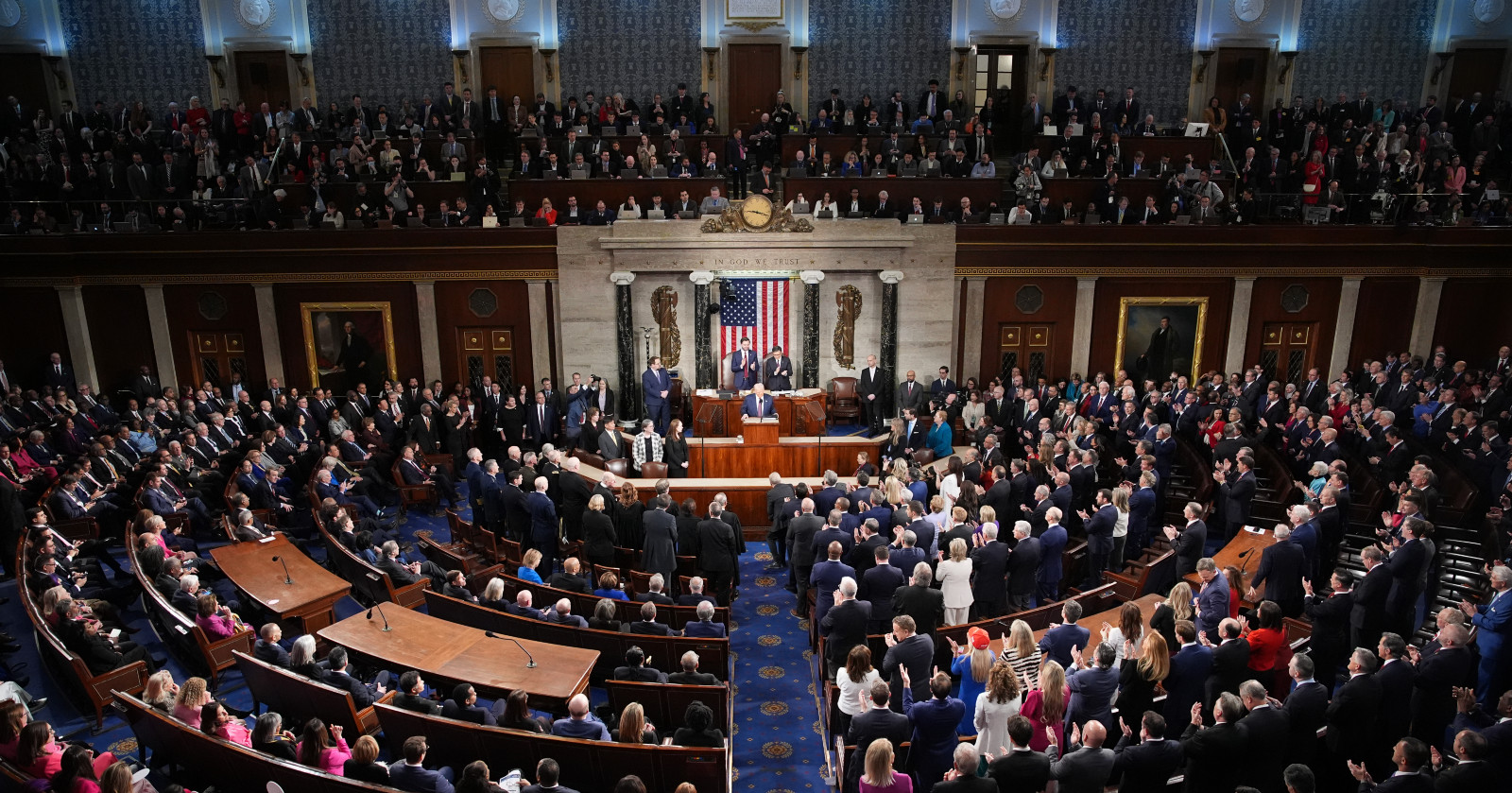
The U.S. House of Representatives on Sunday night advanced a sweeping new defense bill that will shape how America funds, equips, and deploys its military in the coming year, marking one of the most consequential legislative moves of the session.
The annual defense package, viewed as a must-pass measure to keep the Pentagon operating, outlines U.S. military priorities across everything from troop pay and weapons systems to border security and geopolitical competition with China and Russia.
House Republican leaders framed the legislation as a reset of military policy following what they described as years of ideological drift inside the Department of Defense.
“This year’s defense bill advances President Trump’s Peace Through Strength agenda,” House Speaker Mike Johnson said in a statement. He said the legislation strengthens national security, restores merit-based leadership in the armed forces, and refocuses the military on combat readiness rather than political ideology.
A major shift in Pentagon priorities
According to House leadership, the bill aims to redirect the military’s focus toward deterrence, force readiness, and industrial capacity. Key goals include revitalizing domestic weapons production, strengthening supply chains, and accelerating shipbuilding programs that have lagged behind schedule in recent years.
The bill also expands U.S. counter-drone capabilities and deploys new technologies designed to defend military bases, ports, and critical infrastructure from emerging aerial threats.
In the Indo-Pacific, the legislation increases support for Taiwan’s defensive posture and boosts cooperation with U.S. allies in the region as tensions with communist China continue to rise.
Provisions targeting Russia and China include expanded funding for next-generation weapons systems, hypersonic defense, and strengthening the U.S. nuclear deterrent.
Troop pay, readiness, and border missions
House Republicans highlighted a 4 percent pay raise for members of the U.S. Armed Forces as one of the most important elements of the package. Leaders said the raise is necessary to keep pace with inflation and improve recruitment and retention across all branches.
The bill also authorizes expanded use of National Guard and active-duty forces along the southern border to assist with immigration enforcement and drug interdiction operations. Supporters argue that the military’s logistical capabilities are essential to slowing cartel activity and illegal crossings.
Johnson said the legislation restores what he called the military’s “warrior ethos,” emphasizing combat preparedness over social programs.
Ending military DEI and climate programs
One of the most controversial aspects of the House proposal is its aggressive rollback of diversity, equity, and inclusion programs inside the Pentagon.
The bill would eliminate funding for DEI offices, halt critical race theory-based training, and remove climate-focused initiatives that Republicans argue distract from combat readiness.
Johnson said the bill “roots out Biden-era wokeism” and restores merit-based promotions and admissions to the nation’s service academies.
Provisions also target antisemitism inside military institutions and prohibit Pentagon contracts with firms accused of partisan political activity.
Israel, missile defense, and new security investments
The legislation includes expanded support for Israel through joint military operations, increased intelligence sharing, and reinforced cooperative missile defense systems such as the Golden Dome.
It also directs new investments into shipbuilding programs for the U.S. Navy and strengthens America’s defense industrial base after years of supply shortages exposed by conflicts in Ukraine and the Middle East.
The measure further prioritizes modernization of ground forces, cybersecurity upgrades, and increased readiness across air, sea, and space operations.
The scope of the bill comes into focus
Only after lawmakers finalized its contents did the full size of the legislation become clear: the House draft spans 3,086 pages, reflecting the enormous breadth of military policy, funding directives, and regulatory changes included in the measure.
The length alone underscores how deeply the annual defense bill touches nearly every aspect of U.S. military operations—from paychecks and procurement to alliances and battlefield doctrine.
Differences with the Senate version
The House legislation now sets up a major showdown with the Senate, which passed its own version of the defense bill earlier this fall.
One key difference is the absence of a bipartisan Senate provision aimed at expanding affordable housing options. House Financial Services Committee Chairman French Hill said his committee will pursue separate housing legislation later this month.
“This month, the Financial Services Committee will advance solutions to tackle housing cost and access challenges for American families,” Hill said. “Next year, we look forward to working with our Senate colleagues to send a bill to the president’s desk that reflects the views of both chambers.”
What happens next
If the House passes its version of the defense bill, lawmakers from both chambers will be forced into negotiations to reconcile the two packages before sending a final version to the president.
With troop pay, border security, China policy, and military readiness all on the line, the coming weeks will determine what ultimately makes it into the final defense framework for the next fiscal year.
As one senior aide put it privately, “Nothing else Congress does this year affects more lives, more money, or more global power than this bill.”

Emily Johnson is a critically acclaimed essayist and novelist known for her thought-provoking works centered on feminism, women’s rights, and modern relationships. Born and raised in Portland, Oregon, Emily grew up with a deep love of books, often spending her afternoons at her local library. She went on to study literature and gender studies at UCLA, where she became deeply involved in activism and began publishing essays in campus journals. Her debut essay collection, Voices Unbound, struck a chord with readers nationwide for its fearless exploration of gender dynamics, identity, and the challenges faced by women in contemporary society. Emily later transitioned into fiction, writing novels that balance compelling storytelling with social commentary. Her protagonists are often strong, multidimensional women navigating love, ambition, and the struggles of everyday life, making her a favorite among readers who crave authentic, relatable narratives. Critics praise her ability to merge personal intimacy with universal themes. Off the page, Emily is an advocate for women in publishing, leading workshops that encourage young female writers to embrace their voices. She lives in Seattle with her partner and two rescue cats, where she continues to write, teach, and inspire a new generation of storytellers.