



A Quiet Shift With Massive Consequences
A dramatic shift is unfolding across America’s immigration system — and according to Homeland Security Secretary Kristi Noem, the full scale of what’s happening is only just beginning to come into focus.
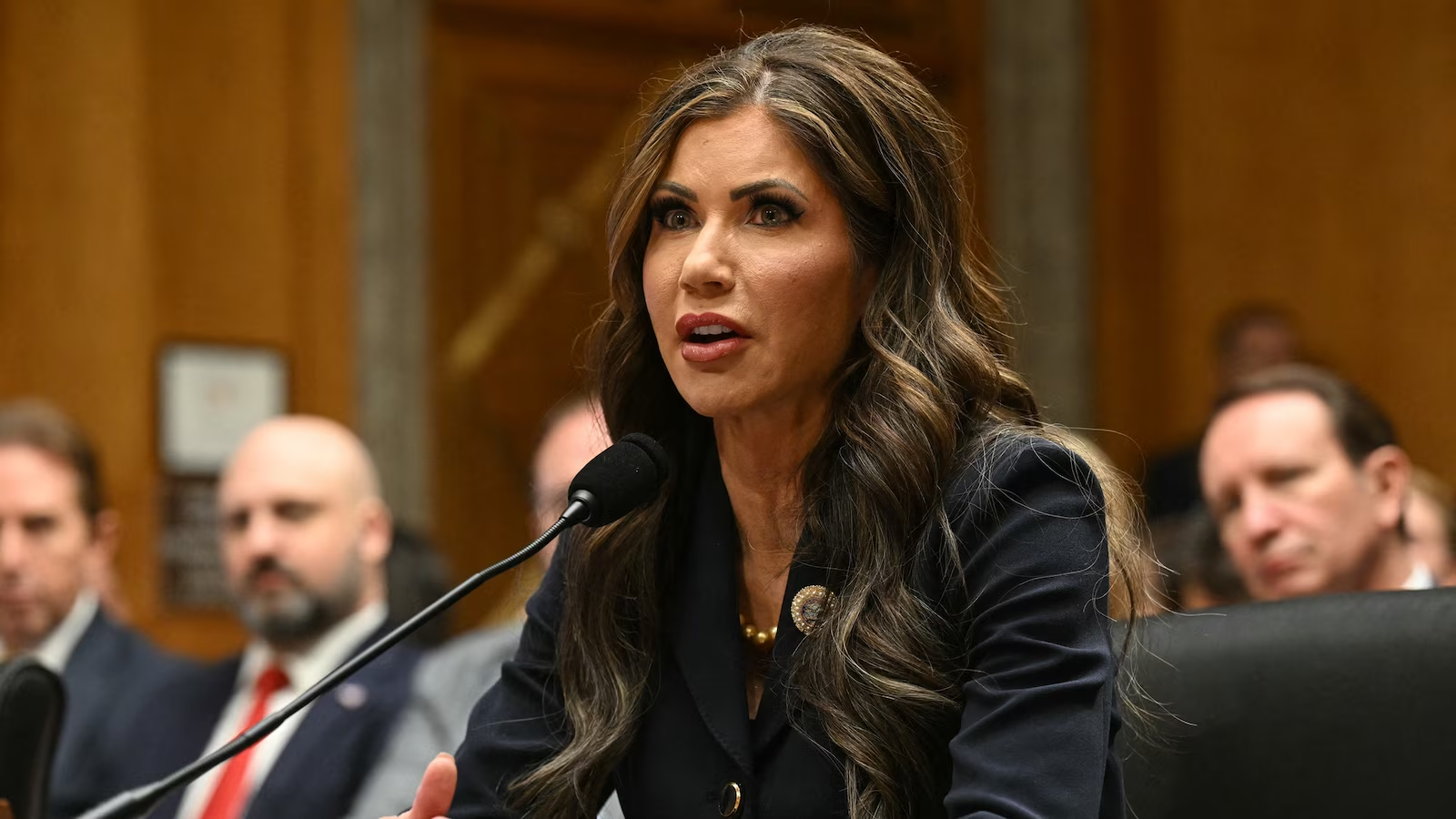
Speaking during a White House Cabinet meeting this week, Noem delivered an update on the Trump administration’s immigration enforcement efforts that stunned even longtime observers of border policy. While the administration has consistently signaled that it would move aggressively to reverse Biden-era immigration practices, new details now suggest the scale of those efforts is far larger than previously understood.
What’s becoming clear is that Trump’s second-term immigration strategy is no longer theoretical. It is active, accelerating, and reshaping the federal government’s approach to border security, deportation, and vetting.
Enforcement Ramps Up Under the Radar
For much of the year, the Trump administration has avoided dramatic press conferences or splashy announcements on immigration enforcement. Instead, officials say the focus has been on infrastructure: hiring, training, surveillance, coordination between agencies, and rebuilding enforcement pipelines that had weakened during the previous administration.
Noem confirmed that Immigration and Customs Enforcement (ICE) has quietly undergone one of the most significant staffing expansions in its history.
According to Noem, tens of thousands of applicants flooded the system seeking law enforcement positions with ICE, and the agency has already brought in a massive wave of new personnel. She confirmed that more than 10,000 new ICE officers have been hired so far this year alone.
That hiring surge has allowed the administration to dramatically increase the pace and geographic reach of enforcement operations — from sanctuary cities to rural border corridors.
A Shadow Immigration Exodus Is Underway
While public debate continues to rage over travel bans, asylum policy, and court challenges, Noem revealed that a quieter but far more consequential trend has been unfolding beneath the surface: a steady and accelerating outflow of people who entered or remained in the U.S. illegally.
At the Cabinet meeting, Noem described the trend as unprecedented in modern American history.
Rather than attempting to cross the border in large numbers, she said, many individuals are now leaving the country voluntarily or under direct removal orders, driven by stricter enforcement, expanded vetting, and reduced access to work authorization and benefits.
Trump, she noted, has made it clear that deportations are no longer symbolic — they are structural.
The Moment the Number Finally Dropped
It was at this point in her remarks that Noem revealed the scale of what has already happened — a number that sent a visible reaction through the room.
“To date,” she told the president and Cabinet members, “over two million people who were here illegally have already gone home.”
The figure marked one of the largest single-year immigration reversals in U.S. history.
Noem added that removals are continuing and that the administration expects even more departures before the end of the year, including targeted operations during the holiday period.
“We’re going to send more home for the holidays too,” she said.
How This Is Happening So Fast
Officials familiar with the effort say the removals are not the result of one single policy — but rather a combination of coordinated changes:
-
Rapid expansion of ICE manpower
-
Aggressive workplace enforcement
-
Revival of interior enforcement programs
-
Suspension of large-scale asylum approvals
-
Increased criminal alien prioritization
-
Expanded international repatriation agreements
Under Trump’s directive, enforcement operations have concentrated first on individuals with criminal histories, expired court orders, or links to fraud and identity crimes.
Noem emphasized that many removals involve people with serious criminal records — including assault, sexual offenses, major theft, and drug trafficking.
Travel Bans Set to Expand Dramatically
As enforcement inside the U.S. accelerates, the administration is simultaneously tightening controls on who is allowed to enter.
Noem confirmed in a televised interview this week that the White House is preparing a major expansion of the existing travel ban, which currently covers 19 countries.
When asked how many nations may soon face restrictions, Noem refused to give an exact number — but confirmed it will exceed 30.
“I won’t be specific on the number,” she said, “but it’s over 30, and the President is continuing to evaluate countries.”
Why Some Countries Are Being Targeted
Noem outlined the criteria driving the ban expansion:
-
Countries without stable governments
-
Nations that cannot reliably verify identity documents
-
States that cannot provide criminal background data
-
Regimes unable to assist U.S. officials with vetting
“If they don’t have a stable government,” she said, “if they can’t tell us who these individuals are or help us vet them — why should we allow people from that country to come here?”
The Shooting That Changed Everything
The immigration crackdown intensified sharply following last month’s deadly attack on two National Guard members in Washington, D.C., carried out by a suspect who entered the U.S. during the Biden administration.
That attack became a turning point for Trump’s national security posture.
Within days:
-
Certain asylum processing was suspended
-
Dozens of additional enforcement actions were authorized
-
Foreign screening protocols were rewritten
The administration publicly blamed weak vetting procedures from the Biden era for allowing dangerous individuals into the country without sufficient background checks.
USCIS Freezes Approvals and Reopens Old Cases
Following the attack, U.S. Citizenship and Immigration Services (USCIS) issued a policy memo pausing key application types from the same 19 restricted countries.
More significantly, USCIS announced that it would begin a “comprehensive re-review” of already approved immigration benefits granted under the Biden administration.
That review includes:
-
Past asylum approvals
-
Temporary protected status decisions
-
Work authorizations
-
Visa overstays
According to the memo, individuals will now face:
-
Mandatory re-interviews
-
National security rechecks
-
Criminal background re-screening
Trump’s “Third World” Immigration Policy
Trump has openly described certain immigration pipelines as threats to national security and social stability.
In recent statements, he referred to continued mass migration from parts of the developing world as a source of “social dysfunction” and has threatened to permanently suspend migration from countries unable to meet U.S. security standards.
“We are done importing danger,” one senior official said privately.
Trump has also revived early 20th-century immigration language, emphasizing that entry into the U.S. should be reserved for those who contribute directly to American security and economic stability.
Public Reaction Splits Sharply
Supporters of Trump’s policy have praised the administration for enforcing laws that previous presidents refused to touch.
Critics, meanwhile, accuse the administration of cruelty, discrimination, and overreach — arguing that mass removals will destabilize families and labor markets.
But the White House remains unmoved.
“This is the law,” one DHS official said. “And it hasn’t been enforced like this in decades.”
A Long-Term Strategy, Not a Temporary Surge
Noem made clear that what’s happening now is not temporary.
The administration is building a long-term enforcement infrastructure designed to function regardless of political cycles.
Expanded detention capacity, digitized tracking systems, biometric cross-referencing, and real-time border surveillance are all being scaled nationwide.
Officials say the goal is to ensure that the situation seen under Biden — where millions entered with minimal screening — can never happen again.
What Comes Next
Over the next six months, the administration is expected to:
-
Expand the travel ban beyond 30 countries
-
Double workplace enforcement operations
-
Roll out new biometric exit tracking
-
Finalize repatriation deals with additional governments
-
Continue high-volume removals inside the U.S.
If early figures hold, Trump’s second-term immigration reversal could become the most dramatic demographic enforcement shift in modern American history.

James Jenkins is a celebrated Pulitzer Prize-winning author whose work has reshaped the way readers think about social justice and human rights in America. Raised in Atlanta, Georgia, James grew up in a community that instilled in him both resilience and a strong sense of responsibility toward others. After studying political science and creative writing at Howard University, he worked as a journalist covering civil rights issues before dedicating himself fully to fiction. His novels are known for their sharp, empathetic portraits of marginalized communities and for weaving personal stories with broader political realities. Jenkins’s breakout novel, Shadows of Freedom, won national acclaim for its unflinching look at systemic inequality, while his more recent works explore themes of identity, resilience, and the fight for dignity in the face of oppression. Beyond his novels, James is an active public speaker, lecturing at universities and participating in nonprofit initiatives that support literacy and community empowerment. He believes that storytelling is a way to preserve history and inspire change. When not writing, James enjoys jazz music, mentoring young writers, and traveling with his family to explore cultures and stories around the world.