


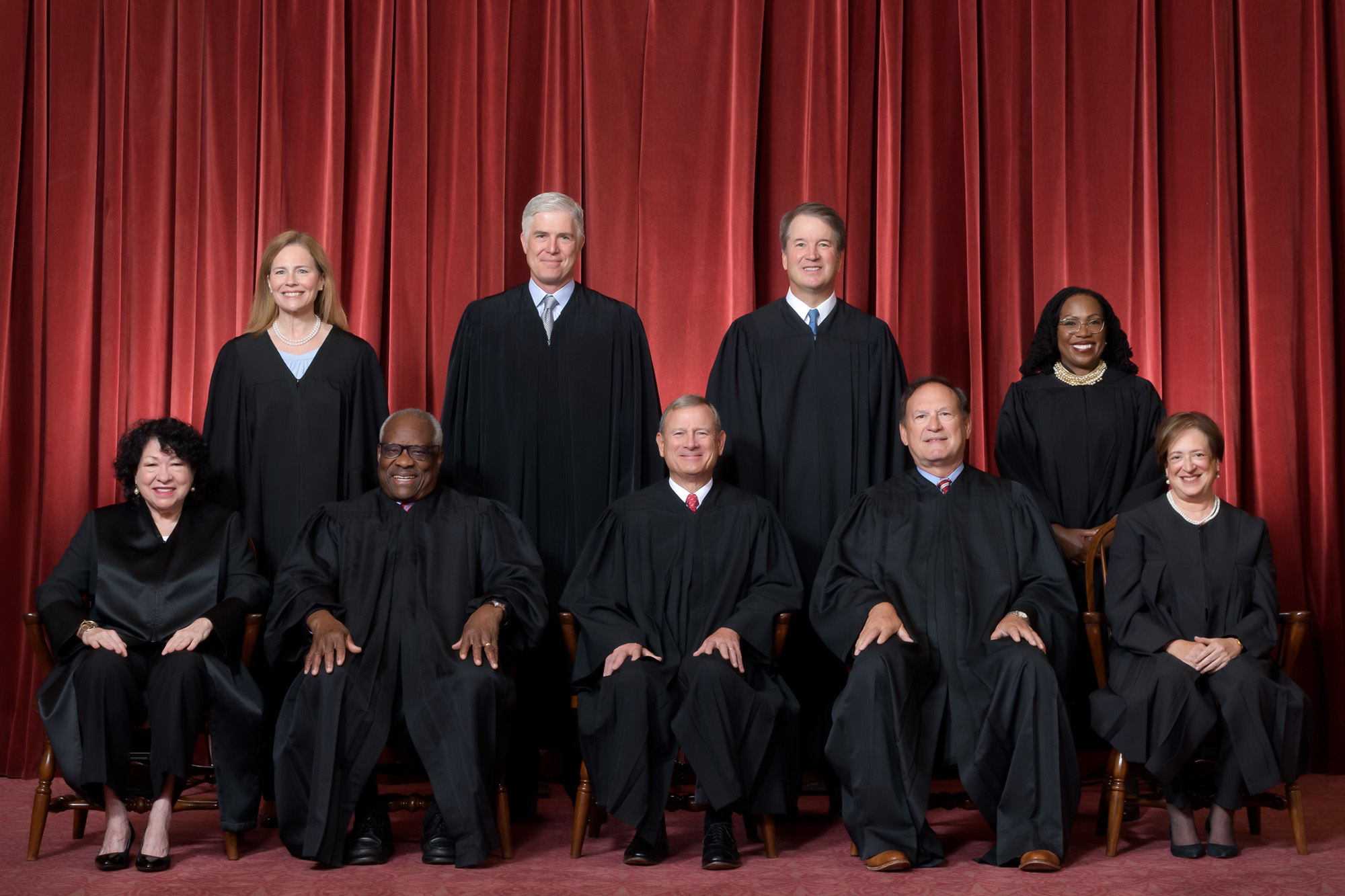
The Supreme Court delivered a seismic ruling late Thursday night, handing Texas a major victory in its heated redistricting battle and unleashing an almost instant wave of outrage from Democrats across the country. In a 6–3 decision split along ideological lines, the Court upheld Texas’ newly redrawn congressional map — a map poised to hand Republicans additional House seats in the 2026 midterms.
The ruling marks yet another chapter in the ongoing war over redistricting, one that has increasingly become a central battleground in the fight for control of Congress. And while Texas Republicans celebrated the decision as a validation of legislative authority, Democrats and their media allies were left grasping for talking points, with reactions ranging from frustration to outright panic.
A Thunderbolt Ruling — and a Rejection of the Lower Court
At the heart of the Supreme Court’s decision is a straightforward message: federal courts should not jump into state-run redistricting battles without overwhelming evidence of wrongdoing. According to the ruling, the lower District Court “committed at least two serious errors” when it tried to block the map.
The Court specifically faulted the District Court for failing to grant Texas the presumption of legislative good faith — a foundational legal principle requiring challengers to prove intentional discrimination, not merely allege it.
The opinion was blunt:
“Texas is likely to succeed on the merits of its claim that the District Court committed at least two serious errors. First, the District Court failed to honor the presumption of legislative good faith by construing ambiguous direct and circumstantial evidence against the legislature.”
In other words:
The lower court overreached. Badly.
The Supreme Court also rebuked the District Court for interfering in an active election cycle. The justices noted that reshaping election rules late in the calendar disrupts campaigns, confuses voters, and destabilizes the federal–state balance.
“The District Court improperly inserted itself into an active primary campaign, causing much confusion and upsetting the delicate federal-state balance in elections.”
With this ruling, the justices reaffirmed a long-standing principle: states get to draw their maps unless challengers can prove intentional racial discrimination, not just partisan motivations.
And that distinction — partisan vs. racial — became the flashpoint for the Democrat meltdown that followed.
A Brutal Blow to Democratic Legal Strategy
For years, Democratic strategists and activists have leaned heavily on friendly federal courts to block maps they dislike, especially in red states. When they cannot legislate their way to favorable boundaries, they often litigate their way there.
But the Texas ruling represents a crack in that strategy.
Democrats argued that the new map intentionally diluted minority voting power. Texas countered that the decisions were political, not racial — a critical legal distinction supported by decades of Supreme Court precedent.
And under current law, political motivations are not unconstitutional, even if they benefit one party.
That’s exactly why Democrats are furious:
Their argument didn’t hold up. Their preferred court didn’t back them. And their media allies immediately went into damage-control mode.
MS NOW Panel Erupts Into Outrage
If you needed confirmation of the left’s panic, you didn’t have to wait long. Within minutes of the decision, MSNBC’s “MS NOW” panel unraveled live on air, offering one of the most dramatic meltdowns since election night 2016.
Co-host Symone Sanders Townsend delivered the first wail of the night:
“Because Texas said they drew it for political reasons, not race, they’re using political as the cover over race!”
Her claim?
That Republicans were somehow hiding racial intent behind a cloud of partisan strategy — despite a complete lack of legal evidence supporting that theory.
Former RNC chair Michael Steele — who now serves as MSNBC’s resident “Republican for hire” — piled on with a somber lament:
“The Supreme Court put itself in the position of the district court. It should not have done so. And they basically slapped the district court.”
He continued with a dramatic flourish straight out of cable-news theater:
“I’m looking at the disintegration of civil rights at the hands of a party and political philosophy that once elevated those civil rights.”
Steele, of course, failed to mention the fundamental point:
It is literally the Supreme Court’s job to overturn lower courts when they break the law.
But nuance rarely survives long on MSNBC.
Selective Outrage? Only When It Helps Democrats
One powerful question emerged during the broadcast:
Would these same commentators demand judicial intervention when California’s deeply partisan redistricting comes under scrutiny?
Of course not.
As one conservative analyst pointed out during a heated exchange, the answer is always the same:
-
When Democrats draw maps that benefit Democrats: they call it “fair representation.”
-
When Republicans draw maps that benefit Republicans: they call it “racism,” “voter suppression,” or “the end of democracy.”
And when Democrats don’t control a legislature, they often lean on friendly courts to do the job for them.
This ruling slams that door shut — or at least makes it much harder to run through.
Why This Decision Matters Beyond Texas
This Supreme Court decision does more than settle Texas’ map. It sets a major precedent for the next round of legal warfare in states from Georgia to Florida to North Carolina — and even blue states that face challenges of their own.
Here’s what it practically means:
1. States have firmer control over their maps.
The Supreme Court signaled that courts cannot simply presume bad intent from Republican legislatures.
2. Democrats will have a harder time using courts as a weapon.
The ruling elevates the burden of proof for claims of racial discrimination.
3. The midterms may tilt further toward Republicans.
Texas gaining additional GOP seats shifts the House battlefield — and Democrats know it.
4. California’s map challenges suddenly look shakier.
If the same legal standards apply, California’s heavily partisan maps could face scrutiny they weren’t prepared for.
Why Democrats Are Really Panicking
The legal defeat stings. But the political implications hurt more.
Texas is growing rapidly, and every seat matters as 2026 approaches. Republicans already have structural advantages in several states—and this ruling strengthens their hand even further.
Democrats fear this decision could:
-
secure a durable Republican House majority,
-
limit future redistricting lawsuits,
-
energize GOP state legislatures, and
-
weaken their own legal tools for years to come.
It isn’t just about Texas.
It’s about the national landscape.
And they know it.
The Bottom Line
Texas won.
The Supreme Court reaffirmed legislative authority.
Democrats exploded across cable news.
And the redistricting battle now shifts into an entirely new phase.
For Republicans, it’s a huge win.
For Democrats, it’s a warning shot ahead of the 2026 midterms.
And for the nation, it’s a reminder that redistricting — once a sleepy policy issue — has become one of the most consequential political weapons in American life.

Emily Johnson is a critically acclaimed essayist and novelist known for her thought-provoking works centered on feminism, women’s rights, and modern relationships. Born and raised in Portland, Oregon, Emily grew up with a deep love of books, often spending her afternoons at her local library. She went on to study literature and gender studies at UCLA, where she became deeply involved in activism and began publishing essays in campus journals. Her debut essay collection, Voices Unbound, struck a chord with readers nationwide for its fearless exploration of gender dynamics, identity, and the challenges faced by women in contemporary society. Emily later transitioned into fiction, writing novels that balance compelling storytelling with social commentary. Her protagonists are often strong, multidimensional women navigating love, ambition, and the struggles of everyday life, making her a favorite among readers who crave authentic, relatable narratives. Critics praise her ability to merge personal intimacy with universal themes. Off the page, Emily is an advocate for women in publishing, leading workshops that encourage young female writers to embrace their voices. She lives in Seattle with her partner and two rescue cats, where she continues to write, teach, and inspire a new generation of storytellers.