



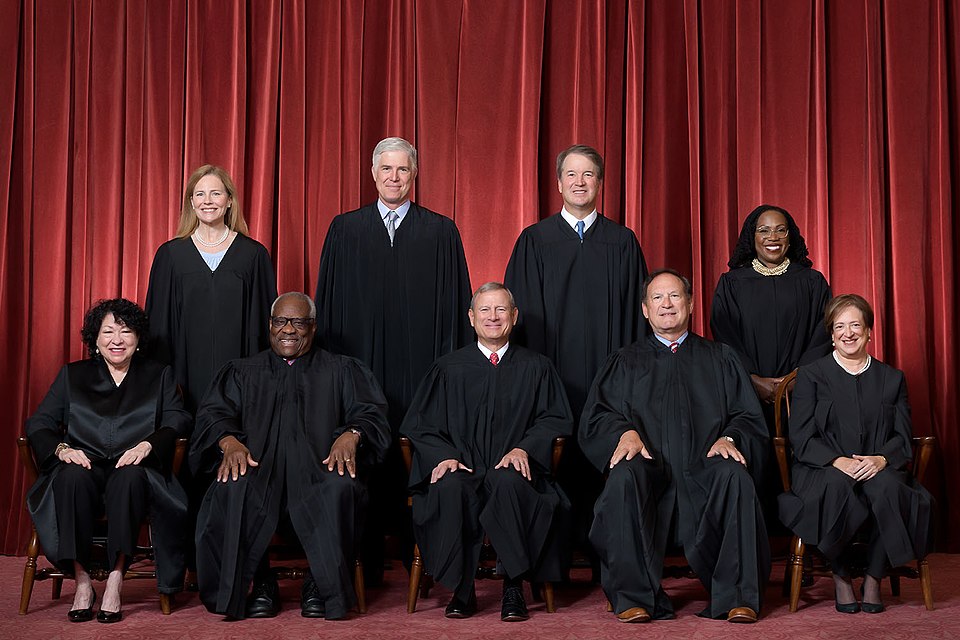
A New Accusation Shakes the Supreme Court’s Leadership
A major legal dispute has erupted in Washington after a prominent conservative legal expert accused Chief Justice John Roberts of allowing what he calls “judicial sabotage” against President Donald Trump’s second-term agenda. The allegation comes from Mike Davis, president of the Article III Project and a former law clerk to Justice Neil Gorsuch.
Davis made the charge during an interview with actor and radio host Joe Piscopo, where he discussed a newly filed lawsuit targeting Roberts in his capacity as the head of the U.S. Judicial Conference. The criticism marks one of the sharpest public attacks yet on the Chief Justice from conservative legal circles aligned with Trump.
The controversy revolves around Davis’ belief that Roberts has failed to stop activist judges in lower courts from issuing nationwide injunctions designed, in his view, to block Trump’s constitutional authorities under Article II.
The Lawsuit Behind the Escalating Feud
The legal complaint Davis referenced was filed by America First Legal, the organization created by former Trump adviser Stephen Miller. It names both Chief Justice Roberts and Robert J. Conrad, director of the Administrative Office of the U.S. Courts, as defendants.
The suit claims the Judicial Conference and Administrative Office overstepped their constitutional authority by engaging in regulatory decisions that drift away from the judiciary’s core functions. The plaintiffs argue that these actions place the Conference within the reach of FOIA requests—an unprecedented claim, considering the judiciary’s long-standing exemption from FOIA.
The challenge aims to expose internal decision-making that conservatives believe has fueled aggressive judicial roadblocks to Trump’s policies. Supporters of the lawsuit say lower courts have repeatedly stepped into executive issues where they do not belong.
Davis’ Blistering Warning: “This Is Not Judicial Review”
During his interview, Davis emphasized that he respects Roberts personally but believes the Chief Justice has let the system fall into chaos.
“I actually like the Chief Justice,” Davis said. “But I would say this to him directly: you have failed to do your job when you allow activist judges to sabotage the president’s Article II powers.”
He argued that the explosion of nationwide injunctions against Trump signals a deeper problem—one that undermines the authority of elected officials and empowers unelected judges.
“This is an assault on American voters,” Davis continued. “This is a repudiation of the people by lifetime-appointed judges who step into political fights they shouldn’t be in. It’s not judicial review. It’s judicial sabotage.”
He went further, warning judges who take political action from the bench that the Article III Project will confront them publicly.
“When you take off your robe, climb into the political arena, and throw political punches, expect political counterpunches. This is dangerous for our republic.”
Piscopo Presses on Ties to Stephen Miller
At one point, Piscopo asked Davis whether he was working directly with Stephen Miller, given that Miller’s organization filed the lawsuit.
Davis dodged the specifics.
“I have to be careful about what I say on particular lawsuits,” he replied, while noting that the Article III Project works independently but “very much aligned with President Trump.”
He reminded listeners that his group aggressively defended Trump throughout the previous legal battles that defined the 2024 election cycle.
“We turned lemons into lemonade,” Davis said. “Everyone thought Trump was finished after the Mar-a-Lago raid. Now he’s back in the White House, and we will continue defending him every single day.”
A Pattern of Friction With the Federal Judiciary
Tension between Trump and the judiciary has only intensified in his second term. Lower-court judges appointed by Democratic presidents have issued rulings that blocked immigration orders, regulatory rollbacks, and national security directives.
During Trump’s first term, nationwide injunctions became far more common, something conservatives say never occurred to such a degree during Democratic administrations.
“This is not the judiciary staying in its lane,” Davis said. “This is political warfare disguised as legal oversight.”
Trump himself has echoed similar sentiments, complaining often that federal judges block his policies faster than his administration can implement them.
Why Conservatives Are Targeting Roberts Now
Chief Justice Roberts has long positioned himself as a stabilizing figure who attempts to shield the Supreme Court from political turbulence. But that stance has increasingly frustrated conservatives who believe he has sided with liberal justices on key issues.
Davis argues that Roberts, intentionally or not, has allowed the lower courts to chip away at the president’s powers.
“Is the president supposed to report to 670 district court judges around the country for everything he does?” Davis asked rhetorically.
The Trump-aligned legal movement now appears ready to challenge the Chief Justice directly—a dramatic escalation that signals a broader internal fight over the direction of the judiciary.
The Battle Ahead
The lawsuit filed by America First Legal is likely just the beginning. Conservatives expect a lengthy confrontation that could reshape how judicial oversight works in America.
Trump allies argue that this fight is essential to protecting the powers of the executive branch. Critics say the lawsuit aims to place the judiciary under political pressure and weaken checks on presidential power.
Either way, the conflict places Chief Justice Roberts at the center of a high-stakes political battle—and marks a new phase in the struggle between Trump’s administration and the federal courts.

Sarah Mitchell is a bestselling novelist recognized for her insightful and emotionally resonant stories that explore the complexities of human relationships. Originally from Denver, Colorado, Sarah grew up in a family of teachers who nurtured her curiosity and love for storytelling. She studied psychology at Stanford University, where she became fascinated by the intricacies of human behavior—an interest that would later shape her writing career. Sarah’s novels are praised for their nuanced characters, intricate plots, and ability to capture the subtle tensions that define love, friendship, and family ties. Her breakthrough novel, The Spaces Between Us, became an instant bestseller, lauded for its honest portrayal of strained family relationships and the fragile bonds that hold people together. Since then, she has published several works that continue to captivate audiences around the world. Outside of her writing career, Sarah is passionate about mental health advocacy and often partners with organizations to promote awareness and support for those struggling with emotional well-being. Her personal life is quieter—she enjoys hiking in the Colorado mountains, practicing yoga, and spending time with close friends. With each new book, Sarah Mitchell cements her reputation as a writer who illuminates the beauty and struggles of human connection.