NOTE: VIDEO INSIDE THE ARTICLE.
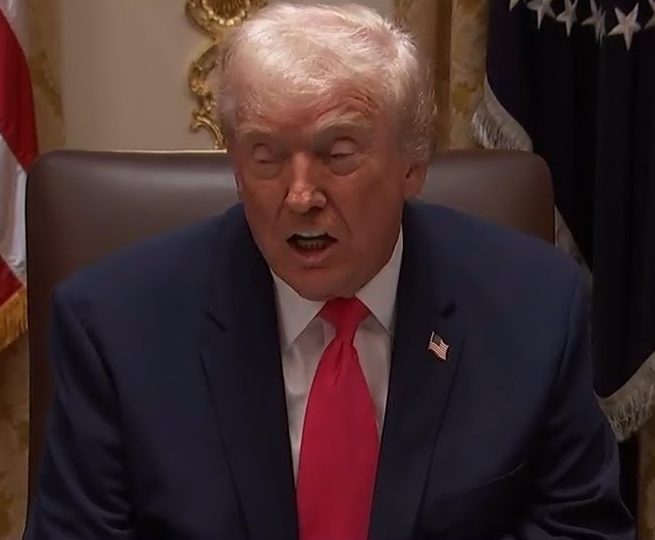
In a high-profile series of announcements on Tuesday, President Donald J. Trump laid out a multi-pronged agenda aimed at reshaping American economic life, social mobility, and infrastructure. Speaking at the White House with an air of determination, Trump unveiled plans that span from childhood investment accounts to leadership changes at the Federal Reserve, and a major overhaul of one of the nation’s busiest airports.
“Trump Accounts”: A Generational Investment in Children
The centerpiece of the day’s announcements was a new program designed to give American children a financial head start. Called “Trump Accounts,” the initiative will create investment accounts for millions of children across the United States. This effort was bolstered by a historic philanthropic pledge from billionaire Michael Dell and his wife Susan Dell, who committed $6.25 billion to the program. Their contributions are intended to seed accounts for children whose families do not otherwise qualify for federal support.
Under the plan, the U.S. Treasury will deposit $1,000 into the accounts of children born between 2025 and 2028. For children under ten years old whose families do not meet the eligibility requirements for federal seed funding, the Dell family will contribute $250 per child. The accounts will be invested in low-cost stock-market index funds, designed to grow over time. Funds will become accessible when beneficiaries reach the age of 18 and can be used for higher education, starting a business, purchasing a home, or other long-term investments.
Trump framed the initiative as “a generational opportunity,” emphasizing that it allows all American children, regardless of family income, to have a stake in long-term financial security. He praised the Dells’ contribution as one of the most significant philanthropic acts in modern American history, and encouraged other philanthropists and corporations to consider similar commitments.
Proponents of the program argue that it could help democratize access to capital, reduce wealth inequality, and instill early financial literacy in young Americans. Critics, however, caution that stock-market investments carry inherent risks. They argue that families relying on this program could be adversely affected if markets experience significant downturns. Others contend that immediate social needs may be better addressed through direct support programs rather than long-term investment accounts.
Federal Reserve Shakeup: A New Chair Coming
Alongside social investment plans, Trump announced that he will nominate a new chair for the Federal Reserve in early 2026. This move is seen as a significant step in shaping the nation’s economic policy, given the central bank’s influence over interest rates, inflation, and the broader financial system.
Trump stated that he has already selected his preferred candidate, though the individual’s identity has not yet been disclosed. The current Fed Chair is set to conclude his term in May 2026, making the timing of this nomination particularly crucial. Analysts suggest that the new chair could influence borrowing costs, mortgage rates, and overall economic growth depending on the policies implemented.
This announcement has sparked attention from financial markets and economic experts, as any new leadership at the Federal Reserve carries the potential to affect global financial stability. While the new chair may prioritize lower interest rates to stimulate economic growth, they will also need to balance concerns such as inflation, employment, and international economic risks.
Infrastructure Overhaul: Rebuilding Dulles International Airport
In a move aimed at modernizing U.S. infrastructure, Trump announced plans to revamp Washington Dulles International Airport. Describing the current facility as “not a good airport,” Trump criticized its aging shuttle systems and outdated design. He unveiled plans to replace these shuttles with modern people-movers and to redesign parts of the terminal to accommodate contemporary travel needs.
Opened in 1962 and known for its iconic terminal designed by Eero Saarinen, Dulles Airport has long been a major hub for domestic and international travel. Trump emphasized the need to update the facility to meet the demands of modern aviation, improve passenger experience, and support regional economic growth. He described the planned overhaul as a visible, tangible project that will leave a lasting legacy.
The airport modernization is expected to be one of the largest infrastructure projects in the Washington area. While details about funding and timelines are still under discussion, the initiative signals a focus on large-scale, high-visibility projects that aim to combine functionality with political symbolism.
Political and Economic Implications
Taken together, these announcements reveal a strategic effort by the Trump administration to address multiple facets of American life. By combining financial opportunity for children, economic leadership changes, and major infrastructure projects, Trump is signaling a vision that spans both the immediate and the long-term.
For families, “Trump Accounts” represent a potential financial boost and an introduction to long-term wealth accumulation. For investors and policymakers, the impending Fed leadership change could reshape economic strategies and financial planning nationwide. For travelers and regional planners, the Dulles Airport project promises a tangible, concrete improvement in infrastructure.
However, each initiative carries inherent risks and uncertainties. The Trump Accounts program depends on market performance and family participation. The Fed chair nomination faces the challenges of Senate confirmation and potential policy constraints. The Dulles Airport overhaul requires careful coordination between federal agencies, airport authorities, airlines, and local communities, alongside substantial financial investment.
Public Reaction and Critiques
Responses to the announcements have been mixed. Supporters applaud the focus on long-term solutions, viewing the initiatives as innovative ways to build economic opportunity, modernize infrastructure, and demonstrate decisive leadership. They argue that encouraging private philanthropy alongside government programs can leverage resources effectively and foster greater societal benefits.
Critics, on the other hand, raise concerns about the feasibility and equity of these proposals. Some suggest that stock-market-based investment accounts may not serve all children equally, particularly in volatile economic periods. Others question whether redirecting attention to high-profile projects like airport overhauls diverts resources from pressing immediate needs such as healthcare, education, and poverty alleviation.
The Fed chair nomination also draws scrutiny. Experts debate whether political considerations might compromise the central bank’s independence or whether the nominee can effectively balance growth and stability amid complex economic pressures.
The Strategic Vision
The broader strategy behind these announcements appears to be both symbolic and practical. By launching initiatives that span social mobility, economic leadership, and infrastructure, the administration is projecting an image of proactive governance and forward-looking leadership.
Trump’s emphasis on high-profile, tangible projects — such as the airport overhaul — complements longer-term financial programs like the Trump Accounts. This combination serves to appeal to multiple constituencies: families concerned with future opportunities, business leaders and investors focused on economic conditions, and the general public interested in visible improvements to public services.
Additionally, the Dell family’s philanthropic pledge adds weight and credibility to the investment account program. By involving private sector resources, the administration underscores its commitment to public-private partnerships as a model for future social initiatives.
What Lies Ahead
While the announcements are ambitious, execution will be the true test. Key questions remain:
-
Will families contribute to and utilize the Trump Accounts effectively?
-
Can the Fed chair nominee implement policies that balance growth with economic stability?
-
How will funding and logistical challenges affect the Dulles Airport project?
-
Will these initiatives produce tangible results or merely serve as symbolic political gestures?
The coming months will be critical in determining whether these announcements translate into measurable outcomes. Stakeholders, from policymakers to families, will be closely monitoring the rollout of each program and project.
Conclusion
Today’s announcements reflect an administration seeking to leave a multifaceted legacy — one that touches the lives of young Americans, shapes the nation’s economic policy, and transforms a key piece of the country’s infrastructure. The Trump Accounts program aims to provide financial empowerment for the next generation, the Fed chair nomination could influence national and global markets, and the Dulles Airport overhaul promises a visible symbol of modernization.
While ambitious and visionary, each initiative carries inherent challenges and uncertainties. Their success will depend on effective implementation, political negotiation, and real-world outcomes. Yet for now, these announcements mark a bold step toward reshaping the landscape of American opportunity and infrastructure — signaling a president intent on leaving a lasting imprint across multiple domains of national life.
Only time will reveal whether these initiatives achieve their transformative goals or remain ambitious proposals with uncertain results. Regardless, today’s announcements underscore a proactive, multi-dimensional approach to leadership that seeks to combine financial empowerment, economic oversight, and infrastructural modernization in a single, ambitious agenda.

Emily Johnson is a critically acclaimed essayist and novelist known for her thought-provoking works centered on feminism, women’s rights, and modern relationships. Born and raised in Portland, Oregon, Emily grew up with a deep love of books, often spending her afternoons at her local library. She went on to study literature and gender studies at UCLA, where she became deeply involved in activism and began publishing essays in campus journals. Her debut essay collection, Voices Unbound, struck a chord with readers nationwide for its fearless exploration of gender dynamics, identity, and the challenges faced by women in contemporary society. Emily later transitioned into fiction, writing novels that balance compelling storytelling with social commentary. Her protagonists are often strong, multidimensional women navigating love, ambition, and the struggles of everyday life, making her a favorite among readers who crave authentic, relatable narratives. Critics praise her ability to merge personal intimacy with universal themes. Off the page, Emily is an advocate for women in publishing, leading workshops that encourage young female writers to embrace their voices. She lives in Seattle with her partner and two rescue cats, where she continues to write, teach, and inspire a new generation of storytellers.