

President Donald Trump has once again thrust the national conversation on cannabis into the spotlight—this time by signaling openness to reshaping federal law, even as researchers warn of a newly recognized and troubling side effect linked to long-term marijuana use. His comments, made earlier this year but resurfacing amid the growing debate, reveal both a willingness to reconsider long-standing regulations and a surprising admission about the complexity of the issue.
For a country where cannabis policy resembles a messy quilt of conflicting state and federal rules, Trump’s statements have reignited questions about how the U.S. should handle a substance that is legal in some states, tolerated in others, restricted in many, and yet still federally outlawed. The renewed attention comes as medical experts raise alarms about cannabis hyperemesis syndrome (CHS), a condition newly documented among frequent users and characterized by severe nausea and vomiting—sometimes bad enough to require hospitalization.
Below is a full breakdown of what President Trump actually said, what any potential change could mean for Americans, and why the medical community is issuing warnings at a time when cannabis use is more widespread than ever.
A Fractured Legal Landscape: How Cannabis Laws Work in the U.S. Today
To understand why President Trump’s comments matter, it’s important to recognize how fragmented American cannabis policy currently is. Although marijuana is widely available in many places—whether for medical purposes, recreational enjoyment, or both—the nation’s legal framework is deeply inconsistent.
On the federal level, cannabis remains classified as a Schedule I drug under the Controlled Substances Act of 1970. This classification is reserved for substances considered to have no accepted medical use and a high potential for abuse. That puts cannabis in the same category as heroin and LSD, despite decades of scientific and political debate.
Because of this federal classification:
-
Banks are reluctant to work with cannabis businesses
-
Research is severely restricted
-
Transporting cannabis across state lines is illegal
-
Federal employees are prohibited from using cannabis
-
Cannabis companies face unique tax burdens
Yet at the state level, the reality is far more varied.
More than half of U.S. states permit medical marijuana, allowing doctors to recommend cannabis for chronic pain, nausea associated with chemotherapy, neurological disorders, Multiple Sclerosis symptoms, and more. In many of these cases, cannabis is seen as a safer alternative to opioids.
Recreational laws differ even more dramatically. States such as California, Colorado, Michigan, and Nevada allow adults to legally buy and consume cannabis. Other states permit medical use only. Some have decriminalized possession, while a few still enforce strict penalties.
The result is a confusing patchwork: an American can legally purchase marijuana in one state, but become a criminal for possessing that same product only miles away across the border.
Trump Says He’s Considering Reclassification — And Calls Cannabis “Complicated”
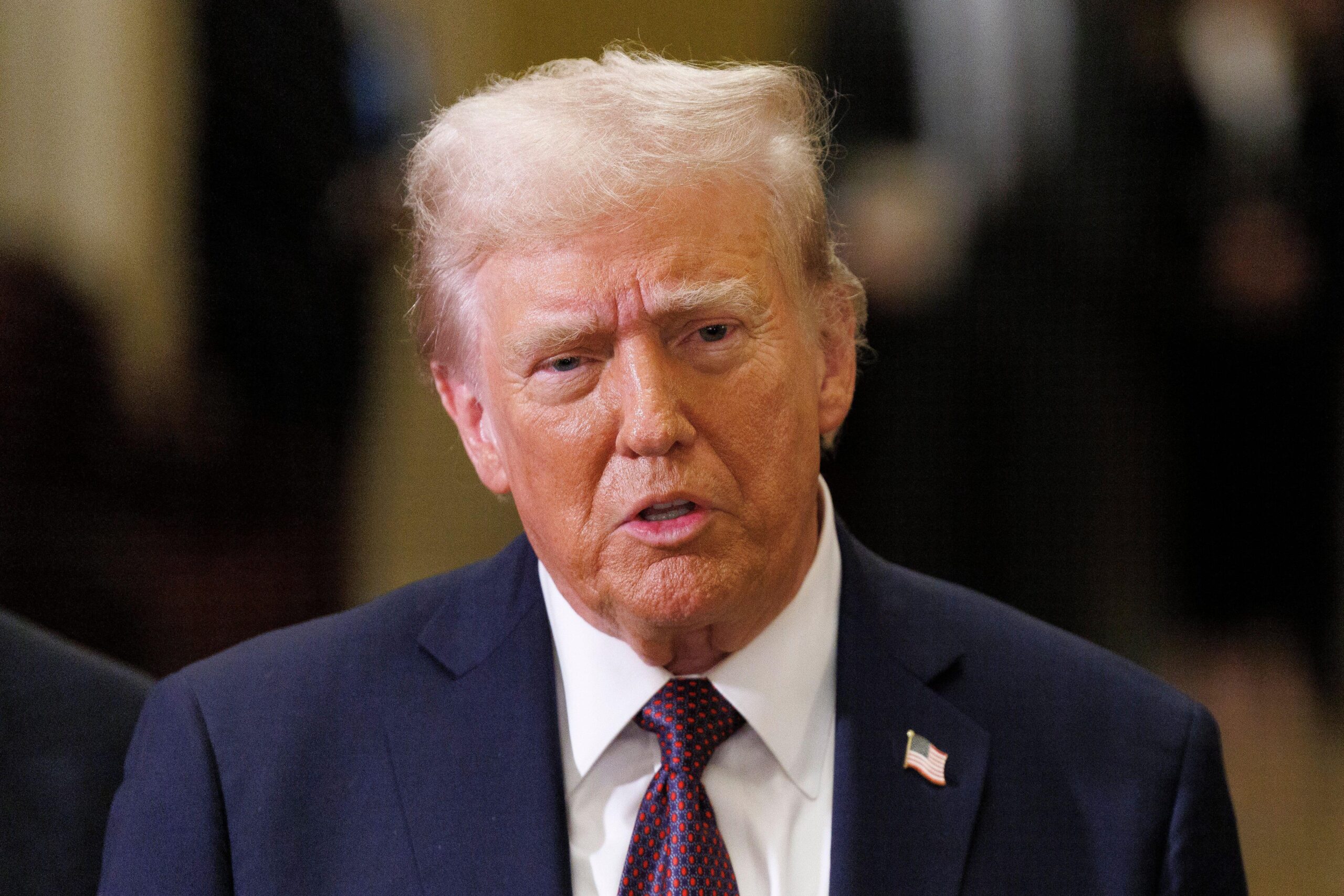
Against this uneven backdrop, President Trump’s latest comments have attracted major attention. He signaled that his administration is actively evaluating whether to reclassify cannabis at the federal level—an action that could reshape the legal, medical, and economic landscape.
“We’re looking at reclassification,” Trump said at a press event earlier this year. “We’ll make a determination over the next—I would say, over the next few weeks, and that determination hopefully will be the right one.”
Reclassification would be a significant shift. Moving cannabis out of Schedule I would:
-
Enable robust medical research
-
Allow banks to work with cannabis businesses
-
Reduce penalties for federal offenses
-
Create national standards and stability
-
Align federal law more closely with states that have legalized marijuana
Trump also made a surprising concession:
“It’s a very complicated subject.”
For a president known for direct, forceful statements, describing cannabis this way stood out. His remarks show an awareness of the political, medical, and regulatory complexities surrounding marijuana—issues that have evolved rapidly in recent years.
Trump further explained:
“I’ve heard great things having to do with medical and bad things having to do with just about everything else.”
This reflects the divided national sentiment: medical marijuana is widely accepted, but recreational use remains politically sensitive, especially among older and more conservative voters.
Why Trump’s Remarks Are Back in the Spotlight Now
The timing of Trump’s comments resurfacing coincides with growing concern over a newly recognized health condition linked to long-term cannabis use: cannabis hyperemesis syndrome (CHS).
CHS is paradoxical and alarming. While cannabis is well-known for treating nausea—especially in patients undergoing chemotherapy—regular, heavy use can trigger severe bouts of the very symptom it is reputed to relieve.
CHS symptoms include:
-
Intense nausea
-
Repeated vomiting
-
Abdominal cramps
-
Dehydration
-
Temporary inability to eat
Many patients require emergency room treatment, IV fluids, and anti-nausea medications. Some are hospitalized for multiple days.
Emergency medicine specialist Dr. Chris Buresh explained:
“Some people say they’ve used cannabis without a problem for decades. Or they smoke pot because they think it treats their nausea.”
The discovery of CHS is recent enough that many doctors still misdiagnose it as food poisoning, gallbladder issues, or a stomach virus—delaying proper treatment.
Buresh continued:
“It seems like there’s a threshold when people can become vulnerable to this condition, and that threshold is different for everyone. Even using in small amounts can make these people start throwing up.”
As cannabis becomes more potent and more widely used, doctors expect CHS cases to continue rising.
A Newly Uncovered Side Effect Raises High-Stakes Questions
The emergence of CHS has complicated an already heated national debate. It raises several important questions:
1. Are modern cannabis products too strong?
THC levels in today’s strains are far higher than those available decades ago, potentially altering long-term effects.
2. How many people are at risk?
Emergency departments report a noticeable increase in CHS cases, particularly among daily users.
3. Should states implement stronger health warnings?
Public health experts argue that consumers deserve clear information as cannabis markets expand.
4. Will CHS influence federal decisions on cannabis scheduling?
The discovery of a serious side effect may affect how regulators balance medical benefits against public risks.
With cannabis now legal or semi-legal for tens of millions of Americans, CHS has become a growing concern for policymakers.
What Reclassification Under President Trump Could Mean Nationwide
If Trump proceeds with reclassification, the changes could ripple across nearly every aspect of American life.
1. Major Expansion of Scientific Research
Researchers would finally have access to higher-quality cannabis and fewer bureaucratic barriers. This could lead to breakthroughs in understanding:
-
Long-term effects
-
Dosage safety
-
Potential treatments
-
Cannabinoids’ medical benefits
2. Financial Relief and Growth for Cannabis Businesses
Banks, payment processors, and insurers could legally serve cannabis companies, boosting:
-
Job creation
-
Tax revenue
-
Investment opportunities
3. Sentencing Reform at the Federal Level
Reclassification may lead to:
-
Reduced penalties
-
Easier expungements
-
Fairer treatment for non-violent offenders
4. Nationwide Standardization
Businesses, researchers, and medical professionals could work under unified federal guidelines rather than navigating 50 different state systems.
5. Public Health Safeguards
If CHS continues to rise, federal officials may pair reclassification with:
-
Potency caps
-
Consumer education
-
Mandatory health warnings
-
Funding for clinician training
President Trump’s comments signal that these issues are being weighed together—not separately.
Conclusion: A Policy Crossroads for America
As cannabis use grows and scientific understanding deepens, the United States stands at a pivotal turning point. President Trump’s openness to reevaluating the nation’s cannabis laws indicates a potential shift unlike any seen since the drug was first classified over half a century ago.
At the same time, the discovery of CHS underscores how much remains unknown about the long-term effects of today’s cannabis products—especially in heavy or daily users.
The debate is no longer simply about legalization versus prohibition. It is about modern medicine, economic opportunity, public safety, and evolving science.
President Trump summed it up clearly:
“It’s a very complicated subject.”
And for once, virtually everyone—from doctors to lawmakers to everyday Americans—seems to agree.

Emily Johnson is a critically acclaimed essayist and novelist known for her thought-provoking works centered on feminism, women’s rights, and modern relationships. Born and raised in Portland, Oregon, Emily grew up with a deep love of books, often spending her afternoons at her local library. She went on to study literature and gender studies at UCLA, where she became deeply involved in activism and began publishing essays in campus journals. Her debut essay collection, Voices Unbound, struck a chord with readers nationwide for its fearless exploration of gender dynamics, identity, and the challenges faced by women in contemporary society. Emily later transitioned into fiction, writing novels that balance compelling storytelling with social commentary. Her protagonists are often strong, multidimensional women navigating love, ambition, and the struggles of everyday life, making her a favorite among readers who crave authentic, relatable narratives. Critics praise her ability to merge personal intimacy with universal themes. Off the page, Emily is an advocate for women in publishing, leading workshops that encourage young female writers to embrace their voices. She lives in Seattle with her partner and two rescue cats, where she continues to write, teach, and inspire a new generation of storytellers.