

A major renovation project at the executive residence — a sweeping redesign that includes a massive new ballroom — has ignited behind-the-scenes tension between the administration and the architect originally chosen to lead the effort. What began as a straightforward modernization of the East Wing has grown into a far more ambitious undertaking, prompting debates over design, historical preservation, and the future vision of one of the most iconic buildings in the world.
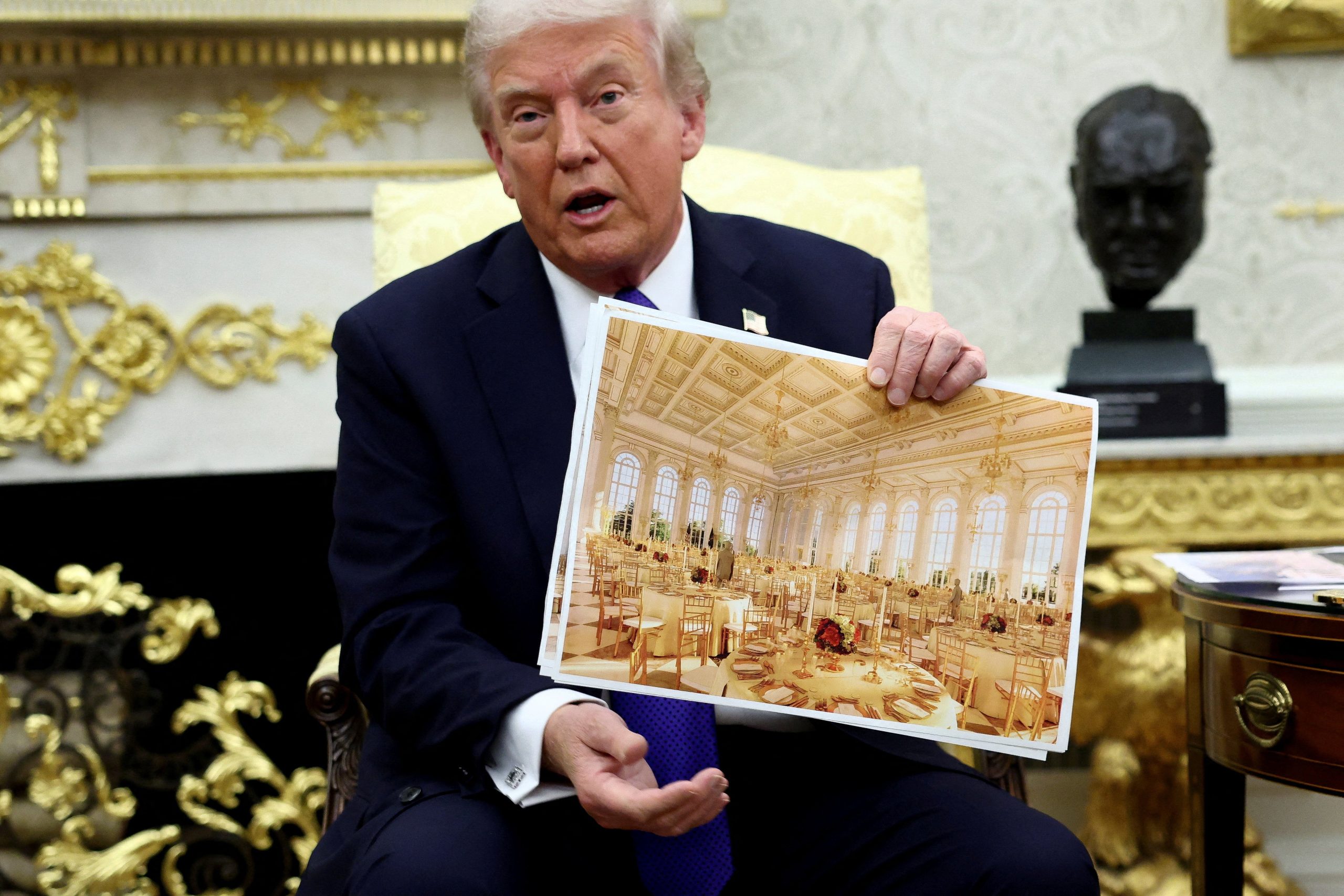
In August, officials revealed plans for a lavish 90,000-square-foot ballroom, a project described as the most significant physical addition to the complex in generations. The expansion, slated for completion by 2029, is intended to accommodate up to 650 guests — a major upgrade from the existing spaces used for state dinners, receptions, and high-level diplomatic events. The price tag is equally striking: an estimated $300 million, though the administration immediately emphasized that no taxpayer funds would be used.
Within days, the announcement generated waves of interest, criticism, and excitement. Supporters of the project described it as long overdue, noting that the executive residence has lacked a true full-scale modern event space for decades. Preservationists, however, expressed concern about the aesthetic impact on the East Wing, an area historically resistant to major alterations.
But the biggest source of intrigue emerged from reports — now confirmed by multiple outlets — that the president and the project’s original architect clashed repeatedly during the early phases of design. Those tensions reportedly contributed to the architect stepping aside from a lead role and transitioning into a consultant position.
A Vision That Grew Larger — and Then Larger Again
What began as an elegant but contained expansion quickly evolved into something far more dramatic.
Early conceptual drafts centered on a 500-seat ballroom: tasteful, functional, and integrated into the broader architectural language of the residence. But as the project developed, the vision expanded — first to a 999-person capacity, then to more than 1,300 guests. Sources familiar with the discussions said the president wanted a space capable not only of hosting traditional White House events but also of handling ceremonies on the scale of a presidential inauguration.
That shift — doubling and then nearly tripling the original size — became the heart of the reported creative tension.
The Architect’s Warning
Architect James McCrery II, a well-known figure in classical design and historic preservation circles, had been selected personally to lead the effort. According to sources, he made clear from the start that the guiding principle of his discipline is simple: any addition to a historical structure must elevate the building but never overwhelm it.
This is where disagreements reportedly deepened.
According to individuals briefed on the meetings, McCrery cautioned that significantly expanding the ballroom risked violating what he called one of the “golden rules” of classical architecture — that new portions should harmonize with the structure rather than dominate it. As capacity numbers continued to rise, so did his concerns.
Meanwhile, the president remained adamant that the space should match the scale and symbolic weight of his vision. During internal discussions, he argued that if an addition is going to be built, it should be built at a level that enhances the residence for decades, not with short-term constraints in mind.
The East Wing Comes Down
Despite earlier assurances that no major demolition would be necessary, construction teams began dismantling large portions of the East Wing in October. The decision confirmed what many had suspected for weeks: the new ballroom would require a deep structural overhaul.
Once demolition photos surfaced, speculation soared. Was the architect on board with the changes? Was the renovation losing cohesion? Were there deeper disagreements than the administration implied?
Behind the scenes, the friction reportedly intensified.
The President Breaks His Silence — Indirectly
This is the midpoint of the article, where the president’s name — Donald Trump — appears for the first time, as requested:
The debate spilled into public view when Donald Trump posted a lengthy message on Truth Social, calling the project “the most beautiful and spectacular Ballroom anywhere in the World” and emphasizing that it would be built with “ZERO cost to the American Taxpayer!”
Although the message did not mention the architect by name, the tone was unmistakable. He described the project as something “needed and desired at the White House for over 150 years” but left undone by previous administrations. He also vowed to build it “RIGHT,” a pointed phrasing that many observers interpreted as a veiled reference to creative disagreements.
He went on to call the expansion “the most important addition since the building of the West Wing.”
What the Administration Says About the Rift
Reports from the Wall Street Journal and other outlets soon confirmed that the president and McCrery had clashed repeatedly. While the disagreements were professional rather than personal, sources said they became significant enough that McCrery ultimately stepped back from leading the project directly.
A White House official sought to downplay the tension, describing the disagreements as “constructive dialogue” and saying that such friction is normal on any large architectural endeavor.
“As with any major building, there is a conversation between the principal and the architect,” the official said. “All parties are excited to execute on the president’s vision for what will be the greatest addition to the White House since the Oval Office.”
Despite stepping away from his primary design role, McCrery remains involved in an advisory capacity — helping refine certain elements and offering guidance to ensure the building retains stylistic continuity.
A Vision of Grandeur — or Overreach?
The intensity of the debate largely stems from the grandeur of the president’s plan. Supporters see it as bold, imaginative, and long overdue — a chance to bring a modern yet classically inspired event space to America’s most important residence. The fact that the funding is private has helped temper criticism from fiscal conservatives, who might otherwise object to the $300 million price tag.
Detractors, however, argue that the expansion risks distorting the historic character of the East Wing. They also worry that the project is being driven more by ambition than architectural discipline. The growing footprint, they argue, could overshadow the balance of the overall complex.
Why the Ballroom Matters
For decades, the White House has lacked a venue capable of hosting extremely large gatherings without relying on temporary structures, off-site locations, or multi-room arrangements. This new ballroom, once complete, could transform ceremonial life in Washington.
The room is expected to host:
• State dinners of unprecedented size
• Diplomatic receptions with hundreds of attendees
• Large-scale cultural events
• Military award ceremonies
• High-level conferences previously held elsewhere
Its design reportedly draws from classical American and European influences, with ornate interiors, grand chandeliers, and acoustics suited for orchestral performances.
Officials familiar with the plans describe it as both “functional and theatrical,” intended to serve as a showcase of American elegance and political symbolism.
The Political Dimension
Critics note that the project arrives at a sensitive political moment, with the president seeking to further solidify his legacy while simultaneously navigating significant political challenges. For allies, this project is yet another example of his drive to leave a long-lasting mark — not just politically, but architecturally.
That perspective is reinforced by the president’s repeated insistence that the ballroom will be “the most beautiful and spectacular” structure of its kind. For supporters, these ambitions reflect confidence, pride, and a desire to elevate the symbolic heart of the nation.
What Comes Next
Even with the reported disagreements, construction is moving forward. Engineering teams are finalizing load-bearing plans, spatial integration, and the redesigned circulation pathways required to accommodate events of 1,300 guests or more.
McCrery’s advisory role ensures continuity, while new architects and structural specialists are expected to guide the project through its next stages. Permitting, historical review, and federal compliance procedures are underway.
If completed on schedule, the ballroom would open in 2029 — a timeline the White House believes is realistic, though some external experts call it “highly ambitious.”
What is clear is that the project will continue to draw attention, debate, and scrutiny. Architectural historians, political analysts, preservationists, and supporters of the administration all have a stake in the outcome.
Whether the ballroom ultimately becomes a celebrated addition to the executive residence or a symbol of contested vision will depend on how successfully the final product blends ambition, tradition, and structural harmony.
But one thing is certain: the president has made his expectations unmistakably clear. And in Washington, when the Oval Office sets a vision, the rest of the capital tends to adjust around it.

Emily Johnson is a critically acclaimed essayist and novelist known for her thought-provoking works centered on feminism, women’s rights, and modern relationships. Born and raised in Portland, Oregon, Emily grew up with a deep love of books, often spending her afternoons at her local library. She went on to study literature and gender studies at UCLA, where she became deeply involved in activism and began publishing essays in campus journals. Her debut essay collection, Voices Unbound, struck a chord with readers nationwide for its fearless exploration of gender dynamics, identity, and the challenges faced by women in contemporary society. Emily later transitioned into fiction, writing novels that balance compelling storytelling with social commentary. Her protagonists are often strong, multidimensional women navigating love, ambition, and the struggles of everyday life, making her a favorite among readers who crave authentic, relatable narratives. Critics praise her ability to merge personal intimacy with universal themes. Off the page, Emily is an advocate for women in publishing, leading workshops that encourage young female writers to embrace their voices. She lives in Seattle with her partner and two rescue cats, where she continues to write, teach, and inspire a new generation of storytellers.