

A devastating and chaotic scene unfolded just blocks from the White House on Tuesday afternoon after two National Guard members were fatally shot in what authorities have described as a targeted and deeply troubling act of violence. The incident triggered immediate security measures, including a full lockdown of the White House complex, and prompted emotional reactions from state and federal officials.
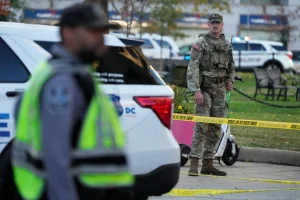
The shooting occurred near the entrance of the Farragut West Metro station, a heavily trafficked transit hub located near 17th Street and I Street NW in downtown Washington, D.C. The area—centrally positioned between government buildings, corporate offices, and hotels—is normally filled with commuters and visitors moving through the capital. At approximately 2:20 p.m. ET, gunfire erupted, sending civilians scrambling for safety and prompting a massive, multi-agency emergency response.
Authorities quickly confirmed that two of the victims were members of the National Guard who had been stationed in the city as part of an expanded security presence. Both Guardsmen succumbed to their injuries. A third victim, whose identity has not yet been released, was taken to the hospital in critical condition.
The news drew swift and emotional reactions, among them a statement from West Virginia Governor Patrick Morrisey, who revealed that the two slain Guardsmen were from his state. “These brave West Virginians lost their lives in the service of their country,” Morrisey said. “West Virginia will never forget their service or their sacrifice, and we will demand full accountability for this horrific act.”
Not long after the shooting, police announced that a suspect had been taken into custody. Law enforcement officials told multiple outlets that the attacker was injured during the incident and is currently hospitalized. Authorities have not released the suspect’s name or possible motives, but the investigation is ongoing and involves federal, local, and military agencies.
Within minutes of the shots being fired, the White House was placed under lockdown out of an abundance of caution. Though it was soon established that the president’s safety was not directly at risk, the proximity of the violence to the executive mansion triggered standard emergency protocols. Reuters correspondent Jeff Mason confirmed the lockdown after witnessing security personnel closing off the perimeter.
White House Press Secretary Karoline Leavitt issued a statement acknowledging the gravity of the moment. “The White House is aware and actively monitoring this tragic situation. The President has been briefed,” she said. Security officials continued to coordinate with the Metropolitan Police Department, the Secret Service, and other agencies to ensure there was no broader threat to federal facilities or personnel.
Homeland Security Secretary Kristi Noem urged the public to join in prayer for the fallen service members, calling the shooting “a heartbreaking act of violence against those who stand guard for our nation.”
Images from the scene showed a massive law enforcement presence, with police vehicles, emergency medical teams, and tactical units surrounding the Metro entrance. Several blocks were shut down as authorities secured the area and searched for any potential accomplices. Investigators also began reviewing surveillance footage from nearby buildings and the transit system, hoping to reconstruct the moments leading up to the attack.
President Donald Trump was not at the White House during the incident. The president had traveled to his Palm Beach resort for Thanksgiving week, where he was receiving updates from national security aides. Vice President JD Vance was also out of Washington on scheduled travel in Kentucky.
Shortly after being briefed, Trump issued a strongly worded statement on Truth Social addressing the shooting and expressing solidarity with the National Guard and all law enforcement officers involved. “The animal that shot the two National Guardsmen, with both being critically wounded, and now in two separate hospitals, is also severely wounded, but regardless, will pay a very steep price. God bless our Great National Guard, and all of our Military and Law Enforcement,” Trump wrote. “These are truly Great People. I, as President of the United States, and everyone associated with the Office of the Presidency, am with you!”
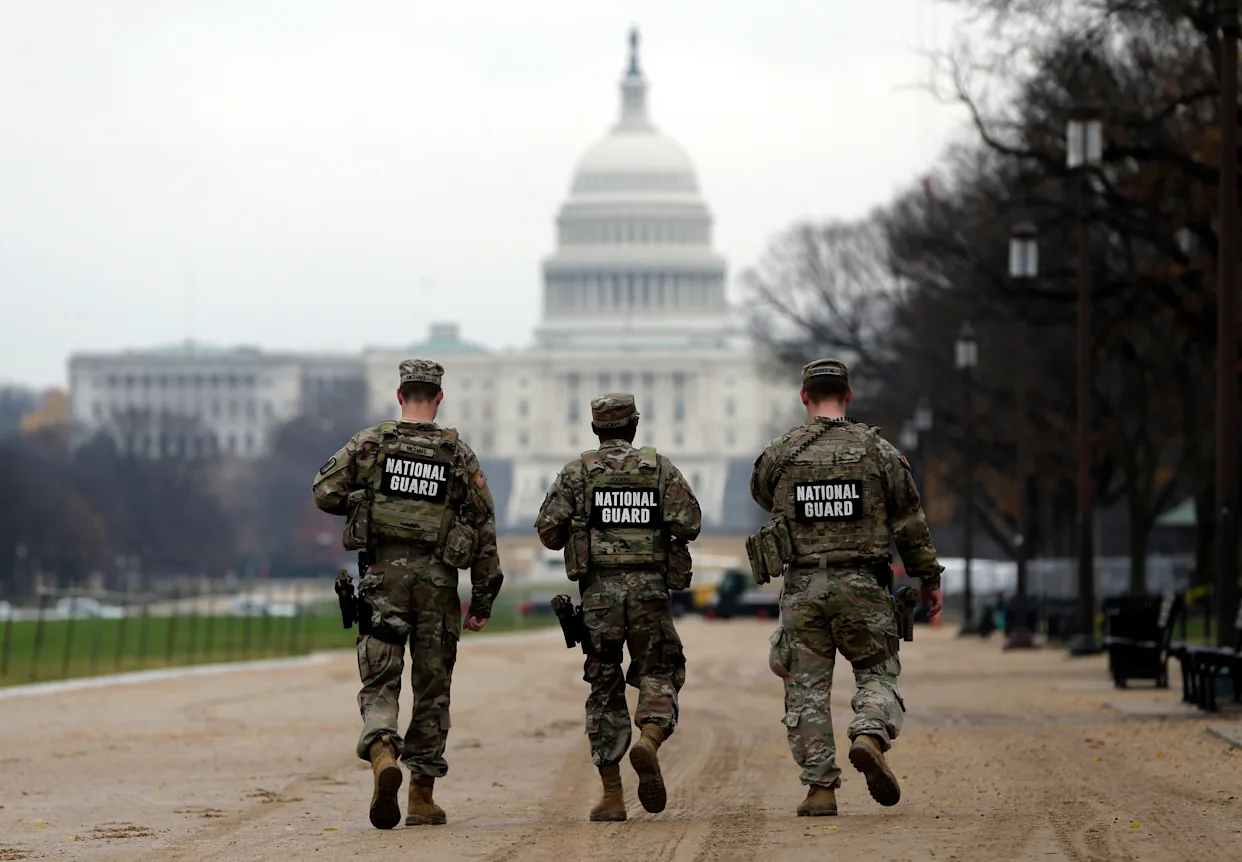
The president’s message underscored the heightened tension surrounding security in Washington, where National Guard members have had an increased presence since the summer. In August, Trump issued an emergency order federalizing the Metropolitan Police Department—a rare and controversial move that effectively placed the city’s law enforcement operations under federal control. As part of the order, National Guard units from eight states were deployed to patrol high-traffic areas and support crime-reduction operations in the capital.
Sky News reported that hundreds of Guardsmen have been regularly stationed across D.C. since that action, which the administration has framed as essential to restoring safety in a city the president has frequently described as being overwhelmed by violent crime.
The latest tragedy is likely to intensify debates over those policing policies. Supporters of the federal intervention say the attacks highlight the dangers these service members face and justify the need for strong federal oversight. Critics, however, argue that increased militarization can strain the relationship between law enforcement and the community.
The impact of the shooting extended beyond the immediate scene. According to NBC, the Federal Aviation Administration temporarily suspended flights into Ronald Reagan Washington National Airport due to its proximity to the unfolding incident. Flight delays quickly accumulated as air traffic controllers implemented emergency protocols before gradually resuming normal operations later in the afternoon.
Witnesses near the Metro entrance described scenes of panic as shots rang out. Commuters ran from escalators and platforms while police shouted for people to clear the area. “It was chaos,” one witness said, noting that police arrived “within seconds” and quickly established a perimeter.
As investigators work to determine what motivated the suspect, the city remains on edge. The attack on uniformed personnel so close to the White House raises serious questions about security readiness and the potential targeting of federal or military members stationed in the capital.
The National Guard released a statement shortly after the shooting, expressing condolences to the families of the fallen and emphasizing their continued commitment to protecting the city. “We’re aware of the incident and we are working closely with the Metropolitan Police Department and other law enforcement agencies,” the statement read. “The health and safety of our service members is our top priority as we continue to support the citizens and visitors of Washington, DC.”
The coming days are expected to bring more clarity as authorities interview the suspect, gather digital evidence, and await updates from hospitals treating the surviving victim. Questions about whether the attack was premeditated, whether the Guardsmen were intentionally targeted, and how the shooter reached one of the most heavily policed areas in the nation will all be part of an intensive investigation.
For now, Washington mourns the loss of two service members who were, as Governor Morrisey emphasized, fulfilling their duty when tragedy struck. The incident serves as a grim reminder of the risks faced by those tasked with protecting the capital—and of how swiftly violence can erupt even in areas assumed to be among the safest in the country.
More developments are expected as officials continue to brief federal leaders and release additional information to the public.

Emily Johnson is a critically acclaimed essayist and novelist known for her thought-provoking works centered on feminism, women’s rights, and modern relationships. Born and raised in Portland, Oregon, Emily grew up with a deep love of books, often spending her afternoons at her local library. She went on to study literature and gender studies at UCLA, where she became deeply involved in activism and began publishing essays in campus journals. Her debut essay collection, Voices Unbound, struck a chord with readers nationwide for its fearless exploration of gender dynamics, identity, and the challenges faced by women in contemporary society. Emily later transitioned into fiction, writing novels that balance compelling storytelling with social commentary. Her protagonists are often strong, multidimensional women navigating love, ambition, and the struggles of everyday life, making her a favorite among readers who crave authentic, relatable narratives. Critics praise her ability to merge personal intimacy with universal themes. Off the page, Emily is an advocate for women in publishing, leading workshops that encourage young female writers to embrace their voices. She lives in Seattle with her partner and two rescue cats, where she continues to write, teach, and inspire a new generation of storytellers.