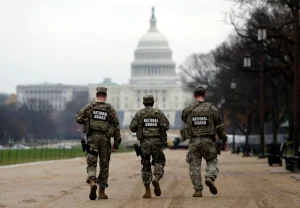


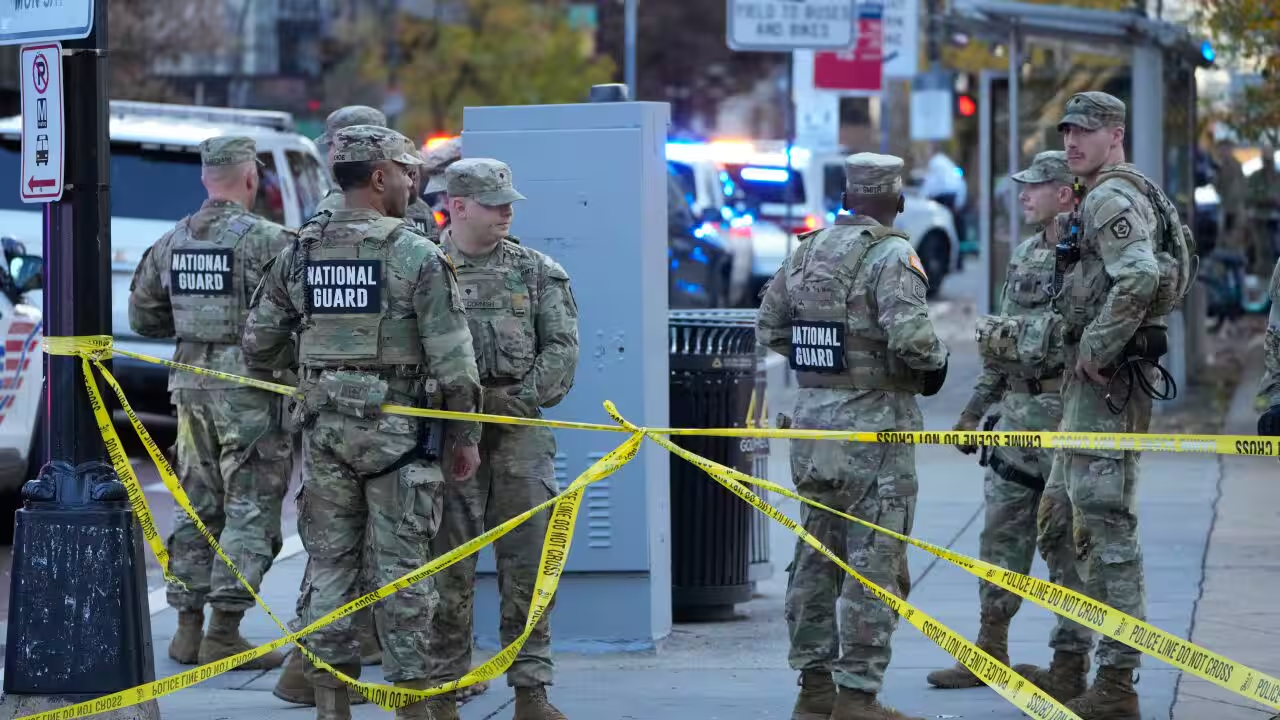
A major security scare unfolded in Washington, D.C., on Tuesday afternoon after gunfire erupted just blocks from the White House, leaving multiple victims—including at least two National Guardsmen—critically wounded. The incident triggered an immediate lockdown of the White House complex and set off a wave of urgent responses from federal officials, culminating in a forceful statement from President Donald Trump.
The shooting occurred shortly after 2:20 p.m. ET near the entrance of the Farragut West Metro station, a bustling transit hub located close to the intersection of 17th Street and I Street NW, an area that is typically crowded with commuters, office workers, and tourists. At the time of the attack, the president was not in the capital. Trump was at his Mar-a-Lago resort in Palm Beach, Florida, preparing for the Thanksgiving holiday. Vice President JD Vance was also away from Washington, traveling for scheduled events in Kentucky.
Despite being out of the city, Trump quickly issued a public response once details of the shooting were relayed to him. In a strongly worded statement, the president condemned the attacker responsible and expressed deep concern for the wounded service members.
“The animal that shot the two National Guardsmen, with both being critically wounded and now in two separate hospitals, is also severely wounded, but regardless, will pay a very steep price,” Trump said. “God bless our Great National Guard, and all of our Military and Law Enforcement. These are truly Great People. I, as President of the United States, and everyone associated with the Office of the Presidency, am with you!”
The victims—three individuals in total according to authorities, including the two Guardsmen—were transported to nearby hospitals. Law enforcement sources said their conditions remained “critical,” and medical teams were working urgently to stabilize them.
Police confirmed a suspect had been taken into custody shortly after the shooting. Authorities have yet to publicly disclose the suspect’s identity or possible motives, but investigators are conducting interviews and analyzing surveillance footage from the surrounding area. The neighborhood where the shooting took place is lined with office buildings, federal facilities, and transit routes, making situational awareness a central focus of the ongoing investigation.
Multiple law enforcement agencies responded, including officers from the Metropolitan Police Department (MPD), Secret Service personnel, and federal rapid-response teams. The White House entered a precautionary lockdown as a safety measure while officials assessed whether the attack posed any ongoing threats to the area or to federal institutions.
Karoline Leavitt, the White House Press Secretary, confirmed that federal authorities immediately briefed the president and that the situation was being monitored in real time. “The White House is aware and actively monitoring this tragic situation. The President has been briefed,” Leavitt said.
A spokesperson for the National Guard issued a statement hours later, emphasizing that the safety of service members is paramount and that the Guard is working closely with MPD and other law enforcement partners. “We’re aware of the incident and we are working closely with the Metropolitan Police Department and other law enforcement agencies,” the statement read. “The health and safety of our service members is our top priority as we continue to support the citizens and visitors of Washington, DC.”
The Department of Homeland Security also reacted swiftly. Homeland Security Secretary Kristi Noem took to social media, urging the public to join her in prayer for the wounded Guardsmen. “Please join me in praying for the two National Guardsmen who were just shot moments ago in Washington, DC,” she wrote.
The shooting comes at a moment of heightened federal involvement in D.C. law enforcement. Earlier this year, Trump announced a federal takeover of the Metropolitan Police Department, citing surging crime rates and concerns about public safety in the nation’s capital. It was one of the most aggressive moves taken by the administration in response to what the president has frequently described as an unacceptable breakdown of law and order.
At the time of the takeover announcement, the administration outlined plans to deploy National Guard troops across key areas of the city to supplement police presence, particularly in zones identified as high-risk. Trump accused local officials of failing to control violent crime and insisted federal intervention was necessary to restore safety. “This is liberation day in D.C., and we’re gonna take our capital back,” Trump declared during the announcement at the White House.
The president framed Washington as a city in urgent need of federal rescue, referring to it as “worse than the worst places on Earth” and declaring that local leadership had allowed the capital to become a “sanctuary for illegal alien criminals.” While the remarks drew criticism from some officials in the city, others acknowledged long-standing concerns that federal pressure could force a renewed focus on public safety.
The latest shooting has intensified those debates. Supporters of the administration’s crackdown argue that the attack underscores the need for strong federal oversight, especially when service members standing watch near key transportation hubs are targeted. Critics, however, say the president’s aggressive posture risks further destabilizing the relationship between local authorities and federal agencies.
For many Washington residents, the shooting was shocking but not entirely surprising. Violent incidents near major transit stations have become more common in recent years, fueling public frustration with what locals perceive as inadequate crime prevention measures. The proximity of the attack to the White House only amplified concerns about the city’s overall security environment.
Witnesses described chaos in the moments after shots rang out. Commuters waiting to enter or exit the Metro station fled toward nearby buildings, while others sought cover behind transit railings and bus shelters. Police quickly cordoned off the area, shutting down streets and halting Metro service at Farragut West as emergency crews transported victims and searched for potential accomplices.
Within an hour, the White House perimeter was secured, although the lockdown remained in place as a precaution while federal teams swept the area and gathered additional intelligence. As news outlets broke updates, speculation spread rapidly online, with some users questioning whether the shooting was linked to broader threats or had been an isolated act of violence. Authorities have not publicly discussed motive, but officials say there is no currently known threat to the wider public.
Trump’s rapid response signaled the seriousness with which the administration is treating the incident. He emphasized support not only for the National Guard but for all law enforcement agencies that responded to the emergency. Advisers close to the president noted that he considers attacks on military personnel especially grave, viewing them as assaults on the country itself.
As the situation continues to unfold, federal authorities are expected to release additional information about the suspect, possible motives, and updates on the victims’ conditions. The incident also raises new questions about the broader state of security in Washington ahead of major holiday travel and public celebrations, which typically draw large crowds and require coordinated law enforcement planning.
For now, investigators remain on the ground piecing together the events leading up to the shooting. Surveillance footage from Metro entrances, street cameras, and nearby businesses will play a critical role in understanding the suspect’s movements. Witness statements are also being collected, and local officials have urged residents who were in the area to come forward with any relevant information.
Federal and local leaders are expected to address the public once more details are known. With the White House still under tightened security and the city on edge, officials are working to reassure residents that the situation is under control.
More information is expected as authorities continue their work.

Emily Johnson is a critically acclaimed essayist and novelist known for her thought-provoking works centered on feminism, women’s rights, and modern relationships. Born and raised in Portland, Oregon, Emily grew up with a deep love of books, often spending her afternoons at her local library. She went on to study literature and gender studies at UCLA, where she became deeply involved in activism and began publishing essays in campus journals. Her debut essay collection, Voices Unbound, struck a chord with readers nationwide for its fearless exploration of gender dynamics, identity, and the challenges faced by women in contemporary society. Emily later transitioned into fiction, writing novels that balance compelling storytelling with social commentary. Her protagonists are often strong, multidimensional women navigating love, ambition, and the struggles of everyday life, making her a favorite among readers who crave authentic, relatable narratives. Critics praise her ability to merge personal intimacy with universal themes. Off the page, Emily is an advocate for women in publishing, leading workshops that encourage young female writers to embrace their voices. She lives in Seattle with her partner and two rescue cats, where she continues to write, teach, and inspire a new generation of storytellers.