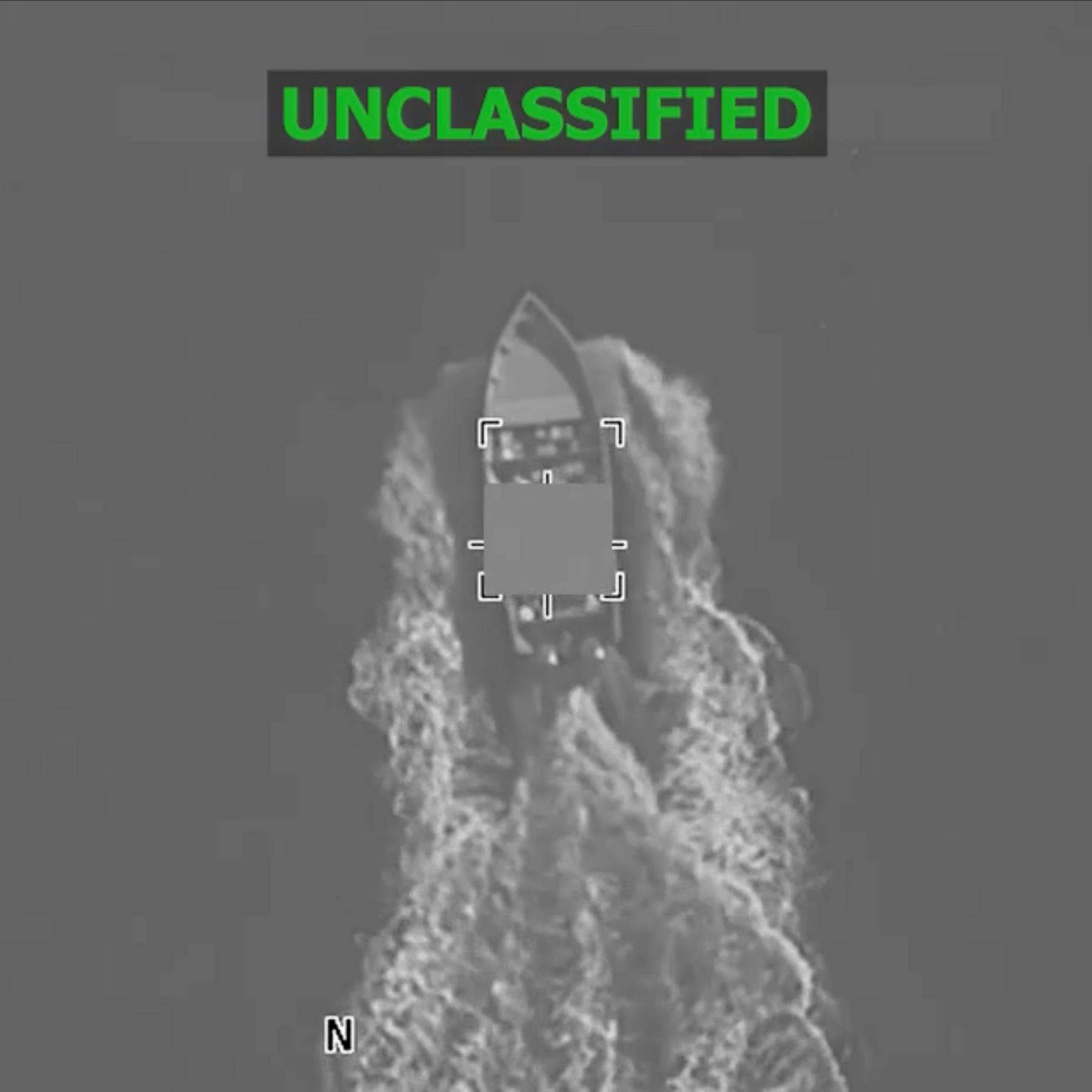
The United States military carried out a series of airstrikes Monday against three vessels allegedly involved in narcotics trafficking, killing eight individuals aboard the boats, according to a statement released by U.S. Southern Command. The operation marks another escalation in the administration’s use of military force against transnational drug cartels, which have recently been designated as terrorist organizations under U.S. policy.
In a post published on X, U.S. Southern Command said the strikes were conducted on December 15 in international waters in the Eastern Pacific Ocean. The action was carried out by Joint Task Force Southern Spear at the direction of Secretary of War Pete Hegseth, the statement said.
“On Dec. 15, at the direction of Secretary of War Pete Hegseth, Joint Task Force Southern Spear conducted lethal kinetic strikes on three vessels operated by Designated Terrorist Organizations in international waters,” Southern Command wrote. “Intelligence confirmed that the vessels were transiting along known narco-trafficking routes and were engaged in narco-trafficking.”
According to the military, the strikes resulted in the deaths of eight individuals described as “male narco-terrorists.” Three people were killed aboard the first vessel, two aboard the second, and three aboard the third.
Details of the Operation
Southern Command did not specify the precise location of the strikes beyond noting that they occurred in the Eastern Pacific, a region long associated with maritime drug trafficking routes linking South and Central America to North American markets. The command also did not disclose what aircraft or munitions were used in the operation, citing operational security concerns.
Officials said the decision to strike was based on intelligence assessments indicating that the vessels were actively transporting narcotics on behalf of cartel-linked organizations. The boats were reportedly operating along routes frequently used to smuggle cocaine and other illicit drugs, often using high-speed “go-fast” vessels designed to evade detection by law enforcement and naval patrols.
The military emphasized that the operation took place in international waters, underscoring that the strikes were not conducted within the territorial waters of any nation. Southern Command did not identify the cartels involved, nor did it provide details about the quantity of drugs believed to be aboard the vessels at the time of the strikes.
Designation of Cartels as Terrorist Organizations
The strikes come amid a broader shift in U.S. policy toward transnational drug trafficking organizations. The administration has moved to designate several major cartels as terrorist groups, a classification that significantly expands the range of tools available to U.S. authorities, including the potential use of direct military force.
By labeling cartels as terrorist organizations, the administration has argued that narcotics trafficking constitutes not only a criminal enterprise but also a national security threat. Officials say the flow of drugs into the United States fuels addiction, violence, and instability, and that cartels increasingly operate with the sophistication, resources, and brutality of insurgent groups.
Southern Command’s statement explicitly referenced the terrorist designation, noting that the vessels were “operated by Designated Terrorist Organizations.” This language signals a deliberate framing of the operation as part of a counterterrorism effort rather than a traditional law enforcement or counternarcotics mission.
A Shift in Counternarcotics Strategy
Historically, U.S. efforts to combat drug trafficking in the Eastern Pacific and Caribbean regions have relied heavily on interdiction, surveillance, and cooperation with partner nations. U.S. Navy and Coast Guard vessels routinely intercept suspected drug boats, seizing narcotics and detaining crew members for prosecution.
The use of airstrikes against suspected drug traffickers represents a notable escalation. While U.S. forces have previously engaged in maritime interdictions that resulted in armed confrontations, direct lethal strikes from the air are far less common in counternarcotics operations.
Defense officials argue that the changing tactics of cartels justify a more aggressive approach. Trafficking organizations have increasingly employed heavily armed crews, advanced communications, and sophisticated logistics networks. In some cases, cartel-linked groups have been accused of engaging in activities beyond drug trafficking, including human smuggling, weapons trafficking, and acts of violence designed to intimidate governments and civilian populations.
Administration officials have said the terrorist designation allows the military to target cartel assets more effectively, particularly in areas where law enforcement operations are difficult or dangerous to carry out.
International Waters and Legal Authority
Southern Command stressed that the strikes occurred in international waters, a point likely intended to address potential legal and diplomatic concerns. Under international law, vessels operating on the high seas are subject to certain enforcement actions, particularly if they are engaged in universally recognized criminal activities such as piracy or drug trafficking.
However, the use of lethal force raises complex legal questions. While the administration maintains that the terrorist designation provides sufficient legal authority for such operations, critics argue that treating drug traffickers as enemy combatants blurs the line between military action and law enforcement.
Neither the Department of Defense nor the White House has publicly released a detailed legal justification for the strikes. Officials familiar with the matter say the operation was reviewed through existing authorization frameworks governing the use of military force against terrorist organizations deemed to pose a threat to U.S. national security.
No Immediate Comment on Civilian Harm
Southern Command’s statement did not address whether any civilians were present on the vessels or whether efforts were made to capture the suspects rather than kill them. The military characterized those killed as “narco-terrorists” but did not provide names or further identifying information.
There was also no immediate information on whether the vessels were destroyed or whether any narcotics were recovered following the strikes. In past interdictions, U.S. forces have often boarded seized vessels to collect evidence and gather intelligence. It remains unclear whether such actions were possible in this case.
The command did not indicate whether additional strikes or operations are planned in the region, but officials said the military remains committed to disrupting drug trafficking networks that threaten U.S. security.
Regional Implications
The Eastern Pacific is one of the primary corridors for cocaine trafficking, with drugs often originating in South America before being transported northward via maritime routes. Smugglers frequently rely on small, fast-moving boats that can carry large quantities of narcotics and evade radar detection.
Regional governments have long cooperated with U.S. forces in combating maritime trafficking, but the use of lethal airstrikes could complicate diplomatic relationships. Some analysts warn that aggressive military actions, even in international waters, may provoke concern among neighboring countries about escalation and the precedent such strikes could set.
At the same time, proponents of the administration’s approach argue that decisive action is necessary to dismantle cartel operations that operate with near impunity across borders.
A Message of Deterrence
Supporters of the strikes say the operation sends a clear message to trafficking organizations that maritime smuggling routes are no longer safe. By targeting vessels directly, the U.S. military aims to deter cartels from using traditional routes and to impose higher costs on trafficking operations.
Officials argue that the deaths of eight individuals involved in narcotics trafficking represent a significant disruption to cartel logistics, particularly if those killed were experienced operators or coordinators.
“This is about disrupting networks, not just seizing drugs,” said one defense official familiar with the administration’s strategy, speaking on condition of anonymity. “When you remove personnel who are integral to trafficking operations, you degrade the organization’s ability to function.”
Criticism and Concerns
Civil liberties groups and some lawmakers have raised concerns about the broader implications of using military force in counternarcotics operations. Critics argue that lethal strikes risk bypassing due process and could lead to unintended casualties or escalation.
There are also concerns about transparency. Without detailed information about the intelligence used to justify the strikes, critics say it is difficult to assess whether the individuals targeted posed an imminent threat or whether alternative methods, such as interdiction and arrest, were feasible.
As of Monday night, there had been no public comment from international organizations or foreign governments regarding the strikes.
Looking Ahead
The airstrikes underscore a significant shift in how the United States is approaching the fight against drug trafficking. By framing cartels as terrorist organizations and employing military force in international waters, the administration is signaling a willingness to expand the scope and intensity of its operations.
Whether this strategy will result in a meaningful reduction in drug flows remains an open question. Past efforts to disrupt trafficking routes have often led cartels to adapt, finding new paths and methods to move narcotics.
For now, the strikes represent one of the most forceful actions taken by the U.S. military against alleged drug traffickers in recent years. As the administration continues to redefine the boundaries between counternarcotics and counterterrorism, the operation is likely to spark ongoing debate over legality, effectiveness, and the long-term consequences of militarizing the fight against drugs.

Emily Johnson is a critically acclaimed essayist and novelist known for her thought-provoking works centered on feminism, women’s rights, and modern relationships. Born and raised in Portland, Oregon, Emily grew up with a deep love of books, often spending her afternoons at her local library. She went on to study literature and gender studies at UCLA, where she became deeply involved in activism and began publishing essays in campus journals. Her debut essay collection, Voices Unbound, struck a chord with readers nationwide for its fearless exploration of gender dynamics, identity, and the challenges faced by women in contemporary society. Emily later transitioned into fiction, writing novels that balance compelling storytelling with social commentary. Her protagonists are often strong, multidimensional women navigating love, ambition, and the struggles of everyday life, making her a favorite among readers who crave authentic, relatable narratives. Critics praise her ability to merge personal intimacy with universal themes. Off the page, Emily is an advocate for women in publishing, leading workshops that encourage young female writers to embrace their voices. She lives in Seattle with her partner and two rescue cats, where she continues to write, teach, and inspire a new generation of storytellers.