The United States has intensified its campaign against transnational drug trafficking, expanding a series of maritime military operations that officials say are aimed at disrupting the flow of narcotics before they reach American shores. The latest developments underscore a broader shift in how the U.S. government is confronting drug cartels—one that blends national security strategy with aggressive enforcement far beyond U.S. territory.
These actions are unfolding amid heightened political debate in Washington, where lawmakers are grappling with questions about executive power, congressional oversight, and the legal boundaries of using military force against criminal networks. While supporters argue the approach is overdue and necessary, critics warn that it risks entangling the country in open-ended conflict without sufficient checks.
As events this week made clear, the issue is no longer hypothetical.
A Campaign That Has Quietly Expanded
Over the past several months, U.S. military activity in the Caribbean and eastern Pacific has increased significantly. According to defense officials, the goal has been to disrupt drug trafficking routes that cartels use to transport narcotics—particularly fentanyl—toward the United States.
These operations have largely taken place far from public view, often in international waters, and have relied on intelligence-sharing, surveillance, and rapid-response capabilities. While interdictions at sea are not new, the scale and frequency of recent actions mark a notable escalation.
Administration officials have framed the campaign as a response to what they describe as an unprecedented drug crisis, arguing that traditional law enforcement tools have proven insufficient against increasingly sophisticated trafficking networks.
Fentanyl and National Security
Central to the administration’s rationale is fentanyl, a synthetic opioid that has driven record overdose deaths in the United States. In recent statements, the White House has increasingly described fentanyl not merely as a public health issue, but as a national security threat.
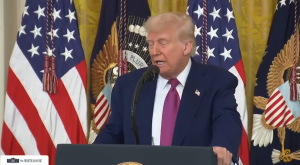
Earlier this week, President Donald Trump signed an executive order designating fentanyl as a weapon of mass destruction, a move that significantly elevated the legal and rhetorical framework surrounding the drug crisis. The designation allows for expanded authorities and reinforces the administration’s view that drug cartels function more like hostile foreign actors than criminal enterprises.
This shift in framing has laid the groundwork for more assertive military involvement.
A Growing Number of Operations
Defense officials say that since January, the United States has carried out more than two dozen targeted strikes against vessels suspected of drug trafficking in the Caribbean and Pacific regions. These actions are part of a broader initiative known as Operation Southern Spear, which aims to dismantle trafficking routes before drugs reach land.
The administration has repeatedly emphasized that these strikes are based on verified intelligence and conducted in areas known for cartel activity. Officials argue that targeting vessels at sea minimizes risk to civilians while striking at the logistical backbone of drug networks.
Until midweek, however, details about the most recent operation remained limited.
The Latest Strike Revealed
On Wednesday, U.S. Southern Command confirmed that American forces conducted another airstrike against a vessel in the eastern Pacific. According to a statement posted on social media, the targeted boat was confirmed to be engaged in drug trafficking and traveling along established smuggling routes.
The strike resulted in the deaths of four individuals described by officials as “narco-terrorists.” No U.S. personnel were injured. Southern Command released video footage of the operation, showing the vessel being destroyed in an explosion at sea.
This was the second such strike reported this week. Just days earlier, U.S. forces destroyed three additional drug-trafficking boats in the same region, killing eight individuals suspected of cartel involvement.
Command Authority and Decision-Making
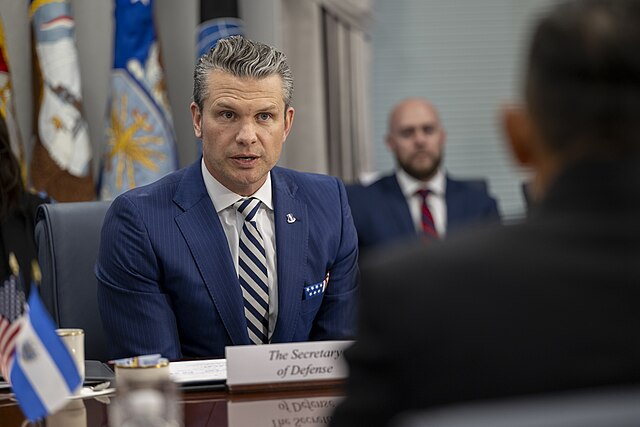
The latest strike was ordered by Secretary of War Pete Hegseth, according to defense officials. His role in authorizing the operation highlights how senior civilian leadership is directly involved in the campaign, reinforcing the administration’s position that these actions are part of a coordinated national strategy rather than isolated military engagements.
President Trump has previously stated that the United States is effectively in an armed conflict with drug cartels, a view that underpins the administration’s willingness to use military force. Shortly after taking office, Trump formally designated major cartels as foreign terrorist organizations, a move that expanded the range of tools available to the executive branch.
Supporters argue that this approach reflects the reality of cartel violence and the scale of harm inflicted by narcotics. Critics counter that it blurs the line between counterterrorism and law enforcement.
Congressional Resistance Emerges
As military operations intensified, pushback emerged on Capitol Hill. On Wednesday, the House of Representatives voted on a measure that would have required President Trump to seek congressional approval before conducting airstrikes on vessels suspected of carrying illegal drugs.
The proposal failed narrowly, 210–216. Two Republicans—Reps. Thomas Massie of Kentucky and Don Bacon of Nebraska—joined Democrats in supporting the measure, citing concerns about unchecked executive power.
Supporters of the resolution argued that while drug trafficking is a serious problem, allowing unilateral military action without congressional oversight sets a dangerous precedent. They warned that such authority could be expanded to other contexts with little restraint.
A Second Vote, Similar Outcome
Later the same day, the House considered a separate resolution that would have limited the president’s ability to launch military strikes against Venezuela without explicit congressional authorization. That measure also failed, by a vote of 213–211.
In addition to Massie and Bacon, Rep. Marjorie Taylor Greene of Georgia joined Democrats in backing the proposal. While the resolution did not directly address drug trafficking, it reflected broader concerns about the scope of executive war powers.
Together, the votes highlighted a rare moment of bipartisan unease over military authority, even as a majority of lawmakers ultimately sided with the administration.
Supporters Defend the Strategy
Administration officials and allied lawmakers defended the strikes as lawful, necessary, and overdue. They argue that cartels operate with military-grade equipment, control vast territories, and generate revenue comparable to small states.
From this perspective, treating cartels as terrorist organizations—and targeting their assets accordingly—is not an escalation, but a correction. Proponents also note that maritime strikes reduce the likelihood of urban violence and avoid placing U.S. troops in direct combat on foreign soil.
They contend that congressional micromanagement would slow operations and allow traffickers to adapt.
Critics Warn of Long-Term Consequences
Opponents of the strategy, however, caution that the legal and moral implications remain unresolved. Some lawmakers have questioned whether individuals killed in the strikes receive due process, while others worry about the risk of misidentification or mission creep.
There are also concerns about international law and diplomatic fallout, particularly if strikes occur near or within another nation’s territorial waters. While no such violations have been confirmed publicly, critics argue that transparency is essential when lethal force is used.
Human rights groups have called for clearer rules of engagement and greater disclosure about how targets are identified.
A Broader Shift in U.S. Policy
Taken together, the strikes, executive orders, and congressional votes point to a broader transformation in U.S. drug policy—one that increasingly treats narcotics trafficking as a matter of national defense rather than criminal justice.
Whether this approach will meaningfully reduce the flow of drugs into the United States remains an open question. Supporters see decisive action against cartel infrastructure; skeptics see a strategy that risks normalizing military force in situations traditionally handled by law enforcement.
What is clear is that the debate is far from settled.
Looking Ahead
With Operation Southern Spear ongoing and congressional resistance narrowly defeated, the administration appears poised to continue its maritime campaign. Additional strikes may follow, and further votes in Congress are likely as lawmakers seek to define the limits of presidential authority.
As the United States confronts the dual challenges of drug trafficking and constitutional balance, the outcome of this strategy—both on the seas and in Washington—will shape policy for years to come.

Emily Johnson is a critically acclaimed essayist and novelist known for her thought-provoking works centered on feminism, women’s rights, and modern relationships. Born and raised in Portland, Oregon, Emily grew up with a deep love of books, often spending her afternoons at her local library. She went on to study literature and gender studies at UCLA, where she became deeply involved in activism and began publishing essays in campus journals. Her debut essay collection, Voices Unbound, struck a chord with readers nationwide for its fearless exploration of gender dynamics, identity, and the challenges faced by women in contemporary society. Emily later transitioned into fiction, writing novels that balance compelling storytelling with social commentary. Her protagonists are often strong, multidimensional women navigating love, ambition, and the struggles of everyday life, making her a favorite among readers who crave authentic, relatable narratives. Critics praise her ability to merge personal intimacy with universal themes. Off the page, Emily is an advocate for women in publishing, leading workshops that encourage young female writers to embrace their voices. She lives in Seattle with her partner and two rescue cats, where she continues to write, teach, and inspire a new generation of storytellers.