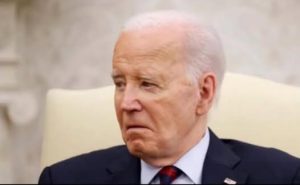
Milwaukee County Circuit Court Judge Hannah Dugan is facing federal charges after allegedly interfering with immigration enforcement actions during a courthouse incident involving an undocumented immigrant. A federal indictment filed on May 13 accuses Dugan of obstructing justice and assisting in the concealment of an individual subject to a lawful arrest warrant issued by U.S. Immigration and Customs Enforcement (ICE).
According to federal prosecutors, the incident took place during a scheduled hearing for Eduardo Flores-Ruiz, a Mexican national reportedly living in the United States without legal authorization and facing three misdemeanor battery charges in Milwaukee County.
Prosecutors allege that ICE agents had arrived at the courthouse in plain clothes to detain Flores-Ruiz when Judge Dugan intervened. The indictment claims she told the agents they needed a judicial warrant—not merely an administrative one—and redirected them to the office of the chief judge, effectively delaying enforcement action.
Surveillance footage reviewed by investigators appears to show Dugan speaking to the agents before allegedly facilitating Flores-Ruiz’s departure through a restricted courthouse exit. ICE later apprehended Flores-Ruiz at a separate location, but the Department of Justice argues the judge’s actions were a deliberate attempt to prevent lawful federal enforcement.
Charges and Legal Response
Judge Dugan has entered a plea of not guilty to both counts and is scheduled to stand trial in July. If convicted, she could face a maximum of six years in prison and fines totaling up to $350,000.
Dugan’s defense team has responded with a motion to dismiss the case, citing judicial immunity—a doctrine that protects judges from prosecution for actions performed in their official capacity. The defense also contends that the charges raise serious constitutional questions, including violations of the Tenth Amendment and separation of powers principles.
In court filings, Dugan’s attorneys argue:
“The indictment is a novel and dangerous overreach. Charging a judge for courtroom conduct risks politicizing the bench and undermining judicial independence.”
Notably, the charges do not accuse Dugan of personal corruption, bribery, or violating anyone’s civil rights. Instead, the indictment focuses on whether her alleged actions exceeded the bounds of legitimate judicial discretion.
Federal Officials Respond
The Department of Homeland Security has strongly condemned the alleged obstruction. In a statement, DHS Assistant Secretary Tricia McLaughlin criticized what she described as “activist judges” interfering with immigration enforcement under the Trump administration.
“Shielding an undocumented individual facing violent criminal charges is not judicial discretion—it’s obstruction,” McLaughlin said. “This administration will not tolerate attempts to sabotage federal law enforcement.”
The Justice Department has not commented beyond the official court filings. However, the case has drawn the attention of legal scholars and civil rights groups, who warn that the prosecution could set a precedent that threatens judicial independence, particularly in politically sensitive immigration cases.
National Implications
The case against Judge Dugan touches on a broader debate about the limits of local and state authority in federal immigration enforcement. In recent years, tensions have risen between ICE and so-called “sanctuary jurisdictions,” where local officials sometimes decline to assist federal immigration efforts.
Though the federal government has traditionally respected judicial immunity, prosecutors argue that Dugan’s alleged conduct—if proven true—was not part of her official judicial duties, but rather a personal act that violated federal law.
For now, Dugan remains free pending trial and continues to serve on the bench. The outcome of her trial could have ripple effects not only for the future of immigration enforcement policy but for the autonomy of judges operating within the American legal system.

James Jenkins is a celebrated Pulitzer Prize-winning author whose work has reshaped the way readers think about social justice and human rights in America. Raised in Atlanta, Georgia, James grew up in a community that instilled in him both resilience and a strong sense of responsibility toward others. After studying political science and creative writing at Howard University, he worked as a journalist covering civil rights issues before dedicating himself fully to fiction. His novels are known for their sharp, empathetic portraits of marginalized communities and for weaving personal stories with broader political realities. Jenkins’s breakout novel, Shadows of Freedom, won national acclaim for its unflinching look at systemic inequality, while his more recent works explore themes of identity, resilience, and the fight for dignity in the face of oppression. Beyond his novels, James is an active public speaker, lecturing at universities and participating in nonprofit initiatives that support literacy and community empowerment. He believes that storytelling is a way to preserve history and inspire change. When not writing, James enjoys jazz music, mentoring young writers, and traveling with his family to explore cultures and stories around the world.