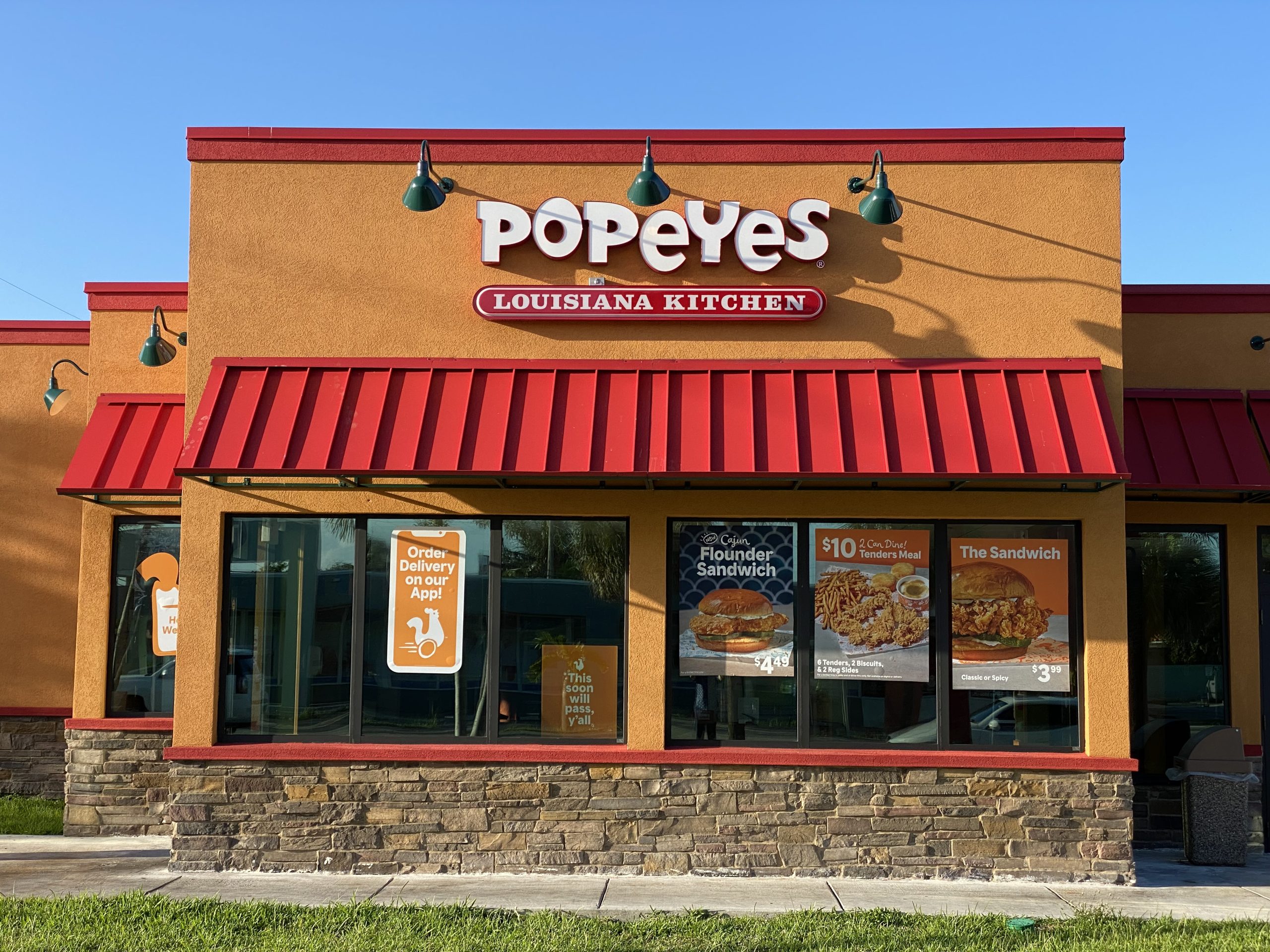
In a significant development for the U.S. fast-food industry, a large franchise operator of a popular fried chicken chain has filed for Chapter 11 bankruptcy protection, placing around 130 restaurants at risk of closure or restructuring. The move highlights mounting financial pressures on franchise-based business models and underscores vulnerabilities faced by operators in a sector still adjusting to lingering economic challenges.
The bankruptcy case, filed in federal court in the Southern District of Florida, was initiated by Sailormen Inc., a Miami‑based franchisee that manages a substantial portfolio of restaurants across multiple markets. According to court documents, the company has been carrying heavy debt and has struggled to navigate a combination of inflationary costs, labor shortages, post‑pandemic changes in customer traffic, and failed efforts to sell underperforming locations.
While the parent brand itself has not declared bankruptcy and continues to operate, the legal protection filing by Sailormen reflects the financial strain on individual operators within a broader system where many restaurants are independently owned and managed. The bankruptcy filing initiates a legal process intended to give the company breathing room to reorganize its obligations while it seeks to negotiate with creditors, landlords, and other stakeholders.
Franchisee Bankruptcy: What Happened?
On January 15, 2026, Sailormen Inc. filed for Chapter 11 bankruptcy — a form of reorganization under U.S. bankruptcy law that allows businesses to continue operating while restructuring their debts. The legal filing lists the company’s total liabilities at roughly $130 million, with assets and debts in a similar range, and cites a mix of macroeconomic pressures that pushed the business to pursue judicial protection from creditors.
Key elements contributing to the filing include the lingering financial effects of the COVID‑19 pandemic, high inflation that has increased operating costs, elevated borrowing rates, and difficulty hiring and retaining qualified workers. According to court documents, Sailormen also faced a failed 2023 attempt to sell 16 of its restaurants — a deal that would have reduced its lease liabilities — before ultimately defaulting on its credit facilities.
How the Bankruptcy Process Works
Under Chapter 11, Sailormen can continue to operate while it works on a plan to restructure its financial obligations. This process involves detailed schedules of assets, liabilities, and ongoing contracts, which the company must file in court. Creditors — including landlords, suppliers, and lenders — have a chance to review and respond to proposed restructuring plans.
One of the most consequential phases of a Chapter 11 case is lease assumption or rejection. The franchisee must decide whether to keep, renegotiate, or reject restaurant leases. Restaurants tied to rejected leases are likely to close once lease agreements are terminated, while locations tied to assumed leases may continue operating — or be sold to new operators — after the court approves such arrangements.
What This Means for Workers and Communities
The situation has implications beyond corporate balance sheets. A typical restaurant of this kind employs dozens of hourly workers, with estimates suggesting that Sailormen’s locations collectively employ around 3,200 people. Although bankruptcy does not immediately mean layoffs, uncertainty about store closures or changes in ownership can create anxiety for employees, who may face changes in hours, locations, or job security as the process unfolds.
Beyond workers, local economies may feel ripple effects if locations are shuttered. Restaurants often serve as community hubs and contribute to sales tax revenue, foot traffic for neighboring businesses, and opportunities for entry‑level employment. Vacant restaurant properties can be difficult to re‑lease quickly because they require specialized kitchen infrastructure, adherence to health and zoning regulations, and significant investment for conversion to other uses.
Identity of the Restaurants at Risk
The restaurants affected by this bankruptcy filing are primarily located in Florida and Georgia. Sailormen Inc.’s footprint has been concentrated in the southeastern United States after a period of expansion and subsequent consolidation. Before focusing on these two states, the franchisee had operations in additional markets, but sold many of those locations in earlier years to concentrate its resources on core markets.
As the legal process continues, individual restaurants in these states will be evaluated based on profitability, lease terms, and strategic importance. Some may remain open through the restructuring period, while others could ultimately close if lease agreements are rejected or if a buyer cannot be found to operate them under new terms.
Inside the Franchise System
It’s important to note that the bankruptcy involves Sailormen Inc., not the overall parent brand or corporate entity of the chicken chain. The brand itself — which is part of the larger Restaurant Brands International portfolio — operates separately from the independent franchise operators who own and manage most locations across the United States.
Because of the franchise structure, financial difficulties at the franchisee level do not automatically translate into corporate insolvency for the brand. In this case, corporate leadership has emphasized that the financial struggles of one operator are not reflective of the overall health of the brand. In a recent communication with franchisees, company officials noted that Sailormen took on a higher level of leverage than typical in the system, contributing to its unique vulnerability.
Broader Context in the Fast‑Food Sector
While this bankruptcy is significant because of the number of restaurants involved, it comes amid a broader trend of financial stress among restaurant operators and franchisees. Rising costs for food, rent, and labor have created challenging economics for many dining concepts, particularly those that operate largely through franchise models rather than corporate ownership.
Industry observers note that the pandemic reshaped consumer behavior, with many diners shifting toward delivery, takeout, or alternative dining options. Although quick‑service restaurants overall saw growth in some categories, the structural pressures on franchisees — who are responsible for their own debt, leases, and payroll — have persisted.
Some analysts caution that this filing may foreshadow additional bankruptcies or closures among heavily leveraged franchise owners if economic conditions do not improve or if cost pressures continue to outpace revenue growth. However, others argue that this case is more indicative of one operator’s specific financial decisions rather than a systemic failure across the entire industry.
The Legal Timeline Ahead
Sailormen’s restructuring plan must be reviewed and approved by the bankruptcy court. Creditors will have the opportunity to raise objections, and the franchisee will need to demonstrate that its plan is feasible and offers creditors a reasonable recovery given the circumstances.
Lease decisions are typically one of the most closely watched aspects of such cases, because they directly determine whether specific restaurants remain open or ultimately close. Courts often set deadlines for these decisions to limit uncertainty for property owners, employees, and customers.
Community and Consumer Response
For regular customers of Popeyes in Florida and Georgia, the news has sparked concern about the future of their local restaurants. Social media posts from community residents express a range of emotions — from worry about losing a favorite dining spot to uncertainty about job security for workers at their local franchise.
Local Chamber of Commerce representatives in some affected communities said they are tracking the situation closely, recognizing that closures could impact foot traffic and sales for neighboring businesses that benefit from restaurant customers.
Looking Ahead
Although bankruptcy introduces uncertainty for many of the restaurants involved, it does not guarantee immediate closure. Many operators emerge from Chapter 11 with reorganized balance sheets and continue operating under revised terms or new ownership.
For workers, customers, and local economies, the outcome will depend on how lease negotiations, restructuring plans, and potential sales unfold in the coming months. What is clear is that this bankruptcy shines a spotlight on the unique risks inherent in the franchise model and the financial challenges facing restaurant operators even in well‑known, popular brands.

Emily Johnson is a critically acclaimed essayist and novelist known for her thought-provoking works centered on feminism, women’s rights, and modern relationships. Born and raised in Portland, Oregon, Emily grew up with a deep love of books, often spending her afternoons at her local library. She went on to study literature and gender studies at UCLA, where she became deeply involved in activism and began publishing essays in campus journals. Her debut essay collection, Voices Unbound, struck a chord with readers nationwide for its fearless exploration of gender dynamics, identity, and the challenges faced by women in contemporary society. Emily later transitioned into fiction, writing novels that balance compelling storytelling with social commentary. Her protagonists are often strong, multidimensional women navigating love, ambition, and the struggles of everyday life, making her a favorite among readers who crave authentic, relatable narratives. Critics praise her ability to merge personal intimacy with universal themes. Off the page, Emily is an advocate for women in publishing, leading workshops that encourage young female writers to embrace their voices. She lives in Seattle with her partner and two rescue cats, where she continues to write, teach, and inspire a new generation of storytellers.